

Wayground
Physical/Chemical Properties and Changes - Printable Science Worksheets ระดับ 4 - Wayground

Physical/Chemical Properties and Changes

13 คำถาม

4th - 4th ระดับชั้น

Science

แบบฝึกหัดวิทยาศาสตร์สำหรับชั้นประถมศึกษาปีที่ 4 นี้ ช่วยให้นักเรียนแยกแยะคุณสมบัติทางกายภาพออกจากคุณสมบัติทางเคมี และจัดประเภทการเปลี่ยนแปลงทางกายภาพและทางเคมี แบบฝึกหัดประกอบด้วย 13 ข้อ—9 ข้อเป็นแบบเลือกตอบ และ 4 ข้อเป็นแบบเลือกตอบหลายข้อ—นักเรียนจะได้ระบุคุณสมบัติที่สังเกตได้ เช่น สี เนื้อสัมผัส ความเงา และความอ่อนตัว; ตระหนักว่าคุณสมบัติทางเคมีอธิบายว่าสสารทำปฏิกิริยากับสสารอื่นอย่างไร; และเชื่อมโยงคุณสมบัติทางกายภาพกับการเปลี่ยนแปลงทางกายภาพ และคุณสมบัติทางเคมีกับการเปลี่ยนแปลงทางเคมี นักเรียนยังสามารถนำแนวคิดเหล่านี้ไปประยุกต์ใช้กับการละลายเนย สารผสม สารละลาย การระเหย ดอกไม้ไฟ การเกิดสนิม การทำอาหาร และการเผาไหม้ คำถามเหล่านี้เน้นย้ำว่าการเปลี่ยนแปลงทางกายภาพอาจเปลี่ยนแปลงสถานะ ขนาด สี หรือรูปร่างของสารโดยไม่สร้างสสารใหม่ ในขณะที่การเปลี่ยนแปลงทางเคมีสามารถสร้างสสารใหม่ได้ แบบฝึกหัดที่พิมพ์ได้ฟรีนี้ออกแบบมาสำหรับการสอนวิทยาศาสตร์ชั้นประถมศึกษาปีที่ 4 การฝึกฝนด้วยตนเอง การทบทวน หรือการประเมินผล และมีเฉลยคำตอบครบถ้วนเพื่อการตรวจสอบที่มีประสิทธิภาพ

การตั้งค่าแผ่นงาน

ขนาดตัวอักษร

S
M
L
XL
แผ่นงาน

Physical/Chemical Properties and Changes

คำถามทั้งหมด: 13

ชื่อ
ระดับ
วันที่
1.

Which of the following is true?

a)

A physical property can only be seen.

b)

A physical property describes how matter can change when exposed to air.

c)

A physical property is something that can be observed about the substance by itself.

d)

A physical property can only be observed when two types of matter interact.

2.

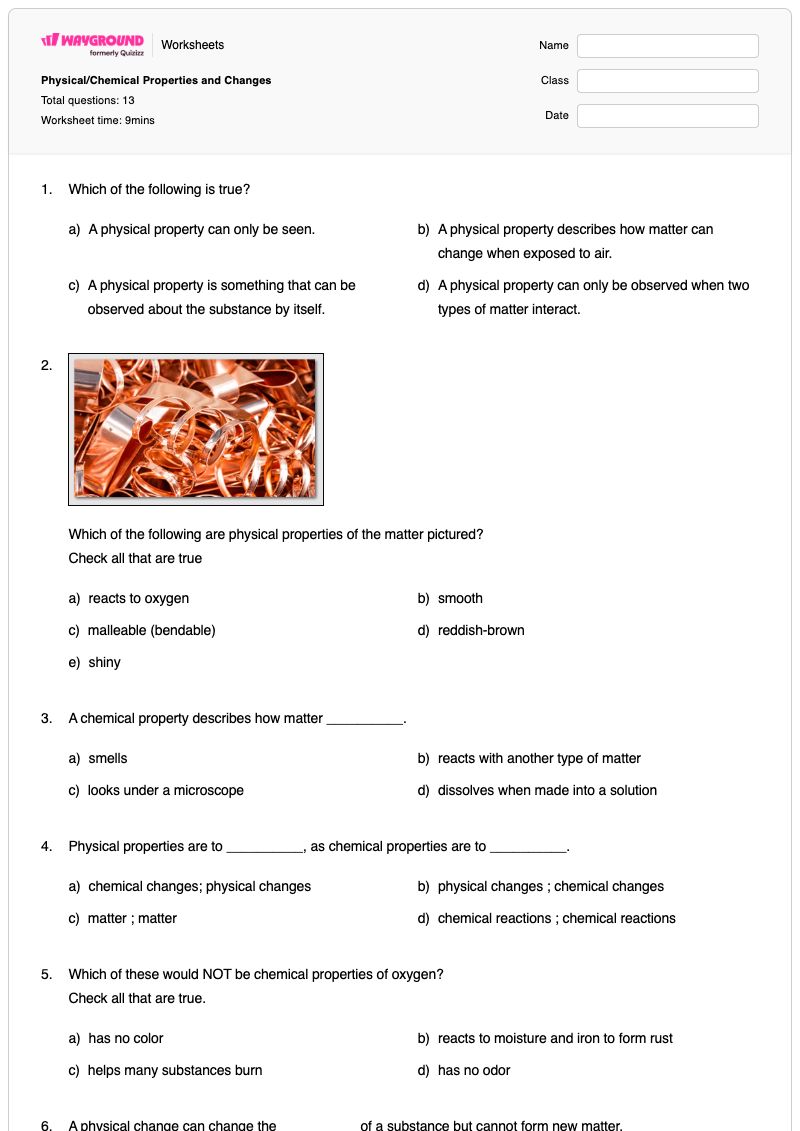
Which of the following are physical properties of the matter pictured?

Check all that are true

a)

reacts to oxygen

b)

smooth

c)

malleable (bendable)

d)

reddish-brown

e)

shiny

3.

A chemical property describes how matter __________.

a)

smells

b)

reacts with another type of matter

c)

looks under a microscope

d)

dissolves when made into a solution

4.

Physical properties are to __________, as chemical properties are to __________.

a)

chemical changes; physical changes

b)

physical changes ; chemical changes

c)

matter ; matter

d)

chemical reactions ; chemical reactions

5.

Which of these would NOT be chemical properties of oxygen?

Check all that are true.

a)

has no color

b)

reacts to moisture and iron to form rust

c)

helps many substances burn

d)

has no odor

6.

A physical change can change the __________ of a substance but cannot form new matter.

Check all that are true.

a)

state

b)

size

c)

color

d)

shape

7.

Which statement best describes what is happening in the images?

a)

a physical change

b)

a chemical change

c)

both a physical and a chemical change

d)

dissolving

8.

Jack leaves solid butter near a warm surface. When Jack returns, the butter has turned into a liquid. Jack's friend Elijah insists this is a chemical change. Is Elijah right?

a)

no, because no new matter was formed

b)

yes, because the matter changed states

c)

no, because the butter didn’t have enough time to go through a chemical change

d)

yes, because melted butter is a new type of matter

9.

Imagine the substances below are combined. None of them dissolve and no new matter is created. What happened?

a)

A physical change that is a solution.

b)

A physical change that is a mixture.

c)

A chemical change that is a mixture.

d)

A chemical change that is a solution.

10.

When combined, the powder and water create a solution because the powder dissolves evenly into the water. This is an example of a __________. If the water were evaporated from the solution, the powder would __________.

a)

physical change ; have disappeared

b)

physical change ; remain

c)

chemical change ; be a new matter

d)

chemical change ; remain

11.

Fireworks can be many different colors. The color depends on the mix of chemicals inside the fireworks. When the different chemicals ignite, they each produce different colors. Which of the following is true about fireworks?

a)

The fireworks’ color is caused by matter dissolving.

b)

A chemical change causes the fireworks’ color.

c)

Neither a physical nor a chemical change causes the fireworks’ color.

d)

A physical change causes the fireworks’ color.

12.

Which of these are most likely to cause a chemical change?

Check all that are true.

a)

folding

b)

rusting

c)

cooking

d)

burning

13.

True or false?

Clues like color change, bubbles, and odors guarantee a chemical change has occurred.

a)

False, these are all clues to only physical changes.

b)

True, all are signs that a chemical change has definitely occurred.

c)

False, some of these clues can be either physical or chemical changes.

d)

False, no clues to chemical changes exist.

แป้นคำตอบ

Physical/Chemical Properties and Changes

คำถามทั้งหมด: 13

1.
c)

A physical property is something that can be observed about the substance by itself.

2.
b)

smooth

, c)

malleable (bendable)

, d)

reddish-brown

, e)

shiny

3.
b)

reacts with another type of matter

4.
b)

physical changes ; chemical changes

5.
a)

has no color

, d)

has no odor

6.
a)

state

, b)

size

, c)

color

, d)

shape

7.
a)

a physical change

8.
a)

no, because no new matter was formed

9.
b)

A physical change that is a mixture.

10.
b)

physical change ; remain

11.
b)

A chemical change causes the fireworks’ color.

12.
b)

rusting

, c)

cooking

, d)

burning

13.
c)

False, some of these clues can be either physical or chemical changes.

คำถามที่พบบ่อย

แบบฝึกหัดนี้ครอบคลุมเนื้อหาอะไรบ้างเกี่ยวกับคุณสมบัติทางกายภาพและทางเคมี รวมถึงการเปลี่ยนแปลงต่างๆ?

แบบฝึกหัดวิทยาศาสตร์สำหรับชั้นประถมศึกษาปีที่ 4 นี้ ประกอบด้วยคำถามแบบเลือกตอบ 9 ข้อ และคำถามแบบเลือกคำตอบ 4 ข้อ เพื่อแยกแยะความแตกต่างระหว่างสมบัติทางกายภาพ สมบัติทางเคมี การเปลี่ยนแปลงทางกายภาพ และการเปลี่ยนแปลงทางเคมี นักเรียนจะนำความแตกต่างเหล่านี้ไปใช้กับตัวอย่างต่างๆ เช่น การละลายของเนย สารผสมและสารละลาย ดอกไม้ไฟ การเกิดสนิม การทำอาหาร และการเผาไหม้ พร้อมทั้งประเมินว่าการสังเกตบ่งชี้ว่ามีสสารใหม่เกิดขึ้นหรือไม่

ฉันจะใช้แบบฝึกหัดนี้ในการสอนเรื่องการเปลี่ยนแปลงทางกายภาพและทางเคมีได้อย่างไร?

เริ่มด้วยการให้นักเรียนจัดเรียงตัวอย่างตามคุณสมบัติ การเปลี่ยนแปลงทางกายภาพ และการเปลี่ยนแปลงทางเคมี ก่อนที่พวกเขาจะทำแบบฝึกหัดด้วยตนเอง ใช้สถานการณ์การละลายของเนย การผสมและการละลาย และดอกไม้ไฟเป็นหัวข้อในการสนทนา โดยถามนักเรียนว่าสารนั้นเปลี่ยนสถานะหรือปฏิกิริยาทำให้เกิดสสารใหม่หรือไม่ ทบทวนข้อคำถามแบบเลือกตอบหลายข้อด้วยกัน เพื่อให้นักเรียนอธิบายว่าเหตุใดลักษณะหรือตัวอย่างที่เลือกแต่ละข้อจึงอยู่ในหมวดหมู่นั้น

ฉันควรสังเกตข้อผิดพลาดอะไรบ้างเมื่อนักเรียนทำแบบฝึกหัดนี้เสร็จ?

นักเรียนอาจสับสนระหว่างสมบัติทางกายภาพ ซึ่งสามารถสังเกตได้จากตัวสารเอง กับสมบัติทางเคมี ซึ่งอธิบายถึงปฏิกิริยาของสารนั้นกับสารชนิดอื่น นอกจากนี้ พวกเขาอาจมองว่าการหลอมเหลว การละลาย หรือการเกิดสารผสม เป็นการเปลี่ยนแปลงทางเคมี หรือเลือกคำตอบเพียงข้อเดียวในคำถามแบบเลือกตอบหลายข้อ เตือนนักเรียนว่า สี ฟองอากาศ และกลิ่น เป็นเพียงเบาะแส แต่ไม่ได้รับประกันว่าเกิดการเปลี่ยนแปลงทางเคมีขึ้นเสมอไป

ฉันจะมอบหมายและให้คะแนนแบบฝึกหัดคุณสมบัติทางกายภาพและทางเคมีนี้ได้อย่างไร?

บน Wayground คุณสามารถมอบหมายแบบฝึกหัดนี้เป็นแบบทดสอบดิจิทัล หรือดาวน์โหลดเป็นไฟล์ PDF ที่พิมพ์ได้ เพื่อให้นักเรียนทำบนกระดาษ แบบฝึกหัดนี้มีเฉลยคำตอบครบถ้วน และสามารถตรวจให้คะแนนงานที่ส่งมาได้โดยการสแกนงานของนักเรียนด้วยแอป Wayground for Teachers ตัวเลือกไฟล์ PDF ยังช่วยสนับสนุนห้องเรียนที่ลดเวลาการใช้หน้าจอได้อีกด้วย

ฉันจะปรับแบบฝึกหัดนี้ให้เหมาะสมกับนักเรียนของฉันได้อย่างไร?

ใช้การตั้งค่าขั้นสูงของแบบฝึกหัดเพื่อปรับระยะห่างระหว่างตัวอักษรและขนาดตัวอักษร เพื่อให้คำถามเกี่ยวกับคุณสมบัติและการเปลี่ยนแปลง รวมถึงตัวเลือกแบบเลือกหลายรายการอ่านง่ายขึ้น นอกจากนี้ คุณยังสามารถใช้แบบอักษรที่เหมาะสำหรับผู้ที่มีภาวะดิสเล็กเซีย หรือแปลแบบฝึกหัดเป็นภาษาอื่นเพื่อช่วยให้เข้าถึงคำศัพท์และสถานการณ์ทางวิทยาศาสตร์ได้ดียิ่งขึ้น

ฉันจะหาแบบฝึกหัดแบบนี้เพิ่มเติมได้ที่ไหนบน Wayground?

Wayground นำเสนอชุดแบบฝึกหัดและโจทย์ฝึกหัดฟรีที่ครอบคลุมหลากหลายวิชา พร้อมไฟล์ PDF และเฉลยคำตอบ เพื่อช่วยให้นักเรียนเชี่ยวชาญทักษะและแนวคิดที่สำคัญ ดูแหล่งข้อมูลเพิ่มเติมได้ที่ https://wayground.com/en-us/worksheets