

Wayground
Subjective, Objective, and Possessive Pronouns - Printable อีแอลเอ Worksheets 6th ระดับชั้น - Wayground

Subjective, Objective, and Possessive Pronouns

Brynlee George

สร้างโดย Brynlee George

20 คำถาม

6th ระดับชั้น

อีแอลเอ

อัปเดตแล้ว ต.ค. 2569

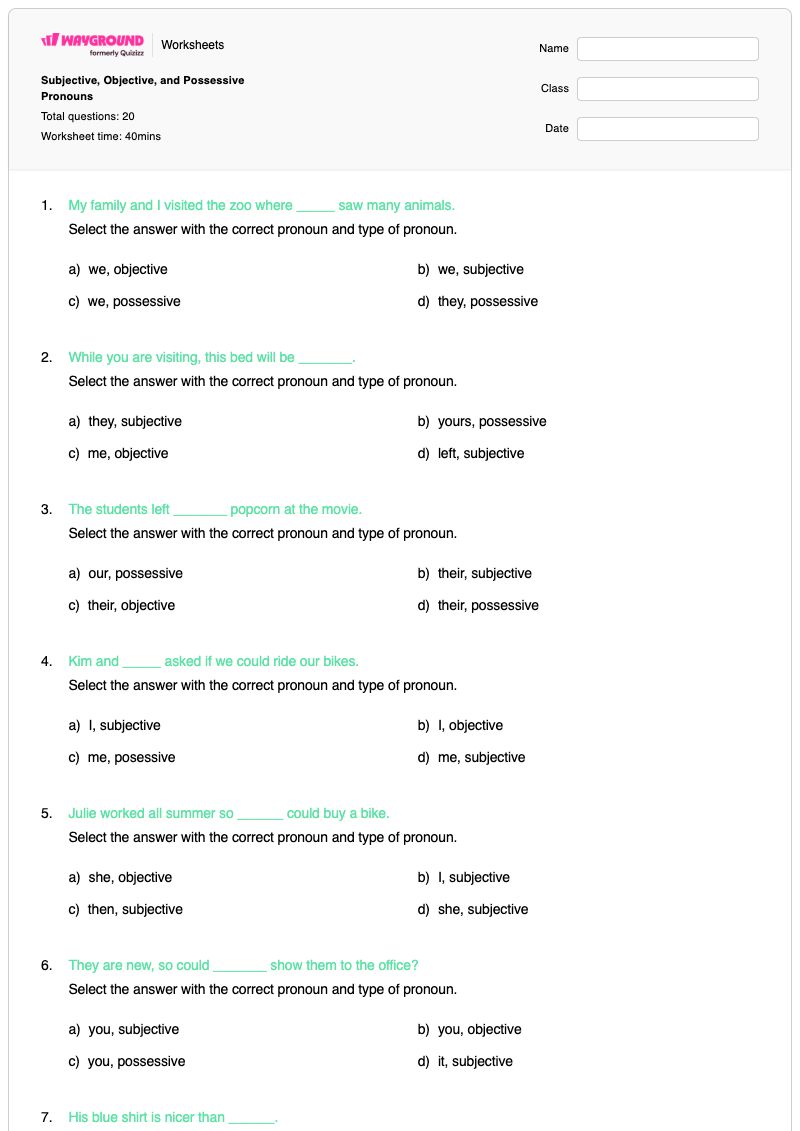
แบบฝึกหัดภาษาอังกฤษสำหรับนักเรียนชั้น ป.6 นี้ มีคำถามแบบเลือกตอบ 20 ข้อ เกี่ยวกับสรรพนามประธาน สรรพนามกรรม และสรรพนามแสดงความเป็นเจ้าของ นักเรียนจะต้องเลือกสรรพนามที่ทำให้ประโยคสมบูรณ์ จำแนกสรรพนามตามประเภททางไวยากรณ์ ระบุสรรพนามประธานและสรรพนามกรรมในบริบท และตระหนักว่าสรรพนามใช้แทนคำนาม ตัวอย่างเช่น การเลือก “we” เป็นสรรพนามประธาน “me” เป็นสรรพนามกรรม และ “mine” หรือ “their” เป็นสรรพนามแสดงความเป็นเจ้าของ ใช้แบบฝึกหัดนี้เพื่อเสริมสร้างความเข้าใจเกี่ยวกับการระบุและการใช้สรรพนามหลังจากการสอนโดยตรงหรือการฝึกฝนแบบมีผู้แนะนำ แบบฝึกหัดที่อิงจากประโยคช่วยให้นักเรียนเชื่อมโยงหน้าที่ของสรรพนามกับบทบาทในประโยค ในขณะที่คำถามเกี่ยวกับการระบุสรรพนามช่วยให้ฝึกฝนการแยกแยะประธานและกรรมได้อย่างมีประสิทธิภาพ แบบฝึกหัดนี้เป็นแบบฝึกหัดที่พิมพ์ได้ฟรีพร้อมเฉลยคำตอบครบถ้วน ทำให้มีประโยชน์สำหรับการทำงานอิสระ การทบทวน การบ้าน หรือการประเมินภาษาอังกฤษชั้น ป.6 อย่างรวดเร็ว

การตั้งค่าแผ่นงาน

ขนาดตัวอักษร

S
M
L
XL
Waygroundแผ่นงาน

Subjective, Objective, and Possessive Pronouns

คำถามทั้งหมด: 20

ชื่อ
ระดับ
วันที่
1.

My family and I visited the zoo where _____ saw many animals.

Select the answer with the correct pronoun and type of pronoun.

a)

we, objective

b)

we, subjective

c)

we, possessive

d)

they, possessive

2.

While you are visiting, this bed will be _______.

Select the answer with the correct pronoun and type of pronoun.

a)

they, subjective

b)

yours, possessive

c)

me, objective

d)

left, subjective

3.

The students left _______ popcorn at the movie.

Select the answer with the correct pronoun and type of pronoun.

a)

our, possessive

b)

their, subjective

c)

their, objective

d)

their, possessive

4.

Kim and _____ asked if we could ride our bikes.

Select the answer with the correct pronoun and type of pronoun.

a)

I, subjective

b)

I, objective

c)

me, posessive

d)

me, subjective

5.

Julie worked all summer so ______ could buy a bike.

Select the answer with the correct pronoun and type of pronoun.

a)

she, objective

b)

I, subjective

c)

then, subjective

d)

she, subjective

6.

They are new, so could _______ show them to the office?

Select the answer with the correct pronoun and type of pronoun.

a)

you, subjective

b)

you, objective

c)

you, possessive

d)

it, subjective

7.

His blue shirt is nicer than ______.

Select the answer with the correct pronoun and type of pronoun.

a)

mine, subjective

b)

mine, objective

c)

me, possessive

d)

mine, possessive

8.

My grandmother gave _______ a yummy cookie.

Select the answer with the correct pronoun and type of pronoun.

a)

me, objective

b)

me, subjective

c)

me, possessive

d)

we, possessive

9.

_____ am going to watch the game at my friend's house.

Select the answer with the correct pronoun and type of pronoun.

a)

they, subjective

b)

I, objective

c)

I, subjective

d)

we, subjective

10.

The student grabbed _____ project to show to the class.

Select the answer with the correct pronoun and type of pronoun.

a)

his, subjective

b)

his, objective

c)

he, possessive

d)

his, possessive

11.

A pronoun is

a)

a person, place, or thing.

b)

a word that replaces a noun.

c)

an antecedent.

d)

a verb.

12.

Subjective pronoun in this sentence:


I always rinse the dishes before I put them in the dishwasher.

a)

I

b)

them

13.

Objective pronoun in this sentence:


I always rinse the dishes before I put them in the dishwasher.

a)

I

b)

them

14.

Objective pronoun in this sentence:


Is she going to the comic book convention without me?

a)

she

b)

me

15.

Subjective pronoun in this sentence:


Is she going to the comic book convention without me?

a)

she

b)

me

16.

Possessive pronoun in this sentence:


The noise from the construction site distracted me from my homework.

a)

noise

b)

site

c)

me

d)

my

17.

Possessive pronoun in this sentence:


While the Dodsons are traveling, they have asked Yin to care for their dog.

a)

they

b)

their

c)

dog

18.

A possessive pronoun replaces the possessive noun _________________.

a)

that is the subject of the sentence

b)

to show ownership

c)

to receive the action of the verb

19.

A subjective pronoun replaces the noun _________________.

a)

that is the subject of the sentence

b)

to receive the action of the verb

c)

to show ownership

20.

An objective pronoun replaces the noun _________________.

a)

to show ownership

b)

that is the subject of the sentence

c)

to receive the action of the verb

Waygroundแป้นคำตอบ

Subjective, Objective, and Possessive Pronouns

คำถามทั้งหมด: 20

1.
b)

we, subjective

2.
b)

yours, possessive

3.
d)

their, possessive

4.
a)

I, subjective

5.
d)

she, subjective

6.
a)

you, subjective

7.
d)

mine, possessive

8.
a)

me, objective

9.
c)

I, subjective

10.
d)

his, possessive

11.
b)

a word that replaces a noun.

12.
a)

I

13.
b)

them

14.
b)

me

15.
a)

she

16.
d)

my

17.
b)

their

18.
b)

to show ownership

19.
a)

that is the subject of the sentence

20.
c)

to receive the action of the verb

คำถามที่พบบ่อย

แบบฝึกหัดเรื่องสรรพนามแสดงความรู้สึกส่วนตัว สรรพนามแสดงกรรม และสรรพนามแสดงความเป็นเจ้าของนี้ครอบคลุมเนื้อหาอะไรบ้าง?

แบบฝึกหัดสำหรับนักเรียนชั้นประถมศึกษาปีที่ 6 นี้ ประกอบด้วยคำถามแบบเลือกตอบ 20 ข้อ เพื่อช่วยให้นักเรียนเลือกใช้สรรพนามในบริบทของประโยค และจำแนกประเภทของสรรพนามว่าเป็นประธาน กรรม หรือแสดงความเป็นเจ้าของ นอกจากนี้ยังช่วยให้นักเรียนระบุสรรพนาม เช่น “ฉัน” “เธอ” “พวกเขา” และ “ของฉัน” ในประโยคที่สมบูรณ์ และตระหนักว่าสรรพนามใช้แทนคำนามได้

ฉันจะใช้แบบฝึกหัดนี้สอนเรื่องสรรพนามประธาน สรรพนามกรรม และสรรพนามแสดงความเป็นเจ้าของได้อย่างไร?

เริ่มต้นด้วยการสาธิตให้เห็นว่าบทบาทของคำสรรพนามเปลี่ยนแปลงไปอย่างไร ขึ้นอยู่กับตำแหน่งในประโยค เช่น เปรียบเทียบ “ฉัน” ในฐานะประธาน กับ “ของฉัน” ในฐานะกรรม จากนั้นให้นักเรียนอธิบายว่าทำไมตัวเลือกต่างๆ เช่น “เรา” “ของคุณ” หรือ “ของฉัน” จึงได้รับการจัดประเภทเช่นนั้น ก่อนที่จะทำข้อสอบแบบเลือกตอบด้วยตนเอง ตรวจสอบคำตอบโดยขอให้นักเรียนระบุว่าคำสรรพนามแต่ละคำแทนคำนามหรือบทบาทในประโยคใด

ฉันควรระวังข้อผิดพลาดอะไรบ้างเมื่อนักเรียนทำแบบฝึกหัดเรื่องคำสรรพนามนี้?

นักเรียนอาจเลือกใช้สรรพนามที่คุ้นเคยโดยไม่ตรวจสอบว่าสรรพนามนั้นทำหน้าที่เป็นประธาน กรรม หรือเจ้าของในประโยคหรือไม่ โดยเฉพาะอย่างยิ่งควรระวังความสับสนระหว่างคู่ประธาน/กรรม เช่น “ฉัน” และ “ของฉัน” และระหว่างสรรพนามแสดงความเป็นเจ้าของ เช่น “ของคุณ” หรือ “ของฉัน” กับสรรพนามที่เพียงแค่ระบุชื่อผู้กระทำกริยา นอกจากนี้ พวกเขายังอาจเลือกสรรพนามผิดเมื่อประโยคมีสรรพนามมากกว่าหนึ่งตัว เช่น “เธอ” และ “ของฉัน”

ฉันจะมอบหมายและตรวจงานแบบฝึกหัดคำสรรพนามนี้อย่างไร?

แบบฝึกหัดนี้มีให้ดาวน์โหลดในรูปแบบไฟล์ PDF ที่สามารถพิมพ์ได้ และเป็นแบบทดสอบดิจิทัลบน Wayground พร้อมเฉลยคำตอบครบถ้วนสำหรับคำถามแบบเลือกตอบทั้ง 20 ข้อ คุณสามารถตรวจงานที่ส่งมาในรูปแบบไฟล์พิมพ์ได้โดยการสแกนงานของนักเรียนด้วยแอป Wayground for Teachers หรือตรวจสอบคำตอบจากแบบทดสอบดิจิทัล รูปแบบไฟล์พิมพ์ยังช่วยสนับสนุนโรงเรียนที่ต้องการลดเวลาการใช้หน้าจอได้อีกด้วย

ฉันจะแยกแยะความแตกต่างระหว่างคำสรรพนามแสดงความรู้สึกส่วนตัว คำสรรพนามแสดงกรรม และคำสรรพนามแสดงความเป็นเจ้าของในแบบฝึกหัดนี้ได้อย่างไร?

ใช้การตั้งค่าขั้นสูงของแบบฝึกหัดเพื่อปรับระยะห่างระหว่างตัวอักษรหรือเพิ่มขนาดตัวอักษร เพื่อให้แบบฝึกหัดเติมประโยคและการระบุคำสรรพนามอ่านง่ายขึ้น นอกจากนี้ คุณยังสามารถใช้แบบอักษรที่เหมาะสำหรับผู้ที่มีภาวะดิสเล็กเซีย หรือแปลแบบฝึกหัดเป็นภาษาอื่นหากช่วยให้เข้าถึงแบบฝึกหัดคำสรรพนามภาษาอังกฤษได้ง่ายขึ้น

ฉันจะหาแบบฝึกหัดแบบนี้เพิ่มเติมได้ที่ไหนบน Wayground?

Wayground นำเสนอชุดแบบฝึกหัดและโจทย์ฝึกหัดฟรีที่ครอบคลุมทุกวิชา พร้อมไฟล์ PDF และเฉลยคำตอบ เพื่อช่วยเสริมสร้างทักษะและความเข้าใจในแนวคิดสำคัญ ดูแหล่งข้อมูลเพิ่มเติมได้ที่ https://wayground.com/en-us/worksheets