
DNA, RNA and Protein Synthesis

Flashcard
•
Biology
•
9th - 10th Grade
•
Practice Problem
•
Hard

Wayground Content
FREE Resource
Student preview

15 questions
Show all answers
1.
FLASHCARD QUESTION
Front
What is DNA?
Back
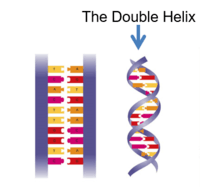
DNA (Deoxyribonucleic Acid) is the molecule that carries the genetic instructions for life. It is composed of two strands that coil around each other to form a double helix.
2.
FLASHCARD QUESTION
Front
What is RNA?
Back
RNA (Ribonucleic Acid) is a single-stranded molecule that plays a crucial role in the synthesis of proteins. It is involved in translating the genetic information from DNA into proteins.
3.
FLASHCARD QUESTION
Front
What is protein synthesis?
Back
Protein synthesis is the process by which cells generate new proteins. It involves two main steps: transcription (copying DNA to mRNA) and translation (reading mRNA to assemble amino acids into proteins).
4.
FLASHCARD QUESTION
Front
What is a mutation?
Back
A mutation is a change in the DNA sequence that can lead to changes in the structure and function of proteins. Mutations can be caused by errors during DNA replication or external factors.
5.
FLASHCARD QUESTION
Front
What is a frameshift mutation?
Back
A frameshift mutation occurs when nucleotides are inserted or deleted from the DNA sequence, causing a shift in the reading frame of the genetic code.
6.
FLASHCARD QUESTION
Front
What is helicase?
Back
Helicase is an enzyme that unwinds and separates the two strands of DNA during replication, allowing each strand to be copied.
7.
FLASHCARD QUESTION
Front
What is DNA polymerase?
Back
DNA polymerase is an enzyme that synthesizes new DNA strands by adding nucleotides to a growing chain and also proofreads the newly synthesized DNA.
Access all questions and much more by creating a free account
Create resources
Host any resource
Get auto-graded reports

Continue with Google

Continue with Email

Continue with Classlink

Continue with Clever
or continue with

Microsoft
%20(1).png)
Apple

Others
Already have an account?

