
AP Bio Unit 3: energy, enzymes, photo., cell resp.

Flashcard
•
Biology
•
11th Grade - University
•
Practice Problem
•
Hard

Wayground Content
FREE Resource
Student preview

15 questions
Show all answers
1.
FLASHCARD QUESTION
Front
What is the proton-motive force?
Back
The proton-motive force is the force that promotes the movement of protons across a membrane, generated by the electron transport chain during cellular respiration.
2.
FLASHCARD QUESTION
Front
What happens when ADP is phosphorylated?
Back
When ADP is phosphorylated, it is converted into ATP, which is the energy currency of the cell.
3.
FLASHCARD QUESTION
Front
Why does the reaction rate plateau at high reactant concentrations?
Back
The reaction rate plateaus because most enzyme molecules are occupied by substrate, limiting the rate of reaction.
4.
FLASHCARD QUESTION
Front
What is chemiosmosis in mitochondria?
Back
Chemiosmosis in mitochondria refers to the movement of protons from the mitochondrial matrix into the intermembrane space, creating a proton gradient.
5.
FLASHCARD QUESTION
Front
What is the role of chloroplasts in chemiosmosis?
Back
In chloroplasts, chemiosmosis moves protons from the stroma to the thylakoid space, contributing to ATP synthesis during photosynthesis.
6.
FLASHCARD QUESTION
Front
Do plants undergo both photosynthesis and cellular respiration?
Back
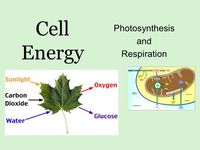
True, plants perform photosynthesis to produce glucose and oxygen, and they undergo cellular respiration to convert glucose into usable energy.
7.
FLASHCARD QUESTION
Front
What is the function of enzymes in biological reactions?
Back
Enzymes act as catalysts that speed up chemical reactions by lowering the activation energy required for the reaction to occur.
Access all questions and much more by creating a free account
Create resources
Host any resource
Get auto-graded reports

Continue with Google

Continue with Email

Continue with Classlink

Continue with Clever
or continue with

Microsoft
%20(1).png)
Apple

Others
Already have an account?

