
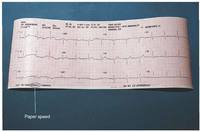
Rhythm Practice

Flashcard
•
Health Sciences
•
Vocational training
•
Practice Problem
•
Easy

Spencer Murphy
Used 2+ times
FREE Resource
Student preview

50 questions
Show all answers
1.
FLASHCARD QUESTION
Front
Identify the rhythm:

Back
atrial fibrillation
Answer explanation
Atrial fibrillation is characterized by an irregular and often rapid heart rhythm due to chaotic electrical signals in the atria. This differentiates it from atrial flutter and other rhythms, making it the correct choice.
2.
FLASHCARD QUESTION
Front
Identify the rhythm:

Back
sinus arrhythmia
3.
FLASHCARD QUESTION
Front
Identify the type of AV block.

Back
Mobitz type 1
Answer explanation
Mobitz type 1, also known as Wenckebach, is characterized by progressive prolongation of the PR interval until a beat is dropped. This pattern distinguishes it from other AV blocks, making it the correct choice.
4.
FLASHCARD QUESTION
Front
Identify the type of AV block.

Back
Mobitz type 2
Answer explanation
Mobitz type 2 is characterized by intermittent dropped beats without a preceding lengthening of the PR interval, distinguishing it from Mobitz type 1. This type is more concerning due to the risk of progression to complete heart block.
5.
FLASHCARD QUESTION
Front
Identify the rhythm:

Back
Atrial flutter
Answer explanation
Atrial flutter is characterized by a rapid, regular atrial rhythm, often seen as 'sawtooth' waves on an ECG, typically in the inferior leads. This distinguishes it from atrial fibrillation, sinus rhythm, and SVT.
6.
FLASHCARD QUESTION
Front
Identify the rhythm: Atrial fibrillation, Sinus tachycardia, MAT, SVT

Back
SVT
Answer explanation
SVT (Supraventricular Tachycardia) is characterized by a rapid heart rate originating above the ventricles, often presenting with a regular rhythm. This distinguishes it from atrial fibrillation and other options.
7.
FLASHCARD QUESTION
Front
Identify the type of AV block.

Back
3rd degree
Answer explanation
3rd degree AV block, also known as complete heart block, occurs when there is a complete failure of electrical conduction between the atria and ventricles, leading to dissociation between the two. This is the correct identification.


Access all questions and much more by creating a free account
Create resources
Host any resource
Get auto-graded reports

Continue with Google

Continue with Email

Continue with Microsoft
or continue with

%20(1).png)
Apple

Others
Already have an account?

