

Circulatory System

Flashcard
•
Science
•
6th - 8th Grade
•
Hard

Barbara White
FREE Resource
Student preview

19 questions
Show all answers
1.
FLASHCARD QUESTION
Front
Circulatory System Noun
[sur-kyuh-luh-taw-ree sis-tuhm]
Back
Circulatory System
The organ system responsible for transporting blood, oxygen, and nutrients throughout the body, consisting of the heart and blood vessels.
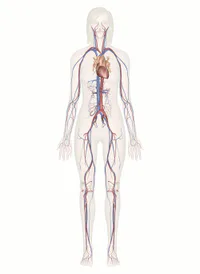
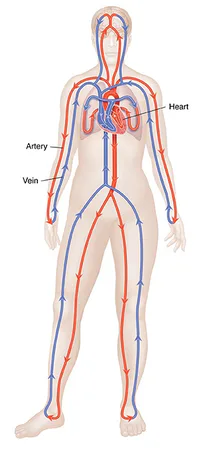
Example: This image shows the circulatory system as a network of blood vessels (arteries in red, veins in blue) that transports blood throughout the entire body, powered by the central heart.
2.
FLASHCARD QUESTION
Front
Atrium Noun
[ey-tree-uhm]
Back
Atrium
An upper chamber of the heart that receives blood returning to the heart from either the body or the lungs.
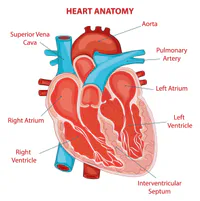
Example: This diagram shows the heart's two upper chambers, the right and left atrium, which receive blood before it passes to the ventricles below.
3.
FLASHCARD QUESTION
Front
Ventricle Noun
[ven-tri-kuhl]
Back
Ventricle
A lower, thick-walled chamber of the heart that pumps blood out to the lungs or the rest of the body.
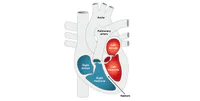
Example: This diagram shows the heart's four chambers, highlighting the two lower chambers, the right and left ventricles, which pump blood out of the heart.
4.
FLASHCARD QUESTION
Front
Septum Noun
[sep-tuhm]
Back
Septum
The muscular wall dividing the right and left sides of the heart, preventing the mixing of different blood types.
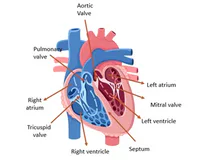
Example: The septum is the thick muscular wall that divides the right and left sides of the heart, keeping oxygen-rich and oxygen-poor blood separate.
5.
FLASHCARD QUESTION
Front
Pacemaker Noun
[peys-mey-ker]
Back
Pacemaker
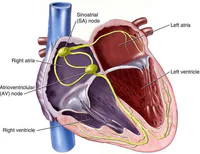
A specialized group of muscle cells in the right atrium that controls the heart's rhythm by generating electrical impulses.
Example: This diagram shows the heart's natural pacemaker, the Sinoatrial (SA) node, and the electrical pathways that signal the heart muscles to contract and pump blood.
6.
FLASHCARD QUESTION
Front
Pulmonary Circulation Noun
[puhl-muh-ner-ee sur-kyuh-ley-shuhn]
Back
Pulmonary Circulation
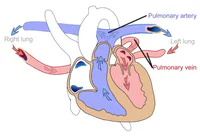
The circuit that carries deoxygenated blood from the heart to the lungs and returns oxygenated blood back to the heart.
Example: This diagram shows how the heart pumps blue, deoxygenated blood to the lungs via the pulmonary artery, and receives red, oxygenated blood back via the pulmonary vein.
7.
FLASHCARD QUESTION
Front
Systemic Circulation Noun
[si-stem-ik sur-kyuh-ley-shuhn]
Back
Systemic Circulation
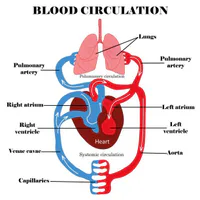
The circuit that carries oxygenated blood from the heart to the rest of the body and returns deoxygenated blood.
Example: This diagram shows systemic circulation as the path where oxygen-rich blood (red) is pumped from the heart to the body's capillaries and back.
Access all questions and much more by creating a free account
Create resources
Host any resource
Get auto-graded reports

Continue with Google

Continue with Email

Continue with Microsoft
or continue with

%20(1).png)
Apple

Others
By signing up, you agree to our Terms of Service & Privacy Policy
Already have an account?


