

7.12DE Background Reading

Presentation
•
Science
•
7th - 8th Grade
•
Easy
Standards-aligned

Joel Garcia
Used 2+ times
FREE Resource
3 Slides • 8 Questions
1
7.12DE Background Reading
Follow along as we explore Organelles!
2
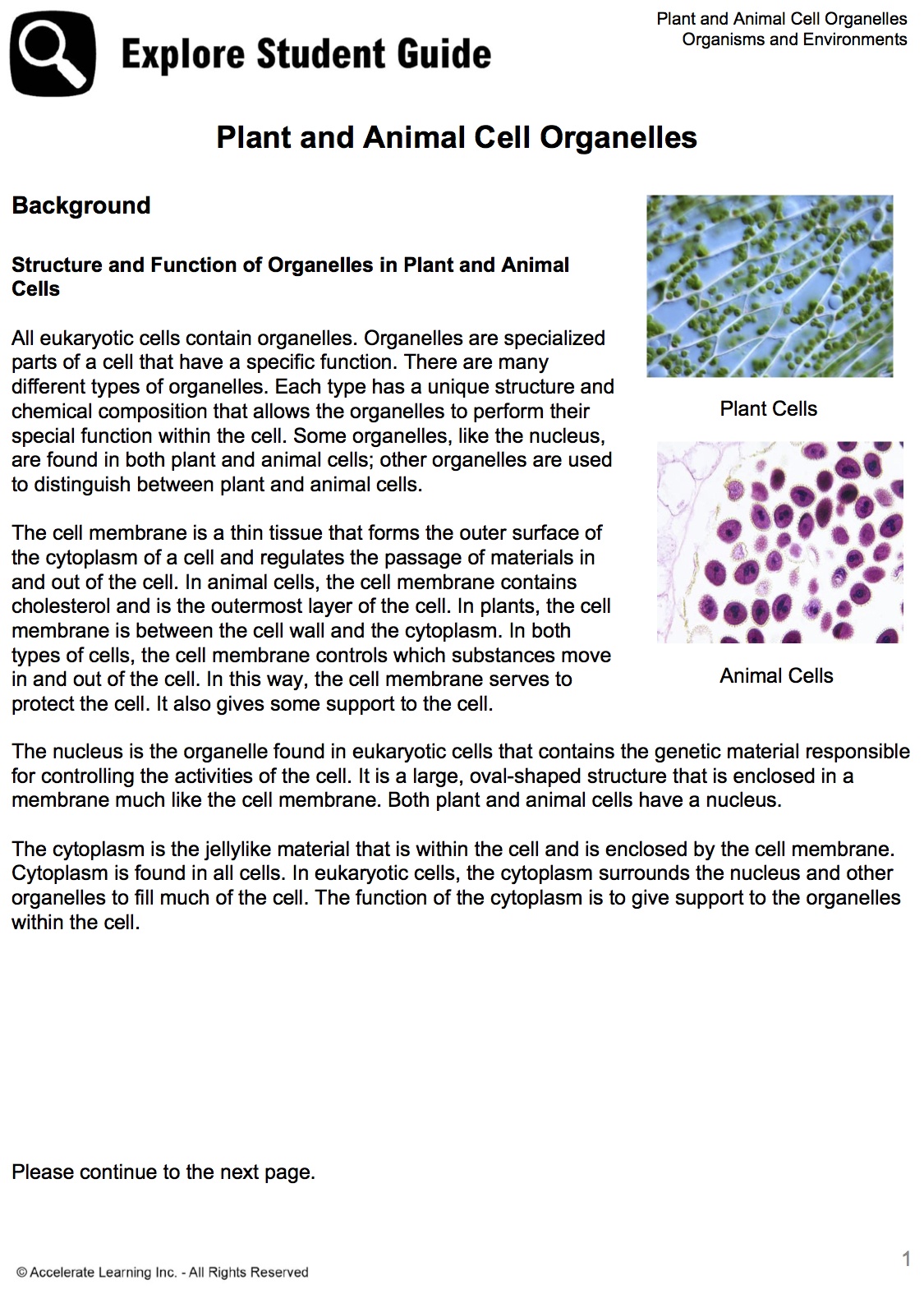
3
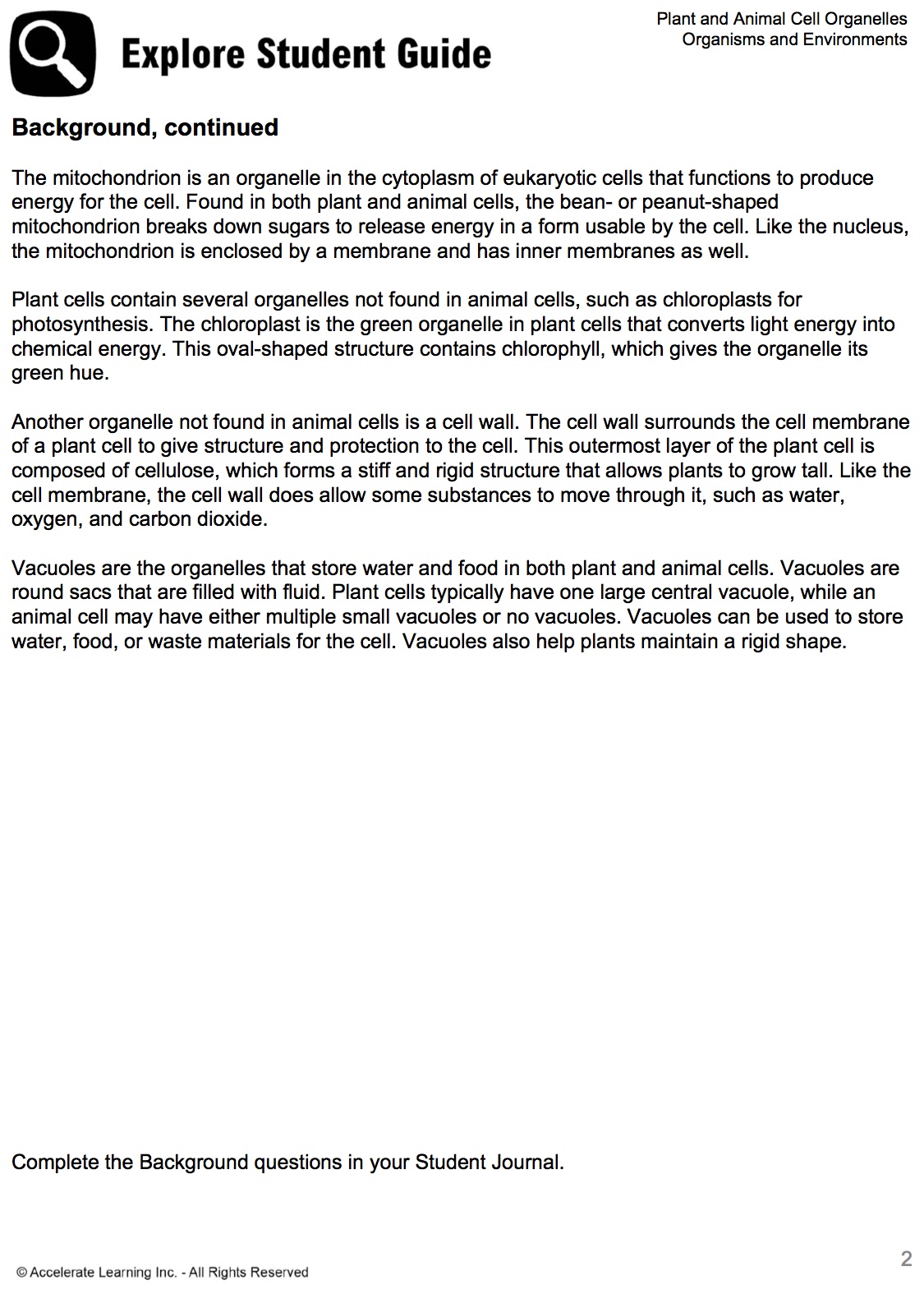
4
Multiple Choice
What is an Organelle?
Specialized Parts of a cell that have a specific function.
Specialized Parts of a tissue that have a specific function.
A weird type of organ that has special components
5
Multiple Choice
What is the structure and function of the cell membrane?
A thin tissue that forms the outer surface of the cytoplasm of a cell and regulates the passage of materials in and out of the cell.
A large tissues that forms the inner surface of the cytoplasm of a cell.
6
Multiple Choice
What is the structure and function of the nucleus?
contains the genetic material responsible for controlling the activities of the cell.
contains the genetic material responsible for controlling the replication of organs.
contains the genetic material responsible for controlling the activities of the air.
7
Multiple Choice
What is the structure and function of the cytoplasm?
the jelly-like material that is within the cell and is enclosed by the cell membrane. It gives support to the organelles within the cell.
the sand-like material that is within the cell and is enclosed by the cell wall. It gives support to the organs within the cell.
8
Multiple Choice
What is the structure and function of the mitochondrion?
The bean- or peanut-shaped mitochondrion breaks down sugars to release energy in a form usable by the cell.
The banana shaped organ breaks down protein to release energy in a form usable by the cell.
9
Multiple Choice
What is the structure and function of chloroplasts?
The chloroplast is the green organelle in plant cells that converts light energy into chemical energy. This oval-shaped structure contains chlorophyll. Chlorophyll gives the organelle its green hue.
The chloroplast is the blue organelle in plant cells that converts light energy into chemical energy. This spiral-shaped structure contains chlorophyll. Chlorophyll gives the organ its blue hue.
10
Multiple Choice
What is the structure and function of the cell wall?
The cell wall surrounds the cell membrane of a plant to give structure and protection to the cell. This outermost layer of the plant cell is composed of cellulose, which forms a stiff, rigid structure that allows plants to grow tall. Like the cell membrane, the cell wall does allow some substances, such as water, oxygen, and carbon dioxide, to move through it.
The cell membrane surrounds the cell wall of a plant to give color and protection to the cell. This innermost layer of the plant cell is composed of glucose, which forms a stiff, rigid structure that allows plants to grow tall. Like the cell wall, the cell membrane does allow some substances, such as water, pizza, and carbon dioxide, to move through it.
11
Multiple Choice
What is the structure and function of vacuoles?
Vacuoles are square sacs that are filled with gas. Animal cells typically have one large central vacuole, while an plant cell may have either multiple small vacuoles or no vacuoles. Vacuoles can be used to store water, food, or waste materials for the cell. Vacuoles also help animals maintain a rigid shape.
Vacuoles are round sacs that are filled with fluid. Plant cells typically have one large central vacuole, while an animal cell may have either multiple small vacuoles or no vacuoles. Vacuoles can be used to store water, food, or waste materials for the cell. Vacuoles also help plants maintain a rigid shape.
7.12DE Background Reading
Follow along as we explore Organelles!
Show answer
Auto Play
Slide 1 / 11
SLIDE
Similar Resources on Wayground

10 questions
Limiting Factors
Presentation
•
8th Grade
10 questions
PWMS Food Webs & Energy Flow
Presentation
•
6th - 8th Grade
9 questions
pH sacale
Presentation
•
7th Grade
7 questions
Coachbook Chapter 1 Lesson 5: Law of Conservation of Matter
Presentation
•
8th Grade
8 questions
APE: Atomic Number, Protons, and Electrons
Presentation
•
6th - 8th Grade
10 questions
Sound Waves
Presentation
•
7th - 8th Grade
8 questions
Natural Selection and Selective Breeding
Presentation
•
7th Grade
8 questions
Microbiome Study Guide
Presentation
•
6th - 8th Grade
Popular Resources on Wayground
10 questions
How much do you know about our Portrait of an Eagle?

Quiz
•
10th Grade
10 questions
Fast Food Slogans
Quiz
•
6th - 8th Grade
21 questions
Continents and Oceans
Quiz
•
6th Grade
20 questions
Parts of Speech
Quiz
•
5th Grade
16 questions
Subject & Predicate
Quiz
•
5th Grade
25 questions
Multiplication Facts
Quiz
•
5th Grade
12 questions
Map Skills
Quiz
•
3rd Grade
22 questions
Continents and Oceans
Quiz
•
5th Grade
Discover more resources for Science
17 questions
7.6D Aqueous Solutions
Quiz
•
7th Grade
20 questions
Scientific Method and Variables
Quiz
•
8th Grade
20 questions
Scientific method and variables
Quiz
•
8th Grade
27 questions
Counting Atoms - Subscripts
Quiz
•
8th Grade
20 questions
Claim, Evidence and Reasoning (CER)
Quiz
•
6th - 8th Grade
18 questions
Counting Atoms
Quiz
•
7th - 8th Grade
20 questions
Elements, Compounds and Mixtures
Quiz
•
8th Grade
10 questions
Exploring Chemical and Physical Changes

Interactive video
•
6th - 10th Grade