

Ancient Mesopotamia

Presentation
•
Social Studies
•
6th - 8th Grade
•
Practice Problem
•
Hard

Tammy Fagan
Used 512+ times
FREE Resource
18 Slides • 0 Questions
1
Ancient Mesopotamian Society
2
Religion in Mesopotamia
Religion played a very important role in the lives of Ancient Mesopotamians.
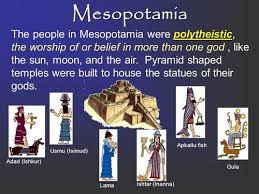
They practiced Polytheism which is the belief in more than one god.

3
Gods and Goddesses
Each god or goddess was responsible for a specific aspect of nature such as fresh water, healing, or farming.
The gods were shared throughout Mesopotamia but it was believed that each city state had a certain god that lived there to look after and protect them.
4
Ziggurats
In order to honor their gods and goddesses and to ensure their presence in the city, Mesopotamians built large religious monuments called ziggurats.
Each ziggurat was dedicated to a specific god and resembled an Egyptian pyramid. The ziggurat gave the gods a place to stay in hopes that they would remain present in the city, offering greater protection.

5
Religion
Mesopotamians believed that all of the land and everything on it belonged to the gods, therefore everything they did was for the gods.
They made offerings to the gods and goddesses.

6
Social Pyramid
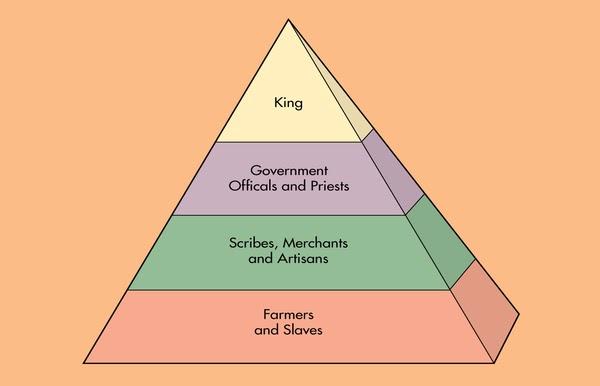
The specialization of labor in Mesopotamia led to the social classes that shaped society.
An individual's work determined the social class to which he or she belonged to. Social classes were rigid and most of the time children were expected to pursue the same occupation as their parents.
7
Leadership and the Elite
Since the King was believed to have gotten his power from the gods, he was at the head of the Mesopotamian society.
The King had many responsibilities such as being responsible for the spiritual lives and the safety of the people, making laws, collecting taxes, and leading an army to protect the people from invaders.

8
Priests
After the King and his officials, priests held the most power.
Priests were responsible for making offerings to their gods in hope that the gods would look favorably upon the city state. Because of this the residents in the city states supported the priests.

9
The Working Class in Mesopotamia
The working class in Mesopotamia consisted of Merchants, Artisans, and Scribes and farmers.
Merchants, Artisans, and Scribes held a higher and more powerful place in society than farmers.
10
SCRIBES
As Mesopotamians developed a writing system called cuneiform, scribes, or public writers, became very important members of society.
Scribes were in charge of writing everything down and kept important records.

11
Merchants
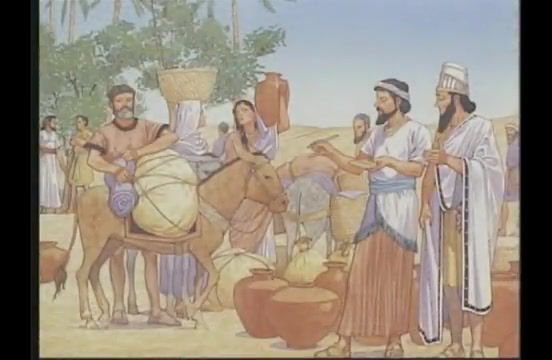
Mesopotamia became a prosperous civilization because of it's vibrant trade. Mesopotamian city-states were in a prime location for trade as they were in between the other city-states in the Indus River valley to the east and the Egyptian kingdom to the west.
Merchants in the Mesopotamian city-states traded with each other and with other ancient civilizations.
12
Artisans
Artisans were crafts people who specialized in making particular goods.
Some examples of Artisans in Ancient Meopotamia were bakers, potters, iron workers and weavers.

13
Farmers
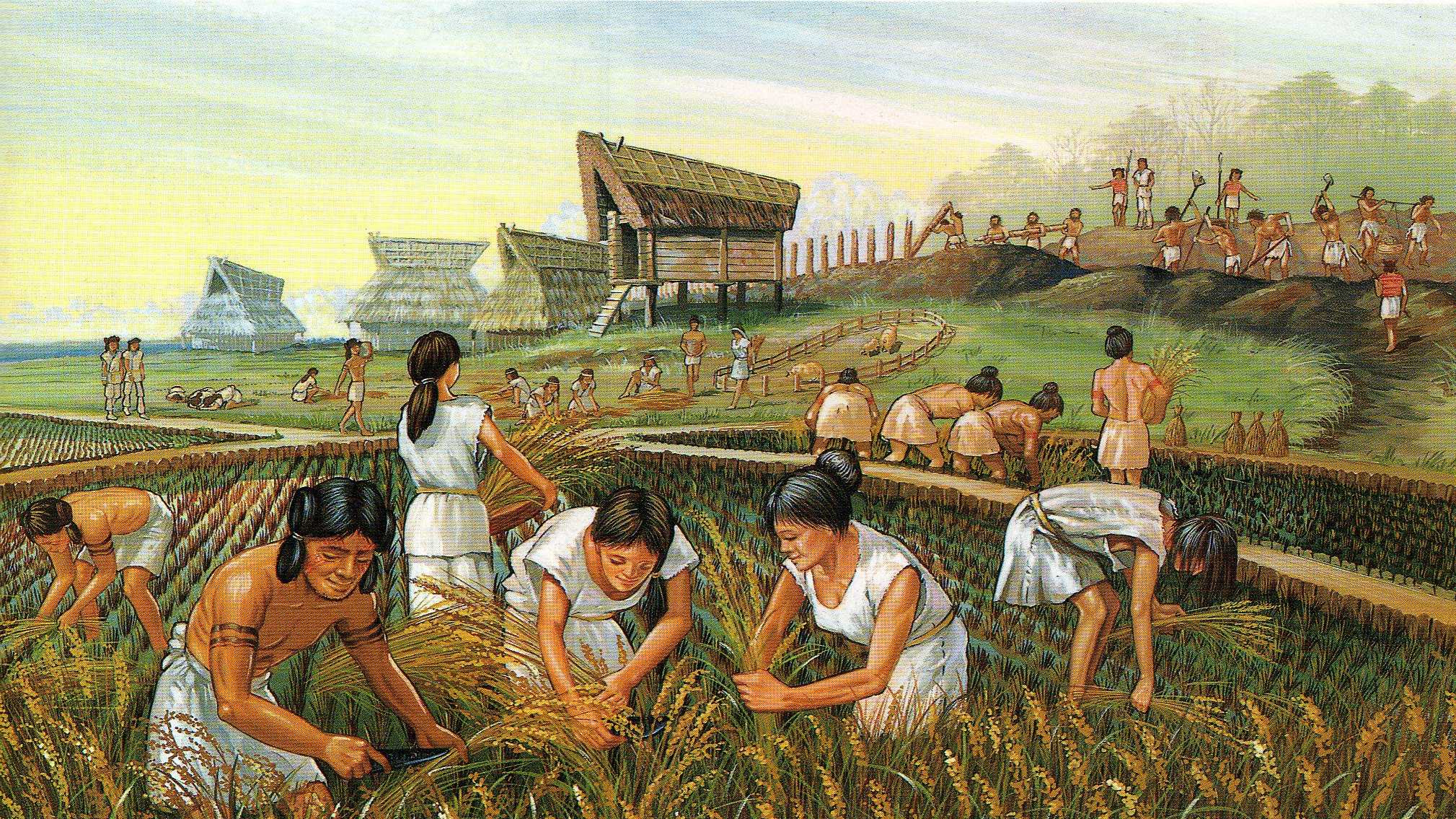
Although farmers were part of the working class in Mesopotamia they were ranked lower in the social class pyramid than Scribes, Merchants, and Artisans. Peasants farmed the land and a certain amount of the crops were given to the King and priests.
Because farmers were able to ensure a stable food supply, other Mesopotamians were able to focus on making crafts, defending the city, and trading with other civilizations.
14
Enslaved People
Enslaved people were at the bottom of the social pyramid.
People could be enslaved for several reasons: 1) prisoneres that were captured during a war 2) criminals ordered into slavery for their punishment 3) people who fell into debt. Some people were able to work their way out of slavery.

15
Men in Mesopotamia
Mesopotamia was a patriarchal society which means the men held the power in matters of government and family.
Men made up most of the political and religious leadership as well as making the household decisions such as who did what work and who marries who.

16
Women's Role in Mesopotamia
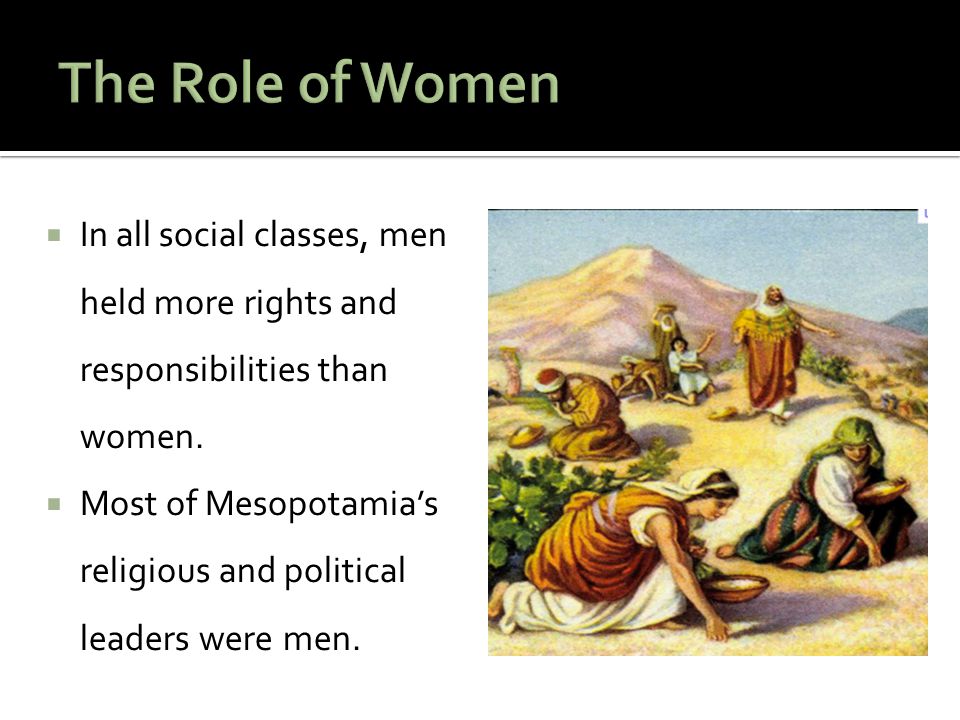
Women's roles in society were clearly defined as wives, mothers, or daughters. They primarily took care of the children, made clothing, worked in the garden and baked bread and other food.
Girls were not taught to read and write unless they were from an elite family. They sometimes were allowed to work at jobs outside of the home such as bakers or in a tavern.
17
18
Ancient Mesopotamian Society
Show answer
Auto Play
Slide 1 / 18
SLIDE


