Search Header Logo
  1. Resource Library
  2. Science
  3. Biology
  4. Nervous System
  5. The Central And Peripheral Nervous System
The central and peripheral nervous system

The central and peripheral nervous system

Assessment

Presentation

Science

9th Grade

Practice Problem

Easy

NGSS
HS-LS1-3

Standards-aligned

Created by

Kate Sugarman

Used 30+ times

FREE Resource

16 Slides • 18 Questions

1

The central and peripheral nervous system

3.4 The central nervous system receives information from the peripheral nervous system (page 50-51)

Slide image

2

The Central Nervous System (CNS)

Is the control centre of the body.

All incoming messages and your responses to them are processed through your CNS.

3

Fill in the Blank

Type answer...

4

The Brain

  • The processing centre of the body - mainly concerned with survival.

  • Your brain is a soft heavy organ, protected by a tough skull.

  • The brain is home to your memories, personality and thought process.

Slide image

5

Lobes of the brain

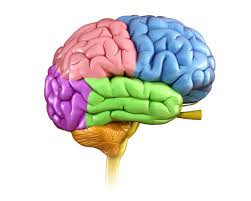
The cerebrum or outer section of your brain is divided into four lobes or sections which have specific functions.

6

The frontal Lobe

  • Located at the front of the brain.

  • Functions include emotions, reasoning, movement and problem solving.

Slide image

7

The Parietal Lobe

  • Manages the perception of senses.

  • Including taste, pain, pressure, temperature and touch.

Slide image

8

The Temporal Lobe

  • Located in the region near your ears.

  • Deals with the recognition of sounds and smells.

Slide image

9

The Occipital Lobe

  • Located at the very back of the brain.

  • It is responsible for various aspects of vision.

Slide image

10

Multiple Choice

Question image

What lobe is pink in this picture?

1

Frontal

2

Parietal

3

Temporal

4

Occipital

11

Multiple Choice

Question image

What lobe is green in this picture?

1

Frontal

2

Parietal

3

Temporal

4

Occipital

12

Multiple Choice

Question image

What lobe is purple in this picture?

1

Frontal

2

Parietal

3

Temporal

4

Occipital

13

Multiple Choice

Question image

What lobe is blue in this picture?

1

Frontal

2

Parietal

3

Temporal

4

Occipital

14

Multiple Choice

Which lobe is responsible for hearing?

1

Frontal

2

Parietal

3

Temporal

4

Occipital

15

Multiple Choice

Question image

What does your occipital lobe do?

1

Processes your hearing

2

Processes your vision

3

Contains your personality

4

Processes your sense of touch

16

Multiple Choice

Question image

What does the parietal lobe do?

1

Processes your hearing

2

Processes your vision

3

Contains your personality

4

Processes your sense of touch

17

Multiple Choice

Question image

What does the frontal lobe do?

1

Processes your hearing

2

Processes your vision

3

Contains your personality

4

Processes your sense of touch

18

The Peripheral Nervous System

The PNS is made up of all nerves outside of the CNS.

The PNS carries information to and from the CNS to the rest of the body, such as limbs and organs

19

Slide image


20

The PNS is divided into two parts.

The somatic and automatic nervous system

21

The Somatic Nervous System

  • Controls voluntary skeletal muscle movements.

  • Eg. waving or reaching out to take an object

Slide image

22

The Autonomic nervous system

  • Controls involuntary actions - happen without conscious control.

  • Examples include: heartbeat, digestion, respiration, salivation and perspiration.

  • This system maintains your body's internal environment (homeostasis).

Slide image

23

The Autonomic nervous system has two parts.

The sympathetic and parasympathetic division - which work together to maintain balance in the body.

24

Sympathetic

  • Prepares you for action!

  • eg. speeds up your heart rate

Slide image

25

Parasympathetic

  • Calms you down

  • eg. slows down the heart rate.

Slide image

26

Multiple Choice

The slowing of your heartbeat is part of the

1

sympathetic division

2

parasympathetic division

27

Multiple Choice

increased heart rate is part of the

1

sympathetic division

2

parasympathetic division

28

Multiple Choice

The _____part of the autonomic nervous system is active during resting.
1
sympathetic
2
parasympathetic
3
somatic
4
peripheral

29

Multiple Choice

The Peripheral Nervous System is divided into the Somatic System and the Autonomic System

1

True

2

False

30

Multiple Select

Question image

The Autonomic part of the Peripheral Nervous System is split into two parts, select them

1

Central Nervous System

2

Sympathetic

3

Parasypathetic

4

Somatic

31

Multiple Choice

Question image

What does the somatic system do? (the somatic system is part of the Peripheral Nervous System)

1

It speeds up functions of the body ready for fight or flight

2

it slows down functions of the body ready for rest and digest

3

It consists of all the neurons outside of the Central Nervous System

4

It is used for actions that you control (reaching out and grabbing something) and sensing stimuli

32

Multiple Choice

You see a friend and wave, which part of you PNS is causing this?

1

Somatic

2

Autonomic

3

Sympathetic

4

Parasympathetic

33

Multiple Choice

Alexa is presenting a project in front of her class. She starts sweating and her heart rate increases. This is an example of the autonomic nervous system, sympathetic division.

1

True

2

False

34

Multiple Choice

Which one coordinates the inner organs?

1

somatic nervous system

2

autonomic nervous system

The central and peripheral nervous system

3.4 The central nervous system receives information from the peripheral nervous system (page 50-51)

Slide image

Show answer

Auto Play

Slide 1 / 34

SLIDE