Study Guide for Module 1
Presentation
•
Science
•
6th - 7th Grade
•
Medium
+19
Standards-aligned
Felicia Raymundo
Used 22+ times
FREE Resource
26 Slides • 60 Questions
1
Study Guide for Module 1 Forces and Energy

2
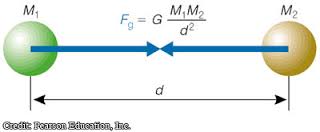
Gravity Vocabulary
Gravity
A force that exists between objects that have mass, and that pulls them together
Mass
Amount of matter/atoms in an object
Weight
Pull of gravity on an object’s mass
3
Mass vs. Weight - Mass
An object will always have MASS
Mass is indestructible
Amount of atoms that is in an object does not change due to gravity pulling
4
Mass vs. Weight - Weight
Is the measure of the strength of gravity pulling an object.
The amount of force on an object can change due to location.
5
Gravity - Two Requirements
Mass of the objects (bigger = stronger)
Distance between the objects (farther = weaker)
6
Multiple Choice
7
Multiple Choice
8
Multiple Choice
9
Multiple Choice
10
Multiple Choice
11
Multiple Choice
The force of gravity is related to the masses of objects attracting each other. Which planet has the greatest mass?
Mercury 3.7
Jupiter 23.1
Neptune 11.0
12
Multiple Choice
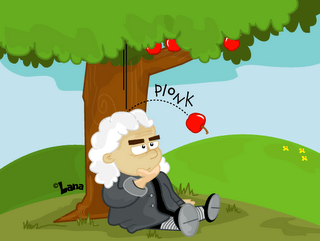
A student drops a bowling ball and an apple from a third-story window. Both objects hit the ground at the same time. From the experiment, the student should conclude that
the apple weighs more than the bowling ball
more air friction is acting on the apple than on the bowling ball
gravity pulls on both objects, causing them to fall at the same time.
13
Dropping Objects of Different Mass
https://youtu.be/xZs9rve5LdY
https://youtu.be/BF2Ic50m7kQ
14
Multiple Choice
The gravitational force exerted by an object depends on its
volume
mass
weight
15
Multiple Choice
Which is needed to determine the amount of gravitational force between two objects?
distance and mass
weight and time
area and weight
16
Multiple Choice
When placed at equal distances apart, the greatest gravitational attraction will be between two
skateboards
bowling balls
school buses
17
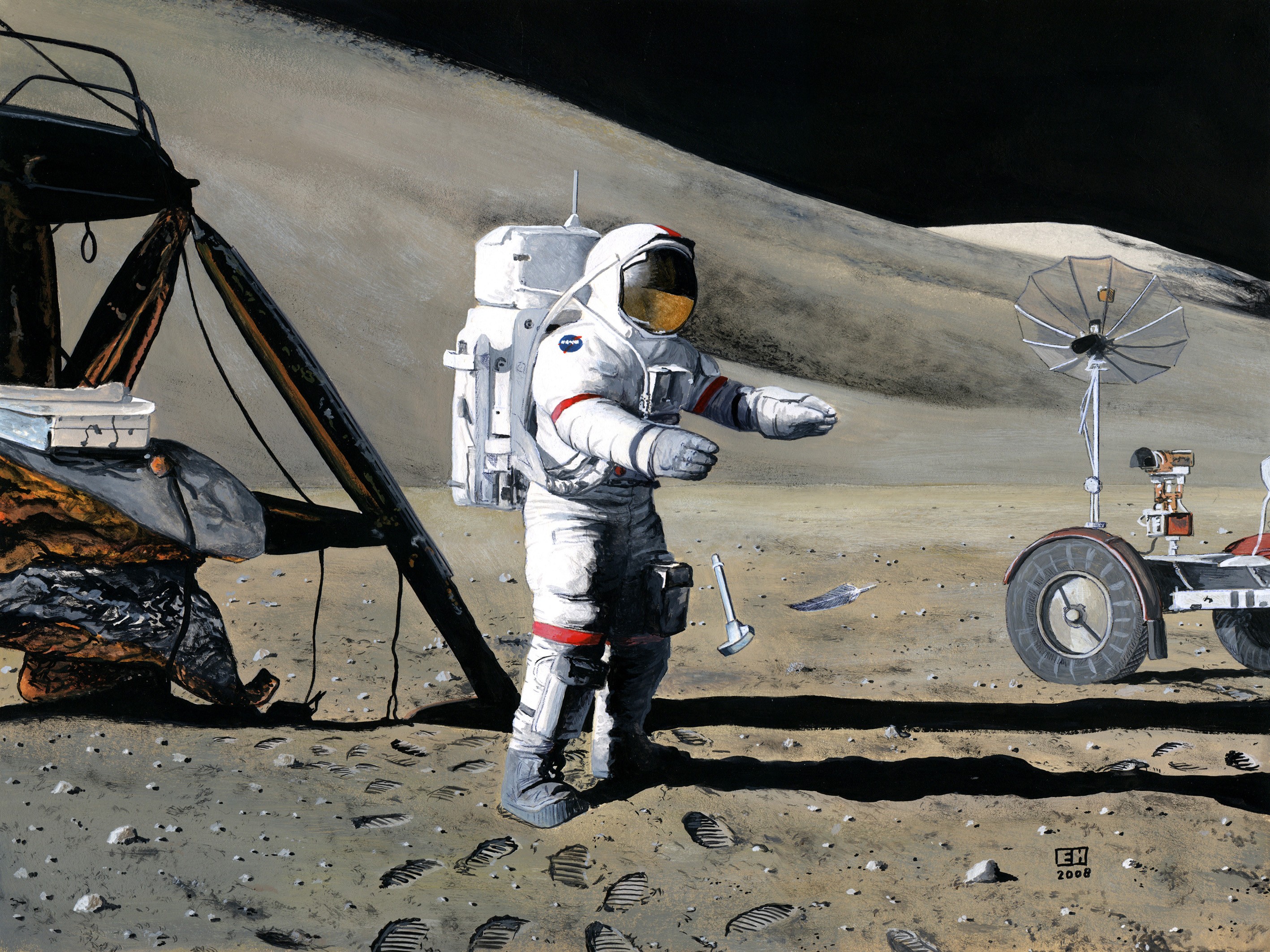
David Scott
Feather and Hammer drop on the Moon
https://youtu.be/Oo8TaPVsn9Y
18
Forces
Contact forces
Noncontact forces
19
Contact Force
An object is touched and it moves
20
Noncontact Force
An object is not touched and it moves
21
22
Multiple Choice
An icy road has less __________ than a dry road.
friction
gravity
magnetism
water
23
Multiple Choice
Applied force is an example of a _________________ force.
contact
non-contact
balanced
unbalanced
24
Multiple Choice
______________ is a force that always acts in the direction opposite of motion.
applied
friction
gravity
normal
25
Multiple Choice
Magnetic Force is an example of ____________ force.
contact
non-contact
balanced
unbalanced
26
Multiple Choice
Friction is a
Contact Force
Myth
Non-contact Force
27
Multiple Choice
Gravity is a
Contact Force
Myth
Non-contact Force
28
Multiple Choice
The three examples pictured are of
Non-contact Forces
Contact Forces
29
Multiple Choice
A non-contact force is between
two objects that aren't touching
two objects that are touching
the ground and wheels
you and me
30
Multiple Choice
A contact force is from
objects physically touching
far apart objects
not touching object
always a pull
31
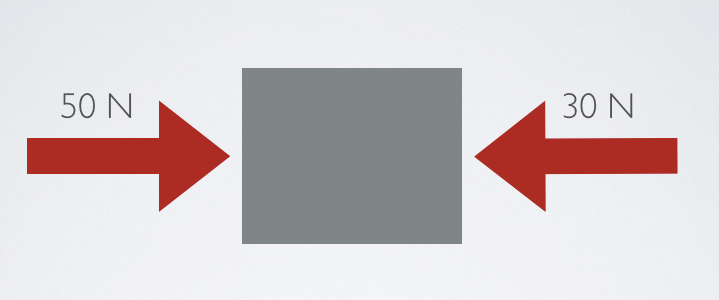
Balanced Force
Is when an equal force is pulling in the opposite direction and another force is pushing it.
32
33
Unbalanced Force
When a force is pulling an object and another force is pushing the object and one force is greater than the other
34
35
Multiple Choice
36
Multiple Choice
37
Multiple Choice
These forces are...
Balanced
Unbalanced
38
Multiple Choice
These forces are...
Balanced
Unbalanced
39
Multiple Choice
40
Multiple Choice
41
Multiple Choice
42
Multiple Choice
43
Magnetism/Magnetic Force
noncontact force that pulls object containing iron, nickel, or cobalt
an attractive or repulsive force between electrically charged particles
44
Electromagnetism
A combined force of electricity and magnetism
Measured in Amperes (A)
https://youtu.be/sFC7-WVNUP8
45
Bill Nye the Science Guy
Electromagnetism
https://youtu.be/sFC7-WVNUP8
46
Multiple Choice
The area of magnetic force around a magnet is known as its ____________.
magnetism
magnetic current
magnetic field
electric current
47
Multiple Choice
What happens when an electric current flows through a wire?
The wire begins to spin.
Nothing happens.
A field of gravity is created around the wire.
A magnetic field is created around the wire.
48
Multiple Choice
What happens to the strength of a magnetic field as you move away from the magnet?
The strength of the magnetic field increases.
The strength of the magnetic field doesn't change.
The strength of the magnetic field is doubled.
The strength of the magnetic field decreases.
49
Scientific Laws
a statement about how things act in the natural world. It is based on observations, and it is always true under the same conditions
Law of universal gravitation
Law of conservation of mass
50
Newton's first law of motion
inertia - a body at rest will stay at rest until it is acted upon by another object
51
Multiple Select
Inertia refers to _____
the tendency of moving objects to remain in motion
the force which keeps moving objects in motion with a constant velocity
the force that keeps stationary objects at rest
the tendency of stationary objects to remain at rest
52
Multiple Choice
The law of inertia (Newton's first law) applies _____.
to moving objects only
only to objects that are not moving
to both moving and nonmoving objects
53
Multiple Choice
54
Multiple Choice
Which of these describes a natural phenomenon or relationship that always occurs under specific conditions
theory
law
55
Multiple Choice
Which of these can change when new evidence is presented?
theory
law
56
Speed and Motion
s = d/t
instantaneous speed - object's speed at one specific point in time.
average speed - takes into account the distanced traveled anf the total time it took to complete the journey.
57
Speed and Velocity
Speed - a measurement of how fast an object is moving over a certain amount of time
Velocity is both the speed and the direction of an object
58
Acceleration
Acceleration describes the rate of change of velocity over time
Velocity is speed and direction - so any change in speed or change in direction is acceleration.
59
Multiple Choice
60
Multiple Choice
61
Multiple Choice
62
Multiple Choice
63
Multiple Choice
64
Multiple Choice
Which statement is true about velocity?
Must have measurement of speed.
Must have a measurement of speed and direction.
Must have only direction.
Has neither a measurement of speed or direction.
65
Multiple Choice
66
Multiple Choice
67
Multiple Choice
68
Multiple Choice
69
Vocabulary.......
Constant speed - moves the same distance each second
Steepness - steep slope shows a fast speed
Slope - steepness of the line
70
Multiple Choice
71
Multiple Choice
72
Multiple Choice
What SI unit is used to measure length?
meters
liters
centimeters
kilograms
73
Multiple Choice
The SI unit for time is the __?__.
hours (h)
liter (L)
gram (g)
second (s)
74
Multiple Choice
75
Multiple Choice
76
Multiple Choice
77
Multiple Choice
78
Multiple Choice
79
Multiple Choice
80
Multiple Choice
81
Multiple Choice
82
Multiple Choice
83
Multiple Choice
84
Multiple Choice
85
Energy takes Work
Energy - the ability to do work; using force to move an object
gravitational potential energy - the energy stored in an object due to it's height
elastic potential energy - energy stored in elastic materials due to the stretching of the material
translation kinetic energy - energy due to motion from one location to another
86
Energy
Mechanical Energy
Electrical Energy
Chemical Energy
Thermal Energy
Sound Energy
Study Guide for Module 1 Forces and Energy

Show answer
Auto Play
Slide 1 / 86
SLIDE

Similar Resources on Wayground
78 questions
Sp 1 - Resource Book - LP Practice
Lesson
•
6th - 8th Grade
82 questions
FF6 Total Revision
Lesson
•
6th Grade
82 questions
Impact on Land
Lesson
•
6th Grade
78 questions
7.LS.1.2-DAY 2: Passive Transport — Diffusion and Osmosis
Lesson
•
7th Grade
78 questions
DNA-> Traits QUIZ
Lesson
•
7th Grade
83 questions
Ch.10 Monroe-Era of Good Feeling
Lesson
•
7th Grade
82 questions
New world 1 Review 1
Lesson
•
6th - 7th Grade
77 questions
2425_T1_WW3 - Reviewer
Lesson
•
7th Grade
Popular Resources on Wayground
10 questions
5.P.1.3 Distance/Time Graphs
Quiz
•
5th Grade
10 questions
Fire Drill
Quiz
•
2nd - 5th Grade
20 questions
Equivalent Fractions
Quiz
•
3rd Grade
15 questions
Hargrett House Quiz: Community & Service
Quiz
•
5th Grade
20 questions
Main Idea and Details
Quiz
•
5th Grade
20 questions
Context Clues
Quiz
•
6th Grade
20 questions
Inferences
Quiz
•
4th Grade
15 questions
Equivalent Fractions
Quiz
•
4th Grade
Discover more resources for Science
20 questions
Rocks and The Rock Cycle
Quiz
•
6th Grade
19 questions
Introduction to Properties of Waves
Lesson
•
6th - 8th Grade
16 questions
Interactions within Ecosystems
Lesson
•
6th - 8th Grade
10 questions
Exploring the Layers of the Earth
Interactive video
•
6th - 10th Grade
20 questions
Electricity and Circuits
Quiz
•
7th Grade
16 questions
Photosynthesis and Cellular Respiration Review
Quiz
•
7th Grade
15 questions
Punnett Squares
Quiz
•
6th Grade
8 questions
VP #9: Amoeba Sisters Pedigrees
Interactive video
•
7th Grade