


Text Features and Text Structures
Presentation
•
English
•
6th Grade
•
Practice Problem
•
Medium
+5
Standards-aligned
Yvette Gonzalez
Used 121+ times
FREE Resource
11 Slides • 14 Questions
1
Text Features and Text Structures
Text Features are the way the author wants you to see the information and text structures are the way the author wants you to read the information.
2
GRAPHICAL FEATURES AKA TEXT FEATURES
When you encounter graphic features in texts, use these questions.
What graphic features are present in the text and what is the purpose of each feature? How do the graphic features relate to the information provided in the text? How do the features and the words of the text work together to support the author’s purpose and meaning?
3
GRAPHICAL FEATURES AKA TEXT FEATURES
When you encounter graphic features in texts, use these questions.
What is the text about?
What graphic features are present in the text and what is the purpose of each feature?
How do the graphic features relate to the information provided in the text?
How do the features and the words of the text work together to support the author’s purpose and meaning?
4
Text Features
https://www.flocabulary.com/unit/text-features/video/
5
Multiple Choice
Using the image above, what is a glossary?
An alphabetical list of important words and their definitions.
Tells the name of chapters and what page the chapters can be found.
A picture labels parts of an object.
Shows where places/events are located.
6
Multiple Choice
7
Multiple Choice
8
Multiple Choice

9
Multiple Choice
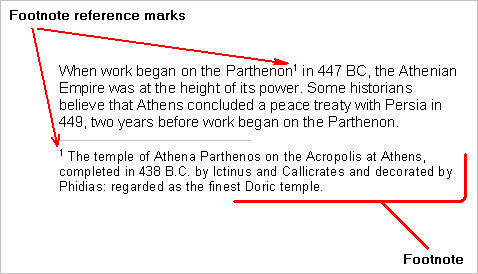
10
Multiple Choice
11
Multiple Choice
12
Multiple Choice
13
Multiple Choice
14
Text Structures/ Organizational patterns
Are the way the author wants you to read the information.
15
Compare and Contrast
a text structure in which an author explains how topics are similar and different.
16
Description
a text structure in which an author tells about a topic and its characteristics with details and adjectives.
17
Problem and Solution
a text structure in which an author explains a problem and how it was solved.
18
Chronological Order/Sequence
a text structure in which authors tell about events in the order they happened. It's also called "time order" or "chronology."
19
Cause and Effect
a text structure in which an author explains causes, things that make other things happen, and effects, the things that happen as a result of causes.
20
Text Structure/Organizational Patterns
https://www.flocabulary.com/unit/text-structure/video/
21
Multiple Choice
A patent can protect your ideas, but filing for one is neither cheap nor easy. Before you waste a bunch of time and money, conduct a search to see if your idea has already been patented. You can do this from the USPTO website. If your idea hasn't been patented, then you may complete a patent application. Submit your completed patent application and pay the appropriate filing fees. Twelve to thirty-six months later, a USPTO agent will either issue or deny your patent. If your patent is denied, you may file a reconsideration request. If your patent is approved, you will own the rights to that idea. You’ll feel comfortable taking your idea into the wild once it is patented.
Sequence/Order of Importance
Chronological
Cause/Effect
Problem/Solution
22
Multiple Choice
Wild chimpanzees are rapidly disappearing. Some people are trying to solve this problem. Otherwise, chimpanzees may one day exist only in zoos. People are trying to save the rain forests and woodlands where the chimps live from being cut down. It will take many people working together to solve this problem
Compare/Contrast
Chronological
Problem/Solution
Sequence/Order of Importance
23
Multiple Choice
Identify the Text Structure:
Tornados form when wind speeds at two different altitudes, or heights, are different,causing a horizontal, rotating column of air. A funnel cloud is created when the column of air gets caught in a large thunderstorm called a supercell. When it meets the supercell, the rotating column speeds up and the rain and hail in the thunderstorm cause the funnel to touch down.
Cause & Effect
Compare & Contrast
Problem &Solution
24
Multiple Choice
Identify the Text Structure:
Even though both Disney World and Disney Land were built by Walt Disney himself, they are not the same theme park. Built in 1971 in Orlando, Florida, the main park at Disney World, The Magic Kingdom, features a huge Cinderella Castle. Disney Land, on the other hand, was built in 1955 in California and features Sleeping Beauty’s Castle. While Disney World has four different theme parks, Disney Land only has two. Even with their differences, they are both popular tourist destinations for children and adults!
Compare & Contrast
Cause & Effect
Problem & Solution
25
Multiple Choice
Identify the Text Structure:
The Magic Kingdom is the first built of four theme parks at Walt Disney World. It opened on October 1971, and the park features rides and shows related to major Disney characters and fairy tales. Symbols of The Magic Kingdom include Cinderella’s Castle, Main Street USA, and rides like the famous Space Mountain coaster.
Description
Cause & Effect
Compare & Contrast
Text Features and Text Structures
Text Features are the way the author wants you to see the information and text structures are the way the author wants you to read the information.

Show answer
Auto Play
Slide 1 / 25
SLIDE

Similar Resources on Wayground
19 questions
Text Structure
Lesson
•
6th Grade
19 questions
Paragraphs
Lesson
•
6th Grade
18 questions
Compound and Collective Nouns
Lesson
•
6th Grade
18 questions
CHARACTERIZATION
Lesson
•
6th Grade
20 questions
main ideas
Lesson
•
6th Grade
20 questions
Geography
Lesson
•
6th Grade
20 questions
Superheroes
Lesson
•
6th Grade
19 questions
Inference & Text Evidence
Lesson
•
6th Grade
Popular Resources on Wayground
10 questions
5.P.1.3 Distance/Time Graphs
Quiz
•
5th Grade
10 questions
Fire Drill
Quiz
•
2nd - 5th Grade
20 questions
Equivalent Fractions
Quiz
•
3rd Grade
15 questions
Hargrett House Quiz: Community & Service
Quiz
•
5th Grade
20 questions
Main Idea and Details
Quiz
•
5th Grade
20 questions
Context Clues
Quiz
•
6th Grade
20 questions
Inferences
Quiz
•
4th Grade
15 questions
Equivalent Fractions
Quiz
•
4th Grade
Discover more resources for English
20 questions
Context Clues
Quiz
•
6th Grade
20 questions
Figurative Language Review
Quiz
•
6th Grade
18 questions
Informative or Argumentative essay
Quiz
•
5th Grade - University
20 questions
Capitalization & Punctuation
Quiz
•
5th - 7th Grade
29 questions
6th Grade STAAR Reading Vocabulary Review
Quiz
•
6th Grade
12 questions
Final Figurative Language Review
Lesson
•
6th - 8th Grade
14 questions
Organizational Patters/ Text Structure
Interactive video
•
6th - 8th Grade
25 questions
Making Inferences
Quiz
•
6th - 8th Grade