
Heat Transfer and Kinetic Model Quiz
Presentation
•
Physics
•
10th Grade
•
Easy
+2
Standards-aligned
Mdm Tan
Used 2+ times
FREE Resource
10 Slides • 34 Questions
1
Heat Transfer and Kinetic Model Quiz
2
Transfer of Thermal Energy
3
Multiple Choice
Near the ceiling of a room the air is warmer. The warm air rises because of
its higher density
its lower density
the fan blows it
4
Multiple Choice
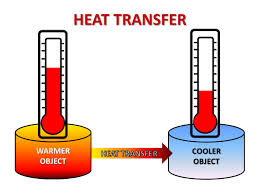
Heat transfers from an area of ___ temperature to an area of ___ temperature.
high, low
low, high
high, high
low, low
doesn't really matter
5
Multiple Choice
Transfer of thermal energy through direct contact / "touch"
conduction
convection
radiation
6
Multiple Choice
Transfer of thermal energy through movement of liquids and gases (aka fluids)
conduction
convection
radiation
7
Multiple Choice
Transfer of thermal energy through vacuum or air
conduction
convection
radiation
8
Multiple Choice
9
Multiple Choice
10
Multiple Choice
A huge rock at the Hort Park gets so hot during the day because of
conduction
convection
radiation
11
Multiple Choice
12
Multiple Choice
Johnny grabs the handle of the hot pot and it feels warm.
conduction
convection
radiation
13
Multiple Choice
Ironing a shirt is an example of...
conduction
convection
radiation
14
Multiple Choice
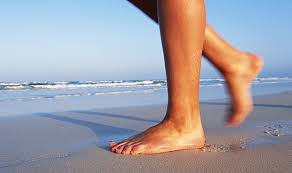
Walking on the sand with bare feet and you feel the sand is warm. This demonstrates
conduction
convection
radiation
15
Multiple Choice
16
Multiple Choice
17
Multiple Choice
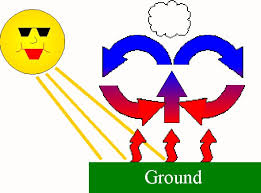
Warm air rises and the cool air sinks demonstrates this type of heat transfer.
conduction
convection
radiation
18
Multiple Choice
The way the heat is moving from the hot coffee is called...
conduction
convection
radiation
19
Multiple Choice
When a pot is touching a stove that is on, what heat transfer is happening?
Conduction
Convection
Radiation
20
Multiple Choice
Which of the following is needed for convection to happen?
Fire
Fluid
Electromagnetic waves
Light or rays
21
Multiple Choice
What heat transfer happens when you burn your hand by touching a fire?
Conduction
Convection
Radiation
22
Multiple Select
Which of the followings are examples of convection?
(2 answers)
When a hair dryer is drying up your hair.
When the air conditioner or heater cools or heats up a room.
When a car engine turns hot after being turned on.
When you are making soup, the water is rising and falling.
23
Multiple Choice
What kind of heat transfer happens when you are sunbathing at the beach?
Conduction
Convection
Radiation
24
Multiple Choice
Which is correct about convection?
when heat transfers through electromagnetic waves
when heat transfers through objects that are touching
a hot liquid or air that expands, becomes less dense and rises
25
Multiple Choice
Which is correct about conduction?
when heat transfers through electromagnetic waves
when heat transfers through objects that are touching
a hot liquid or air that expands, becomes less dense and rises
26
Multiple Choice
Thermal energy always moves:
From a higher density object to a lower density object.
From a higher temperature object to a lower temperature object.
From a colder object to a warmer object.
From a heavier object to a lighter object.
27
Transfer of Heat
Heat or Thermal energy always moves from a hotter object to a colder object. Hot object possesses more thermal energy than cold object.
28
Kinetic Model of Matter Questions
Some questions come with explanation after you submitted the answer. Do read through the explanation to better answer the subsequent questions.
Happy Playing!
29
Multiple Choice
When the temperature of a matter decreases the particles ...
speed up and move farther apart
speed up and move closer together
slow down and move farther apart
slow down and move closer together
30
Multiple Choice
31
Heating and Arrangement of Particles
When a matter is heated, the particles gain kinetic energy and moves faster and further from one another. This makes volume of the matter increases and the matter expands.
The particles in the matter can NEVER change size.
32
Multiple Choice
Two states of matter are described as follows.
In state 1, the molecules are very far apart. They move about very quickly at random in straight lines until they hit something.
In state 2, the molecules are quite closely packed together. They move about at random. They do not have fixed positions.
What is state 1 and what is state 2?
state 1 is gas and state 2 is liquid
state 1 is gas and state 2 is solid
state 1 is liquid and state 2 is gas
state 1 is solid and state 2 is liquid
33
Multiple Choice
When ice melts into water,
the intermolecular force weakens and the molecules move faster.
the intermolecular force weakens and molecules move further from one another.
the intermolecular force becomes stronger and the molecules move slower.
the intermolecular force becomes stronger and the move nearer to one another
34
Change of State and Motion of Particles
When changing state (e.g. melting), the temperature of the matter stays constant (e.g. at melting point). This means the average kinetic energy of the particles remains the same too. Hence, the particles did not move faster, but only move further from one another to form liquid.
35
Multiple Choice
36
Density and Arrangement of Particles
When the particles in a matter are closely packed, the density of the matter is higher. Hence, density of a matter is highest for solid, followed by liquid and lastly gas.
37
Multiple Choice
What would be the change when heat is supplied to a gas?
The particles in the matter expand tremendously.
The particles move randomly in all directions.
The average kinetic energy of the particles increases.
The gas contract and occupy lesser space.
38
Multiple Choice
Which of the following is not a property of a solid?
It expands a little when heated compared to a liquid
It takes any shape of a container
It is cannot be compressed
It usually has a higher density than a gas
39
Multiple Choice
40
Multiple Choice
41
How do we see colour?
(not in syllabus, for information only) Our eyes see colour when the object reflect the light into our eyes. Red apple reflects red component of white light, green grass reflect green component of white light and black hair reflect no light.
42
Multiple Choice
Which of the following explains why solids cannot be compressed?
Solids have a large number of particles per unit volume.
Solids have closely packed particles.
Solids have particles arranged in regular pattern.
Solids have particles which vibrate about fixed positions.
43
Compressibility and Arrangement of Particles
Matter can only be compressed if there is space between the particles in the matter. The motion of the particles (though affected by the forces between the particles and will affect the arrangement of the particles) does not affect the compressibility of a matter.
44
Congratulations for finishing the quiz! Have a great holiday!
Heat Transfer and Kinetic Model Quiz

Show answer
Auto Play
Slide 1 / 44
SLIDE

Similar Resources on Wayground
37 questions
Macromolecules
Lesson
•
9th - 10th Grade
42 questions
SSWH15 Industrialization and Urbanization
Lesson
•
10th Grade
43 questions
1.3 Newton's Laws
Lesson
•
9th Grade
41 questions
Transfer of Energy
Lesson
•
9th - 10th Grade
36 questions
Subject Verb Agreement
Lesson
•
KG - 9th Grade
40 questions
Circle Vocabulary Part 1
Lesson
•
10th Grade
37 questions
Unit 10 Test Review: Current Electricity
Lesson
•
11th Grade
39 questions
Current Voltage Power
Lesson
•
10th Grade
Popular Resources on Wayground
15 questions
Fractions on a Number Line
Quiz
•
3rd Grade
14 questions
Boundaries & Healthy Relationships
Lesson
•
6th - 8th Grade
13 questions
SMS Cafeteria Expectations Quiz
Quiz
•
6th - 8th Grade
20 questions
Equivalent Fractions
Quiz
•
3rd Grade
25 questions
Multiplication Facts
Quiz
•
5th Grade
12 questions
SMS Restroom Expectations Quiz
Quiz
•
6th - 8th Grade
20 questions
Main Idea and Details
Quiz
•
5th Grade
10 questions
Pi Day Trivia!
Quiz
•
6th - 9th Grade