Search Header Logo
USAP Section 1 Foundations of astronomy B

USAP Section 1 Foundations of astronomy B

Assessment

Presentation

Physics, Science

7th - 9th Grade

Medium

NGSS
HS-ESS1-4, HS-PS4-1, MS-PS4-2

+3

Standards-aligned

Created by

Michelle Zou

Used 2+ times

FREE Resource

6 Slides • 40 Questions

1

USAP Section 1 Foundations of astronomy B

Slide image

2

THERMAL RADIATION

All matter

that has a temperature above 0 K (“absolute zero”) radiates electromagnetic waves, which is known as thermal radiation.

Slide image

3

Multiple Choice

What happens when objects become as hot as 800K?

1

We can see that they begin to glow

2

They radiate infrared waves and we can see that

3

They radiate infrared waves but we cannot detect that

4

Nothing happens

4

Multiple Choice

Question image

Blackbody curves also tell astronomers about the ___ of an object (like a star).

1

rotational energy

2

temperature

3

distance

4

composition

5

Multiple Choice

Question image

___ law states that the hotter an object is the "bluer" (shorter wavelengths) its radiation.

1

Wien's

2

Stefan's

3

Plank's

4

Newton's

6

Multiple Choice

Question image

A blackbody curve on a graph tells us how an object releases

1

radio waves according to Planck's constant.

2

light through a black hole's event horizon.

3

radiation over different frequencies.

4

heat over time.

7

Telescope

Optical Astronomy

Radio Astronomy

Infrared Astronomy

Ultraviolet, X-Ray, and Gamma Ray

Astronomy

Slide image

8

Multiple Choice

Electromagnetic radiation is simply known as 
1
light
2
refraction
3
reflection
4
time

9

Multiple Choice

Question image
1
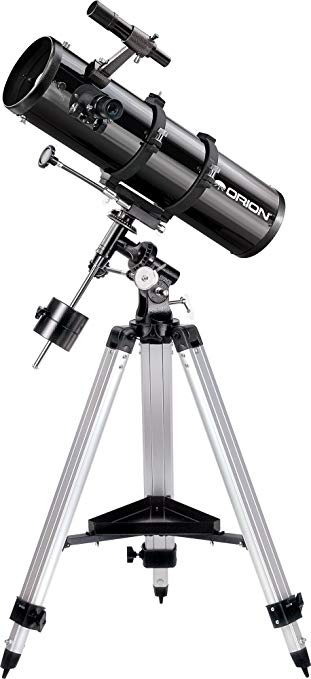
reflection telescope
2
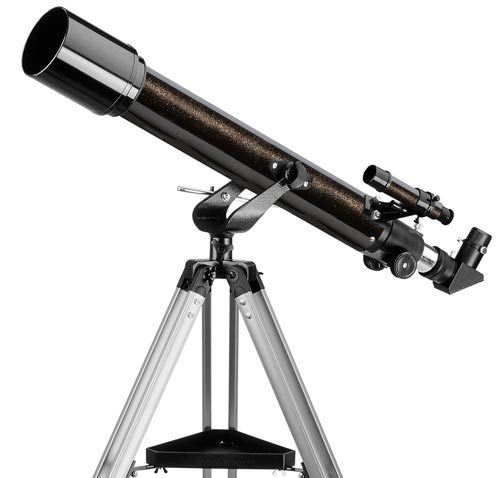
refraction telescope
3
radio telescope

10

Multiple Choice

Question image

What is it?

1

reflection telescope

2

refraction telescope

3

radio telescope

11

Multiple Choice

Refracting telescopes _______ light.

1

Move

2

See

3

Curved Mirrors

4

Bend

12

Multiple Choice

Question image

Reflecting telescopes use _______ to focus light.

1

Lenses

2

Flat mirrors

3

Curved Mirrors

4

A lens and lasers

13

Multiple Choice

Question image

A refracting telescope uses _______ to focus light.

1

Lenses

2

Mirrors

3

Lasers

4

Water

14

Multiple Choice

What telescope has two mirrors to reflect the light into an eyepiece located at the back of the telescope?

1

Newtonian Telescope

2

Hubble Telescope

3

Cassegrain Telescope

4

Radio Telescope

15

Multiple Choice

Question image

What is the name of this part?

1

objective lens

2

eyepiece/ocular lens

3

diaphragm

4

slide

16

Multiple Choice

Question image

What type of telescope is the Hubble Telescope?

1

Refracting

2

Cassegrain Reflecting

3

Prime Focus Reflecting

4

Newtonian Reflecting

17

Multiple Choice

Question image

The focal length is...

1

the distance from the light source to the image.

2

the distance from the object to the centre of the lens.

3

the distance from the image to the centre of the lens.

4

the distance from the focal point(image) to the centre of the lens.

18

Telescope

Optical Astronomy

Radio Astronomy

Infrared Astronomy

Ultraviolet, X-Ray, and Gamma Ray

Astronomy

Slide image

19

Multiple Choice

Which of the following used radio waves to make pictures of space?

1

Computers

2

Light Bulbs

3

Microscopes

4

Kaleidoscopes

20

Multiple Choice

Which type of telescope collects radio waves instead of light?

1

Optical

2

Molecule

3

Radio

4

Speed

21

Multiple Choice

Which telescope is the biggest?

1

Radio Telescope

2

Refracting Telescope

3

Reflecting Telescope

22

Multiple Choice

Which of the following is not an optical telescope?

1

Reflecting telescope

2

Radio telescope

3

Refracting telescope

23

Telescope

Optical Astronomy

Radio Astronomy

Infrared Astronomy

Ultraviolet, X-Ray, and Gamma Ray Astronomy

Slide image

24

Multiple Choice

Why must Ultra-Violet observing be done in space?
1
The ozone blocks most of the UV rays in the surface.
2
It’s hard to know exactly where the ozone hole will be to find UV images
3
It’s hard to use UV telescopes and radio telescopes together on the surface.
4
It’s hard to use UV X-Ray telescopes and radio telescopes together on the surface

25

Multiple Select

Question image

What types of telescopes have to be placed in space? (Choose all that apply)

1

X-ray Telescopes

2

Gamma ray Telescopes

3

Infrared Telescopes

4

Radio Telescopes

26

Review


27

Multiple Choice

Question image
This person bought coffee and put it on the seat next to them. If they stopped quickly and the coffee spilled which law would that represent?
1
Newton's 1st Law
2
Newton's 2nd Law
3
Newton's 3rd Law

28

Multiple Choice

According to Newton’s first law of motion, a moving object that is not acted on by an unbalanced force will
1
remain in motion.
2
eventually come to a stop.
3
change its momentum.
4
accelerate.

29

Multiple Choice

According to Newton's second law, if you increase the force applied to an object :
1
it accelerates more
2
it doesn't move
3
you get more inertia
4
it decelerates

30

Multiple Choice

What is Kepler's 3rd law?

1

The planets orbit in an ellipse

2

The plants move faster when they are closer to the sun and slower when they are further from the sun

3

The farther a planet is from the sun the slower the orbit

(P2 = a3)

31

Multiple Choice

What is Kepler's 2nd law?

1

The planets orbit in an ellipse

2

The plants move faster when they are closer to the sun and slower when they are further from the sun

3

The farther a planet is from the sun the slower the orbit

(P2 = a3)

32

Multiple Choice

What shape is Earth's orbit?

1

circle

2

ellipse

3

square

4

spiral

33

Multiple Choice

Reflecting telescopes differ from refracting telescopes in having
1
no eyepiece lens.
2
two large objective lenses.
3
a mirror instead of an objective lens.
4
one large objective lens.

34

Multiple Choice

Question image

What type of telescope is the Hubble Telescope?

1

Refracting

2

Cassegrain Reflecting

3

Prime Focus Reflecting

4

Newtonian Reflecting

35

Multiple Choice

Question image

Reflecting telescopes use _______ to focus light.

1

Lenses

2

Flat mirrors

3

Curved Mirrors

4

A lens and lasers

36

Multiple Choice

Question image

A refracting telescope uses _______ to focus light.

1

Lenses

2

Mirrors

3

Lasers

4

Water

37

Fill in the Blank

Object having a temperature above 0 K emits ___________ waves.

38

Multiple Choice

Question image
4 is 
1
radio
2
UV 
3
Visible Light
4
X-ray

39

Multiple Choice

Question image
The number of vibrations a wave makes in a given amount of time is a 
1
Absorption
2
Medium
3
Frequency
4
Photon

40

Multiple Choice

Question image
The distance between one peak and the next in a wave
1
Transpartent
2
Scattering
3
Wavelength
4
Waste Pro

41

Multiple Choice

The colors of light we see depend on

1

Energy of light that reach our eyes.

2

Transparency of light that reach our eyes.

3

Reflection of light that reach our eyes.

4

Frequencies of light that reach our eyes.

42

Multiple Choice

Radio waves and gamma rays are not part of the electromagnetic spectrum.

1

True

2

False

43

Multiple Choice

Electromagnetic waves can travel through the empty vacuum of space.

1

True

2

False

44

Multiple Choice

The speed of light is equal to

1

9,792,458 m/s.1

2

299,792,458 m/s.1

3

299,001,000 m/s.1

4

399,792,458 m/s.1

45

Multiple Choice

Light is an

1

A phenomena found only in our solar system

2

A frequency related to electrons

3

Wave amplitude

4

Electromagnetic waves

46

Multiple Choice

Wave speed is related to

1

Amplitude and wavelength

2

Wavelength and amplitude

3

Frequency and wavelength

4

Period and frequency

USAP Section 1 Foundations of astronomy B

Slide image

Show answer

Auto Play

Slide 1 / 46

SLIDE