

Search Header Logo
Naming Acids and Bases

Naming Acids and Bases

Assessment

Presentation

•

Chemistry

•

10th Grade

•

Practice Problem

•

Medium

•
NGSS
MS-PS1-1, HS-PS1-2, HS-PS1-1

Standards-aligned

Created by

Jennifer Herod

Used 175+ times

FREE Resource

21 Slides • 18 Questions

1

Naming Acids and Bases
Slide image

2

Acids and Bases

Acids and Bases are measured using a pH scale from 1-14. Acidic things have a low pH and Bases have a high pH. We will discuss this more in unit 9

Slide image

3

Naming Acids and Bases

  • Acids and Bases are ionically bonded

  • Electrons are transferred

  • Naming of bases is identical to naming other ionic compounds

  • There are some special rules for naming acids.

4

Acids and Bases

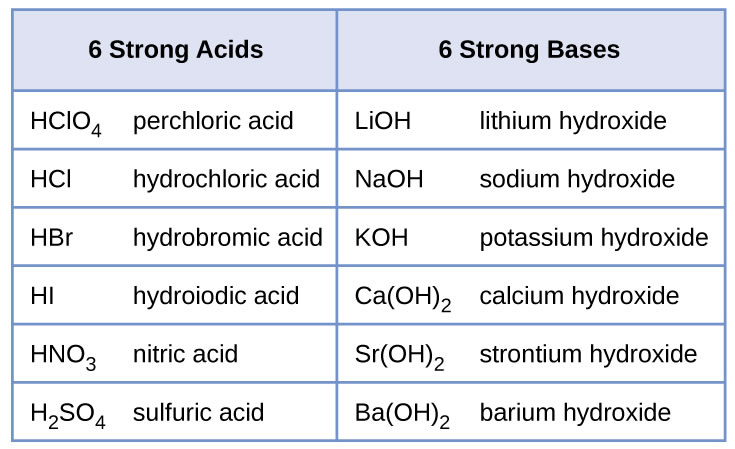
Acids can be identified by their chemical formulas. Their chemical formulas begin with Hydrogen.


Bases can be identified by their formulas also. They end in the Polyatomic Ion, Hydroxide (OH-)
Slide image

5

Acids have 2 types of naming rules

  • Binary

  • These are made of Hydrogen + element

  • Ternary

  • These are made of Hydrogen +element + Oxygen

6

Binary Acids

  • Hydro tells us we have a Binary Acid

  • The Stem indicates which element is present

  • Add -ic to the element stem

  • Add the word acid to the end.

Slide image

7

Examples

  • HF Hydrogen and Fluorine

  • Hydro + fluor + ic

  • Hydrofluoric acid

8

Examples

  • HF Hydrogen and Chlorine

  • Hydro + chlor + ic

  • Hydrochloric acid

9

A few more...

  • HBr

  • Hydrobromic acid

  • HI

  • Hydroiodic acid

  • H2S

  • Hydrosulfuric acid

  • Note- This is different than the Ternary acid H2SO4, Sulfuric acid

10

Multiple Choice

Hydroiodic acid
1
H2I2
2
H1I1
3
HI

11

Multiple Choice

hydrochloric acid
1
HCl
2
HClO
3
H3ClO3
4
HClO3

12

Multiple Choice

HF
1
hydrofluoric acid
2
Hypofluoric acid
3
hydrogen fluorine acid

13

Multiple Choice

HBr
1
hydrogen bromine acid
2
hydrobromide acid
3
hydrobromic acid

14

Ternary Acids

These are a wee bit more complicated.


First, there is no use of "Hydro" even though Hydrogen is present


Second, we must be familiar with polyatomic ions. Now is a good time to pull up your common ion chart.

Slide image

15

HNO3 and HNO2

  • NO3- is the Nitrate ion

  • Looking at our chart, if the name ends in -ate, like nitrate, we change the ending to -ic

  • Nitrate --> Nitric + acid

  • HNO3 is Nitric acid

Slide image

16

HNO3 and HNO2

  • NO2- is the Nitrite ion

  • Looking at our chart, if the name ends in -ite, like nitrite, we change the ending to -ous

  • Nitrite --> Nitrous + acid

  • HNO2 is Nitrous acid

Slide image

17

-ate has more oxygen than -ite

  • H2SO4 , sulfate --> sulfuric

  • Sulfuric Acid -

  • H2SO3 sulfite --> sulfurous

  • Sulfurous Acid -

  • Phosphoric Acid - H3PO4

  • Phosphorous Acid - H3PO3

Slide image

18

4 Variations

  • Hypochlorous Acid - HClO

  • Hypo is used to show least # of Hydrogen

  • Chlorous Acid - HClO2

  • Follows the rule

  • Chloric Acid - HClO3

  • Follows the rule

  • Perchloric Acid - HClO4, "Per" is added to indicate the most # of Oxygens

Slide image

19

Writing formulas for Acids

  • Look at the element or polyatomic ion

  • What is the charge?

  • add enough Hydrogens to absorb the charge.

  • H+F , Fluoride ion has a 1- charge so add 1 Hydrogen, HF

  • H + S, Sulfur ion has a 2- charge so add 2 Hydrogens, H2S

  • H + P, Phosphide Ion has a 3- charge so add 3 Hydrogens, H3P

20

Polyatomic ions work the same way

  • PO43-, The phosphate ion, has a 3- charge so add 3 Hydrogens

  • H3PO4, Phosphoric acid

  • SO32-, the Sulfite ion, has a 2- charge so add 2 Hydrogens

  • H2SO3, Sulfurous acid

  • NO3-, the Nitrate ion has a 1- charge so add 1 Hydrogen

  • HNO3, Nitric acid

21

Multiple Choice

nitrous acid
1
H2NO3
2
HNO3
3
HNO2
4
H2NO2

22

Multiple Choice

 H3PO4
1
hydrophosphoric acid
2
phosphorous acid
3
phosphoric acid
4
phosphoric hydroxide

23

Multiple Choice

bromic acid
1
HBr
2
HBrO2
3
HBrO3
4
H3BrO3

24

Multiple Choice

Select the name for the following acid: H2S
1
Hydrosulfuric acid
2
Sulfuric acid
3
Sulfurous

25

Multiple Choice

HF
1
hydrofluoric acid
2
Hypofluoric acid
3
hydrogen fluorine acid

26

Multiple Choice

sulfuric acid
1
HSO3
2
H2SO3
3
H2SO4
4
H3SO4

27

Multiple Choice

phosphorous acid
1
H3PO4
2
H2PO4
3
H3P
4
H3PO3

28

Multiple Choice

hydrochloric acid
1
HCl
2
HClO
3
H3ClO3
4
HClO3

29

Bases

  • Metals ionically bonded to the polyatomic ion, Hydroxide

  • When writing the formula, be sure the number of Hydroxide ions matches the charge of the metal

  • The name is the Metal Ion + Hydroxide

  • Easy Peasy Lemon Squeezy

Slide image

30

Base Examples

  • Li+ + (OH)-

  • Lithium charge is 1+

  • Hydroxide charge is 1-

  • We need one of each

  • LiOH or Li(OH)

  • Lithium hydroxide

31

Base Examples

  • Ca2+ + (OH)-

  • The charge of Calcium is 2+

  • 2 Hydroxide ions are needed

  • Ca(OH)2

  • Calcium hydroxide

32

More examples

  • K+ + OH- -> KOH

  • Potassium hydroxide

  • Na+ + OH- -> NaOH

  • Sodium hydroxide, NaOH

  • Ba2+ + OH- --> Ba(OH)2

  • Barium hydroxide, Ba(OH)2

33

More examples

  • Rubidium hydroxide (RbOH)

  • Caesium hydroxide (CsOH)

  • Aluminum hydroxide, Al(OH)3

  • Strontium hydroxide, Sr(OH)2

  • (NH4)+ + (OH)- --> NH4OH

  • Ammonium Hydroxide

34

Multiple Choice

Is the following compound an acid or a base? 
Ca(OH)2
1
Acid
2
Base

35

Multiple Choice

Cu(OH)2
1
Copper (II) hydroxide
2
Copper (I) hydroxide
3
Copper (II) hydride
4
Copper (I) hydride

36

Multiple Choice

Barium hydroxide
1
BaOH
2
Ba2OH
3
Ba(OH)2

37

Multiple Choice

Mg(OH)2
1
magnesium hydroxide acid
2
hydromagnesium acid
3
magnesium oxygen hydride
4
magnesium hydroxide

38

Multiple Choice

NaOH
1
sodium oxide
2
sodium hydrogen
3
sodium hydroxide

39

Multiple Choice

Potassium hydroxide
1
KOH
2
K2OH
3
k(OH)2

Naming Acids and Bases

Slide image

Show answer

Auto Play

Slide 1 / 39

SLIDE
