Search Header Logo
  1. Resource Library
  2. Science
  3. Physics
  4. Convection
  5. Convection Currents
Convection Currents

Convection Currents

Assessment

Presentation

Science

7th Grade

Practice Problem

Medium

NGSS
MS-ESS2-6, MS-ESS2-4, MS-PS1-4

+6

Standards-aligned

Created by

Sabrina Wadhams

Used 57+ times

FREE Resource

14 Slides • 26 Questions

1

Convection Currents

Turns out they aren't just in the Earth's Mantle!
Slide image

2

Learning Objective:

  • We will recognize that the Sun provides the energy that drives convection within the atmosphere and oceans, producing winds and ocean currents.

3

Slide image

4

Multiple Choice

Convection Currents cause daily patterns of clouds, wind, precipitation, and air pressure.

1

True

2

False

5

Poll

Did you notice the difference between the Day and Night Cycles of Convection Currents?

Yes

No

6

Day Cycle

What do you notice?

Slide image

7

Multiple Choice

What provides the energy to create warmth during the day?

1

The Moon

2

The Stars

3

The Sun

8

Fill in the Blank

Type answer...

9

Multiple Choice

What happens to warm air?

1

It rises.

2

It blows towards the coast.

3

It sinks.

10

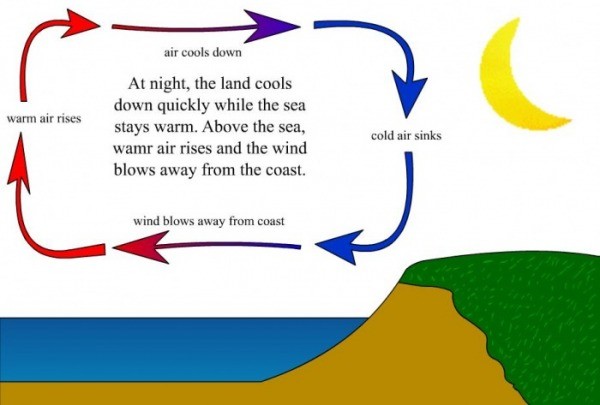
Night Cycle

What do you notice?

Slide image

11

Multiple Choice

What happens to cold air?

1

It rises.

2

It blows towards the coast.

3

It sinks.

12

Fill in the Blank

Type answer...

13

Multiple Choice

What happens to the Convection Cycle during the night?

1

It reverses from the cycle during the day.

2

The heat is provided by the Moon.

3

The wind stops blowing.

14

Atmospheric Convection

What do you notice?

Slide image

15

Multiple Choice

When the sun heats the ground:

1

Radiation

2

Convection

3

Conduction

16

Multiple Choice

When the ground heats the air:

1

Radiation

2

Convection

3

Conduction

17

Multiple Choice

When warm air rises:

1

Radiation

2

Convection

3

Conduction

18

Slide image

19

Poll

Does air density play a role in Atmospheric Convection?

Yes

No

20

Air Pressure

What do you notice?

Slide image

21

Multiple Choice

What do we call the circle formed by convective air movement?

1

Wind

2

Weather

3

Convection Cell

22

Multiple Choice

Where do we find lower pressure air?

1

In warmer, rising air.

2

In cooler, sinking air.

23

Multiple Choice

Where do we find higher pressure air?

1

Sinking over a cool surface.

2

Rising over a warm surface.

24

Slide image

25

Multiple Choice

Do Convection Currents flow within the Earth's oceans?

1

Yes

2

No

26

Ocean Currents

What do you notice?

Slide image

27

Multiple Choice

Where is the cold, salty water?

1

Deep in the ocean

2

Shallow surface water

28

Slide image

29

Multiple Choice

Warm, shallow ocean currents are by the Poles.

1

True

2

False

30

Slide image

31

Thermohaline

What do you notice?

Slide image

32

Open Ended

What do you think Thermohaline means?

33

Multiple Choice

What happens to cold ocean water at the Poles?

1

It moves towards the Equator.

2

It mixes with the brine in the deep ocean.

3

If it doesn't freeze, it starts to sink.

34

Multiple Choice

What happens to ocean currents at the Equator?

1

The water warms at the surface.

2

The water moves poleward.

3

The water losses heat.

35

Poll

Do you think ocean currents are more complex than atmospheric currents?

Yes.

No.

I need more information.

36

Poll

Did you learn about convection currents during this lesson?

Yes.

No.

I want to learn more!

37

Poll

What did you enjoy about this lesson?

Learning about the Atmosphere.

Learning about the Ocean.

I liked everything!

38

Open Ended

How can I make these lessons better?

39

Open Ended

Do you still have questions? (If you write them here, don't forget to put them in your Jamboard!)

40

Don't forget your homework!

Miss Wadhams

Convection Currents

Turns out they aren't just in the Earth's Mantle!

Slide image

Show answer

Auto Play

Slide 1 / 40

SLIDE