Search Header Logo
PS - Force and Motion

PS - Force and Motion

Assessment

Presentation

Science, Physics

8th - 11th Grade

Practice Problem

Medium

NGSS
MS-PS2-2, MS-PS2-4, MS-PS2-1

+16

Standards-aligned

Created by

Nichole SouthGarnerHS

Used 18+ times

FREE Resource

8 Slides • 71 Questions

1

Physical Science Finals Review #3 - Force and Motion

In this review, we will cover Motion (speed, velocity and acceleration), Gravitational Forces, Frictional Forces and Newton's Three Laws of Motion.

Slide image

2

Slide image

3

Slide image

4

Multiple Choice

Question image

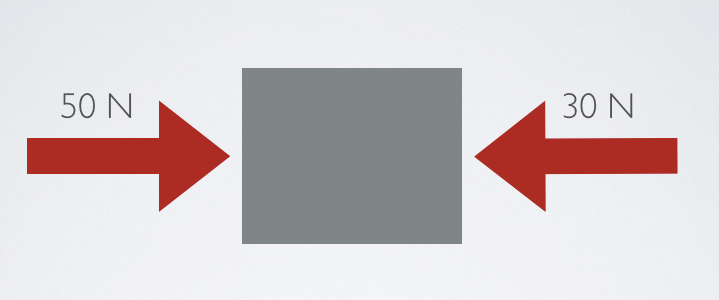
What is the net force?

1

30 N left

2

25 N right

3

5 N left

4

55 N right

5

Multiple Choice

Question image

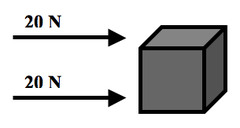
How will this object move?

1

It won't move.

2

It will move to the right.

3

It will move to the left.

4

It will move up.

6

Multiple Choice

Question image
How will this object move? 
1
It won't move. 
2
It will move to the right. 
3
It will move to the left. 
4
It will move in both directions. 

7

Multiple Choice

Question image
What is the net force?
1
400 N Up
2
400 N Down
3
- 400 N Down
4
800 N Down

8

Multiple Choice

Question image
In a tug of war the left team pulls with a force of 200N. The right team pulls with a force of 150N. What is the resultant force?
1
50N to the left.
2
350N to the left.
3
350N to the right.
4
50N to the right.

9

Multiple Choice

Question image
What is the net force?
1
40 N left
2
0 N Balalnced
3
400 N right
4
40 N right

10

Multiple Choice

Question image
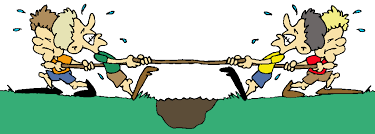
If these teams are pulling with the same amount of force what will happen?
1
The boy in blue will win.
2
They will not move at all.
3
The boy in red will win.
4
Both will fall down.

11

Multiple Choice

You and your dad are moving the couch from one side to another. Your dad pushes with a force of 35 N to the right and you push with a force of 25 N right. What is the net force on the couch?
1
60 N right
2
10 N left
3
60 n right
4
50 N left

12

Slide image

13

Multiple Choice

Weight is another word for

1

the interaction between an object and a planet's rotation.

2

the mass of an object.

3

the force exerted by a planet on an object.

4

the interaction between an object and a planet's rotation.

14

Multiple Choice

Question image
_____can be measured using a scale and can change based on location.
1
Space
2
Force
3
Weight
4
Mass

15

Multiple Choice

Mass and weight are the same thing.

1

True

2

False

16

Multiple Choice

Question image
Which will cause a moving object to change direction?
1
Force
2
Gravity
3
Inertia
4
Speed

17

Multiple Choice

The push or pull between two objects

1

attract

2

mass

3

force

4

gravitational force

18

Multiple Choice

Which of these best describes why your weight (on Earth) would change on another planet?
1
Dehydration effects on different planets change weight.
2
In general, the smaller the planet, the greater weight
3
Different planets have different gravitational pulls
4
Weight does not change, no matter where you are.

19

Multiple Choice

Mass is a measurement of 
1
how much matter is present in an object
2
how much weight is present in an object
3
the amount a spring is compressed on a scale
4
none of the answers are correct

20

Multiple Choice

As the product of two objects' masses increases, the pull of gravity
1
Increases
2
Decreases
3
Stays the same

21

Multiple Choice

Question image
What is gravitational force?
1
It makes objects at rest start moving.
2
It makes objects that are moving stop.
3
The force of attraction between two objects.
4
It pulls you into space.

22

Multiple Choice

Earth's gravity, 9.8 m/s2, is considered a/an...

1

force

2

weight

3

acceleration

4

mass

23

Multiple Choice

The force of gravity (mass x gravity) is also known as...

1

mass

2

weight

3

distance

4

acceleration

24

Multiple Choice

What does the strength of gravity between two objects depend upon?
1
Mass & distance
2
Mass & weight
3
Gravity & inertia
4
Inertia & mass

25

Multiple Choice

Why do we have a stronger gravitational attraction with Earth than the Sun?

1

the sun has a larger mass

2

the Earth has a larger mass

3

we are closer to center of sun

4

we are closer to center of Earth

26

Multiple Choice

as the mass of an object increases, the pull of gravity...

1

Increases

2

Decreases

3

Stays the same

27

Slide image

28

Multiple Choice

Question image
What is the net force?
1
10 N
2
0 N
3
25 N
4
1 N

29

Multiple Choice

When forces are _________ the object DOES NOT move.
1
unbalanced
2
balanced
3
heavy
4
light

30

Multiple Choice

Rougher surfaces have ...
1
greater friction
2
less friction
3
the same level of friction

31

Multiple Choice

Question image
What type of friction is not moving?
1
static
2
sliding
3
fluid
4
rolling

32

Multiple Choice

Question image
By looking at the picture, what is the best conclusion?
1
Friction is in the same direction as Motion
2
The Friction force  is  opposite to the direction of  the motion force
3
Friction does not count
4
I forgot my I-pad

33

Multiple Choice

Question image
What type of force is shown in the picture?
1
The Cat force
2
Star Wars Force
3
Unbalanced force
4
Balanced  force

34

Multiple Choice

Question image
On which surface would friction be the greatest?
1
carpet
2
ice
3
snow
4
satin

35

Multiple Choice

The type of force that opposes motion is called:
1
magnetism
2
friction
3
gravity
4
electric/static

36

Multiple Choice

What is the unit of force?

1

Newton, N

2

Centimetre, cm

3

Kilometre, km

4

kilogram, kg

37

Multiple Select

Which two factors affect the strength of gravity? (Select two.)

1

Mass

2

Speed

3

Force

4

Distance from the source of gravity

38

Multiple Choice

Friction and air resistance always exert force...

1

in the same direction as the object's motion.

2

in the opposite direction of the object's motion.

39

Slide image

40

Multiple Choice

Which of Newton's Laws is illustrated with a large mass and a small mass accelerating?
1
1st Law, the Law of Inertia.
2
2nd Law, the Law of Acceleration
3
3rd Law, the Law of Action Reaction
4
The Law of Conservation of Mass

41

Multiple Choice

A bike accelerates at 10 m/s2 when a force of 50N is applied.  What is the mass of the bike and its rider?
1
25 kg
2
200 kg
3
20 kg
4
5 kg

42

Multiple Choice

A person is pushed forward into their seat belt when a car stops.  Which law is this?
1
1st
2
 2nd
3
2 and 3
4
3rd 

43

Multiple Choice

Question image
When a cannon fires a cannonball we observe Newton's third law. Which force is the reaction force?
1
The cannon moving forward
2
The cannonball moving forward
3
The cannon moving backward
4
The cannonball moving backward

44

Multiple Choice

Which of Newton's laws is illustrated when a magician pulls a tablecloth out from under the dishes without disturbing them?
1
first
2
second
3
third 
4
fourth

45

Multiple Choice

Newton's third law states that any action will have a(n) _______ and ______ reaction
1
Equal and similar
2
Equal and opposite
3
Equal and different
4
Greater and opposite

46

Multiple Choice

What is Newton's First Law
1
F=ma
2
Every action has an equal and opposite reaction
3
An object at rest stays at rest, an object in motion stays in motion. 
4
Friction 

47

Multiple Choice

What is Newton's First Law known as? The Law of
1
Friction
2
Mass
3
Inertia
4
Gravity

48

Multiple Choice

A student pushes a box to right with a force of 10N while a young boy pushes the box to the left with a force of 8N. What is the sum of all forces on the box? 
1
18N left
2
18N right
3
2N right
4
2N left

49

Multiple Choice

A 20 kg bike accelerates at 10 m/s2.  what was the force?
1
25 Newtons
2
20 Newtons
3
200 Newtons
4
10 Newtons

50

Multiple Choice

If a force of 26 N is exerted on two balls, one with a mass of 0.52 kg and the other with a mass of 0.78 kg, which ball will have the greater acceleration?  (F=ma)
1
The one with a mass of .78 kg will have the greatest acceleration.
2
The one with a mass of .52 kg will have the greatest acceleration.
3
They will both accelerate at the same rate.

51

Slide image

52

Slide image

53

Multiple Choice

The amount of ground that is covered is known as _____.

1

distance

2

displacement

54

Multiple Choice

The overall change in position is know as _____.

1

distance

2

displacement

55

Multiple Choice

 Jermaine runs exactly 2 laps around a 400 meter track. What is the displacement?
1
800
2
400
3
0
4
200

56

Multiple Choice

A persons walks 50 meters directly north, stops, and then travels 32 meters directly south.  What is their distance traveled?
1
82 meters
2
18 meters
3
32 meters

57

Multiple Choice

Question image

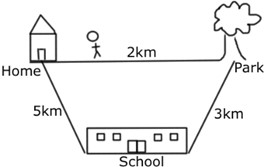
Jerry walked from home to school, then from the school to the park. What is his total distance?

1

2 km

2

5 km

3

8 km

4

10 km

58

Multiple Choice

The change in an objects position from the final position to initial position.

1

displacement

2

distance

3

motion

4

reference point

59

Multiple Choice

The sum of all movements from start to the end of motion is best described as____.

1

distance

2

displacement

3

motion

4

donkey

60

Multiple Choice

Determine the momentum of 1000-kg car moving northward at 20 m/s......... 
1
20000 N
2
20000 Joules
3
20000 Kg * m/s
4
20000 kg * m/s north

61

Multiple Choice

If an object has a mass of 20 kg and a velocity of 4 m/s, what is the momentum of the object?

1

80 kgm/s

2

4 kgm/s

3

5 kgm/s

4

.2 kgm/s

62

Multiple Choice

If an object has a momentum of 40 kgm/s and a mass of 60 kg, what is it's velocity?

1

2400 m/s

2

1.5 m/s

3

240 m/s

4

.67 m/s

63

Multiple Select

Which is the most important factor in an object's momentum?

(2 answers)

1

shape

2

mass

3

velocity

4

volume

64

Multiple Choice

Which object has more momentum?

1

car driving near school

2

car driving on freeway

3

car finding a parking place

4

car driving in the city

65

Multiple Choice

Which object has more momentum?

1

Baseball in the pitchers hand

2

baseball, lost, in a messy room

3

baseball in flight

4

baseball in a catchers mitt

66

Multiple Choice

Which of the following has the MOST momentum?

1

rolling ping-pong ball

2

rolling bowling ball

3

rolling soccer ball

4

rolling basketball

67

Multiple Choice

Question image
A drag racer accelerated from rest ( 0 m/s ) to 195 m/s in 6.5 s.  What was the acceleration?
1
10 m/s
2
30 m/s2
3
-3 m/s2
4
26 m/s

68

Multiple Choice

A ball rolls 144 cm in 12 sec. What is its speed in meters per second?
1
12 cm/sec
2
12 m/s
3
1.2 m/s
4
0.12 m/s

69

Multiple Choice

A car accelerates from 15 m/s to 60 m/s in 30 seconds.  What is its acceleration?
1
2 m/s2
2
3 m/s2
3
1.5 m/s2
4
0.75 m/s2

70

Multiple Choice

It took 3.5 hours for a train to travel the distance between two cities at a velocity of 120 miles/hr.  How many miles lie between the two cities? 
1
34 miles 
2
420 miles
3
120 miles 
4
360 miles 

71

Multiple Choice

A car accelerates from a standstill to 70 m/s in 10 seconds.  What is the acceleration?
1
0.7m/s2
2
7m/s2
3
14m/s2
4
none of the above

72

Multiple Choice

Find the velocity of a truck that travels 75 miles north in 2.5 hours.
1
187.5 mph north
2
30 mph north
3
300 mph north
4
200 mph north

73

Multiple Choice

Shona cycles at an average speed of 8km/h. How far has she traveled if she cycles for 4 hours?
1
55km
2
32km
3
43km
4
32miles

74

Multiple Choice

The correct equation to calculate speed is
1
distance/time
2
time/distance
3
distance x time
4
distance/time2

75

Multiple Choice

If a bicyclist travels 30 km in 2 hours, her average speed is
1
30 km/h
2
60 km/h
3
15 km/h
4
2 km/h

76

Multiple Choice

A train that travels 100 kilometers in 4 hours is traveling at what average speed?
1
50 km/h
2
100 km/h
3
2 km/h
4
25 km/h

77

Multiple Choice

The rate at which velocity changes is called
1
speed
2
direction
3
acceleration
4
motion

78

Multiple Choice

When you know both the speed and direction of an object's motion, you know the
1
average speed of the object
2
acceleration of the object
3
distance the object has traveled
4
velocity of the object

79

Multiple Choice

Speed equals distance divided by
1
time
2
velocity
3
size
4
motion

Physical Science Finals Review #3 - Force and Motion

In this review, we will cover Motion (speed, velocity and acceleration), Gravitational Forces, Frictional Forces and Newton's Three Laws of Motion.

Slide image

Show answer

Auto Play

Slide 1 / 79

SLIDE