Classification of Living Things
Presentation
•
Science
•
6th - 10th Grade
•
Medium
Standards-aligned
M Rice
Used 473+ times
FREE Resource
9 Slides • 14 Questions
1
Classification of Living Things
How are organisms classified?
2
Open Ended
Why do you think scientists classify living things?
3
Why do we classify living things?
There are millions of living things on Earth.
Classifying allows scientist to make connections between new and discovered species.
Make connections between different living things.
4
Open Ended
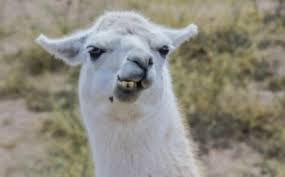
What do these living things have in common?
5
How do scientists know living things are related?
There are two ways: physical and chemical characteristics
Physical includes skeletal structures, egg development, body adaptations.
Chemical includes: DNA and RNA, mutations in the organisms' genes
6
How are living things classified?
Taxonomy is the science of describing, classifying, and naming living things.
There are 8 levels of classifying.
Domain is the largest
Species is the smallest
7
How are living things classified?
There is a riddle to remember the order of the levels.
Dear King Philip Came Over For Good Soup
8
9
Multiple Choice
What is taxonomy?
The study of naming and classifying things
Preserving dead organisms
The science of paying your taxes
My cat's name
10
Multiple Choice
Why do we classify living things
To keep information private
To make finding information easier
To confuse students
To make animals healthier
11
Multiple Choice
What is the smallest and most specific group in the classification system?
species
domain
kingdom
Genus
12
Multiple Choice
What is the largest and most general group that an organism is classified into?
Domain
Kingdom
Species
Family
13
Multiple Choice
Taxonomy is the study of plants
True
False
14
How are living things named?
Each species has a two part scientific name.
It includes the Genus and the Species.
The Genus includes similar species.
The Species is unique to that one living thing.
15
Multiple Choice
To what genus does a Banana tree belong to?
Musa
Ficus
paradisicum
Bamboosa
16
Multiple Choice
In a scientific name, what does the SECOND name identify?
Genus
Species
Kingdom
Domain
17
Multiple Choice
In a scientific name, what group does the FIRST name identify?
Genus
Species
Kingdom
Domain
18
Dichotomous Keys
Tools that scientists use to identify unknown animals.
It has a series of questions that scientists use.
As you move through the key, it helps you identify the organism
19
20
Multiple Choice
The first part of a scientific name is an organism's _______________ and the second part is its ________________.
species, genus
phylum, order
class, spices
genus, species
21
Multiple Choice
What is the purpose of a dichotomous key?
to find a common ancestor
to show the evolution of organisms
to show relationships between organisms
to identify organisms
22
Multiple Choice
When using a dichotomous key to identify organisms, what do we look at?
physical features
weather patterns
environment
diet
23
Multiple Choice
What is monster # 1 ?
Alienus quadlegicus
Alienus haircus
Alienus Tritoothicus
Alienus Blobicus
Classification of Living Things
How are organisms classified?
Show answer
Auto Play
Slide 1 / 23
SLIDE

Similar Resources on Wayground
18 questions
Eccentricity of Orbital Forces
Presentation
•
6th - 10th Grade
20 questions
Rulers and Measurement
Presentation
•
5th - 10th Grade
19 questions
Chemical Properties and Changes
Presentation
•
6th - 9th Grade
19 questions
Science Fair Project
Presentation
•
6th - 9th Grade
20 questions
Acids and Bases
Presentation
•
6th - 9th Grade
20 questions
Parts of an atom
Presentation
•
7th - 10th Grade
20 questions
Separation of Mixtures
Presentation
•
6th - 9th Grade
16 questions
Chapter 6 Lesson 2 The Cell
Presentation
•
7th - 10th Grade
Popular Resources on Wayground
10 questions
5.P.1.3 Distance/Time Graphs
Quiz
•
5th Grade
10 questions
Fire Drill
Quiz
•
2nd - 5th Grade
20 questions
Equivalent Fractions
Quiz
•
3rd Grade
22 questions
School Wide Vocab Group 1 Master
Quiz
•
6th - 8th Grade
20 questions
Main Idea and Details
Quiz
•
5th Grade
20 questions
Context Clues
Quiz
•
6th Grade
20 questions
Inferences
Quiz
•
4th Grade
12 questions
What makes Nebraska's government unique?
Quiz
•
4th - 5th Grade
Discover more resources for Science
8 questions
Amoeba Sister Asexual vs Sexual Reproduction
Interactive video
•
8th Grade
19 questions
Introduction to Properties of Waves
Presentation
•
6th - 8th Grade
16 questions
Interactions within Ecosystems
Presentation
•
6th - 8th Grade
10 questions
Exploring the Layers of the Earth
Interactive video
•
6th - 10th Grade
16 questions
Photosynthesis and Cellular Respiration Review
Quiz
•
7th Grade
20 questions
Abiotic & Biotic Factors
Quiz
•
7th Grade
15 questions
Punnett Squares
Quiz
•
6th Grade
10 questions
Exploring the Evolution of Cell Theory
Interactive video
•
7th Grade