Search Header Logo
Evidence of evolution

Evidence of evolution

Assessment

Presentation

Biology

11th Grade

Medium

Created by

Cheryl Graves

Used 8+ times

FREE Resource

21 Slides • 19 Questions

1
Evidence of evolution

media

2

3

Multiple Choice

What is "tusklessness" in elephants?

1

When an elephant's tusks are removed by humans

2

When an elephant is born without tusks

3

When an elephant has tusks

4

When an elephant is killed by poachers for its tusks

4

Multiple Choice

Why did the percentage of elephants that were tuskless increase over time during the civil war in Uganda?

1

More elephants decided to remove their own tusks

2

The tuskless elephants were able to reproduce and pass the trait down

3

More elephants had their tusks fall off as they aged

4

The tuskless elephants all died at this time

5

Multiple Choice

Why is being tuskless an advantage for certain elephants?

1

Elephants don't need their tusks so there's no reason to have them

2

There is never an advantage to being tuskless

3

Elephants don't have to worry about keeping their teeth clean

4

Elephants won't be targeted by human poachers because they don't have ivory (tusks)

6

media

7

media

8

web page not embeddable

310 million-year-old tree fossils to reveal new ancient animals

You can open this webpage in a new tab.

9

media

10

media

11

12

media

13

media

14

media

15

media

16

media

17

media

18

Multiple Choice

Humans and apes have five fingers they can use to grasp objects. What type of structure is fingers

1

analogous

2

homologous

3

vesitigal

19

Multiple Choice

Question image
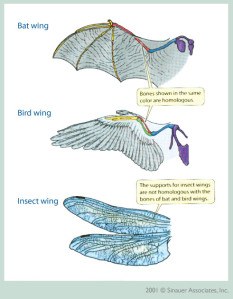
  The diagram shows an image of a Pterosaur wing, bat wing, and bird wing.  These are all different organisms, but share similar wing structures.  If these structures are similar due to common ancestry, which of the following best describes them?
1
a.  Vestigial Organ
2
b.  Embryological Similarities
3
c.  Homologous Structures
4
d.  Analogous Structures

20

Multiple Choice

Question image

What

type

of structure?

1

Homologous

2

Analogous

3

Embryological

4

Vestigial

21

Multiple Choice

Question image
The structures shown are_________
1
homologous
2
heterologous
3
analogous
4
vestigial

22

Multiple Choice

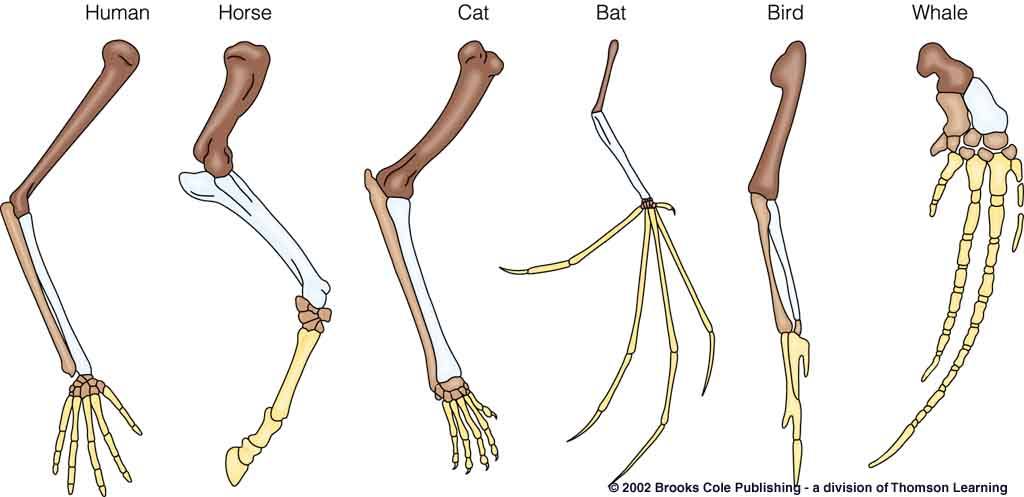
An example of a homologous structure 
1
human arm and bird wing
2
rat appendix  and human appendix
3
wing of butterfly and bird wing

23

Multiple Choice

Question image

What

type

of structure?

1

Homologous

2

Analogous

3

Embryological

4

Vestigial

24

Multiple Choice

Question image

What

type

of structure?

1

Homologous

2

Analogous

3

Embryological

4

Vestigial

25

Multiple Choice

Bird wings and butterfly wings are an example of
1
Homologous structure
2
Analogous structure
3
Mimicry
4
Camoflague

26

Multiple Choice

Humans, birds, whales, and lizards all have similar arm bones. What is the reason for this?
1
The function of these bones is the same in all animals
2
They live in similar environments
3
They have a common ancestor
4
All organisms resemble humans

27

Multiple Choice

Analogous structures show common ancestry.
1
True
2
False

28

Multiple Choice

Question image
1
Homologous
2
Vestigial
3
Analogous

29

media

30

media

31

media

32

Open Ended

When human organs are transplanted, the

rate of success is higher in cases where the

donor and recipient are close relatives. Why

do you think this is so?

33

media

34

Open Ended

Explain how the differences in the sequence

of amino acids that make up cytochrome c in

different kinds of organisms help us

understand evolution.

35

media

36

media

37

media

38

Multiple Choice

What is an example of artificial selection?

1

Letting dogs choose their own mate

2

Letting plants pollinate on their own

3

Crossing a labrador and a poodle to create a labradoodle

39

Multiple Choice

Which statement is true comparing natural selection and artificial selection?

1

In natural selection, traits benefit humans and in artificial selection, the traits benefit the species

2

In natural selection, traits benefit the species and in artificial selection, the traits benefit humans

3

In natural and artificial selection, the process takes hundreds of years to occur

4

In natural and artificial selection, nature determines what traits will be passed down to offspring.

40

Multiple Choice

Question image

What happened to the peppered moth population after the Industrial Revolution?

1

There were MORE LIGHT moths because the bird couldn't see them on the DARK TREES

2

There were MORE DARK moths because the bird couldn't see them on the DARK TREES

3

There were MORE DARK moths because the bird couldn't see them on the LIGHT TREES

Evidence of evolution

media

Show answer

Auto Play

Slide 1 / 40

SLIDE