Search Header Logo
The Periodic Table

The Periodic Table

Assessment

Presentation

Science, Chemistry

8th Grade

Medium

NGSS
MS-PS1-1, HS-PS1-1, HS-PS1-8

+1

Standards-aligned

Created by

Ginger Sudol

Used 7+ times

FREE Resource

9 Slides • 21 Questions

1

The Periodic Table

Slide image

2

Learning Objectives: I can...

  • Identify different atoms by the number of protons in the nucleus

  • Demonstrate that the number of electrons equals the number of protons in a neutral atom

  • Explain the meaning of atomic number and atomic mass

3

History of the Periodic Table

  • In 1869, Russian chemist Dimitri Mendeleev started arranging chemical elements by atomic mass.

  • Predicted the discovery of other elements and left spaces in the periodic table for them

Slide image

4

Multiple Choice

How was Mendeleev's periodic table arranged?

1

by increasing atomic mass

2

by decreasing atomic mass

3

by increasing atomic number

4

by decreasing atomic number

5

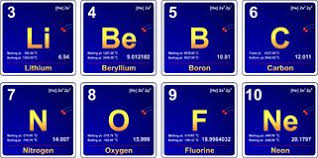
The Periodic Table: First 20 Elements

  • Many common substances are composed of atoms from these first 20 elements.

  • Each box contains information about a different element

  • Shows all the atoms that everything in the known universe is made from

Slide image

6

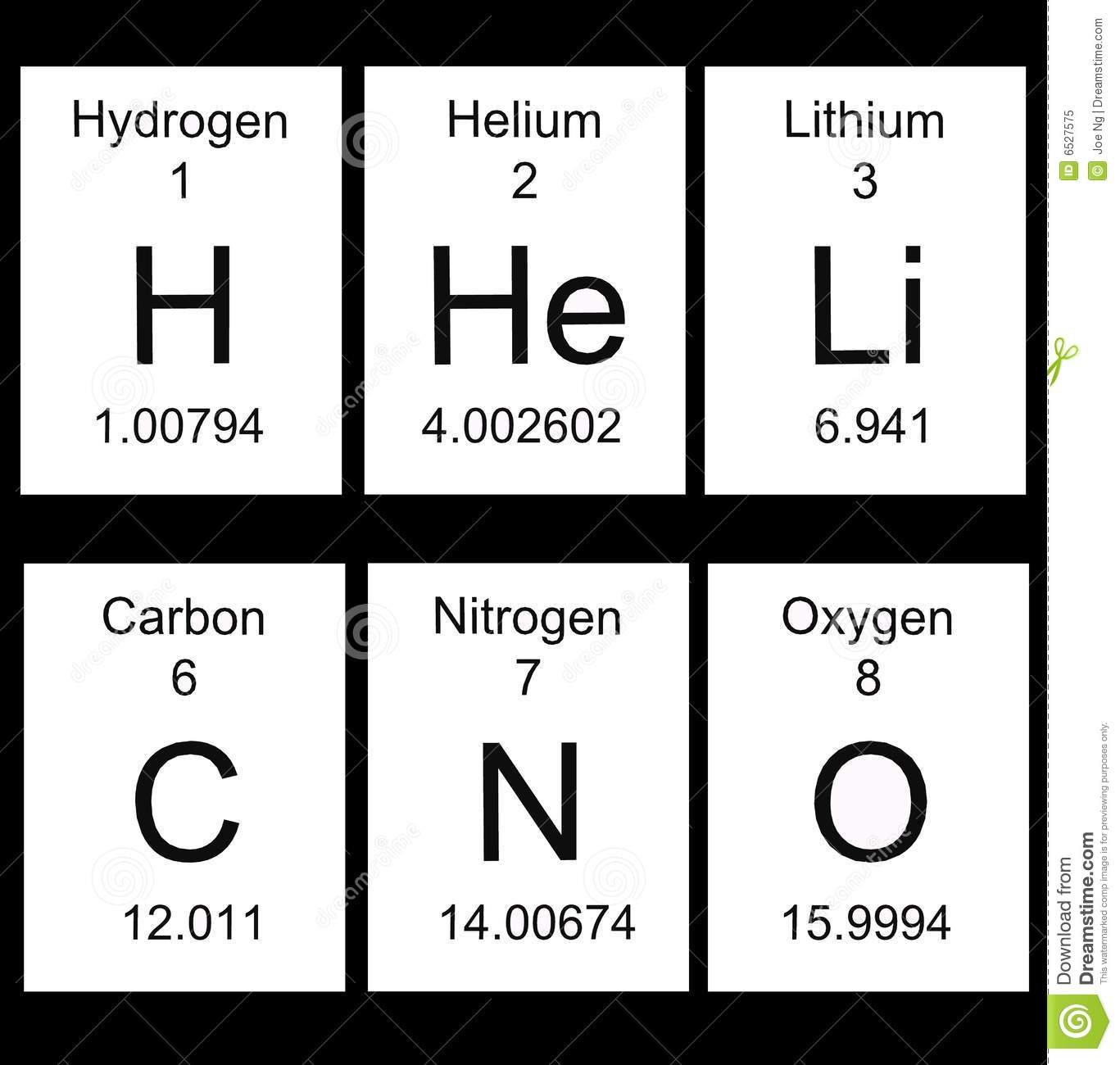
An Example: Carbon

  • Atomic Number: Number of protons in the nucleus of the atom

  • Atomic mass: the average mass of atoms in an element

  • Element Name: Usually from a Greek or Latin word for the element or a substance containing the element.

  • Symbol: Short-hand abbreviation for the element name (starts with a capital letter)

Slide image

7

Multiple Choice

Question image

What is the atomic mass of

iron (Fe)?

1

26

2

13

3

55.845

4

23.423

8

Multiple Choice

Question image

What is the atomic number of Sulfur?

1

16

2

2

3

32.065

4

86

9

Atomic Mass

  • Based on the mass of the protons, neutrons and electrons of that element.

  • Mass of the proton and neutron are about the same, but the mass of the electron is much smaller

  • Majority of the atomic mass is contributed by the protons and neutrons

Slide image

10

Atomic Mass

  • For any element in the periodic table, the number of electrons in an atom always equals the number of protons in the nucleus

  • Not true for neutrons

  • Atoms of the same element can have different numbers of neutrons than protons.

  • They are called isotopes.

  • Atomic mass is the average of the atomic mass of the isotopes of an element.

Slide image

11

Carbon

  • Vast majority of carbon atoms have 6 protons and 6 neutrons

  • A small percentage have 6 protons and 7 neutrons

  • An even smaller percentage have 6 protons and 8 neutrons

  • Since the majority of carbon atoms have a mass very close to 12, the average atomic mass is slightly greater than 12.


Slide image

12

Multiple Choice

Isotopes of an element have a different number of...

1

Protons

2

Neutrons

3

Electrons

4

Mass

13

Subatomic Particles

  • Proton: positively charged particle; located in the nucleus; is the atomic number

  • Electron: negatively charged particle surrounding the nucleus; equal to the number of protons

  • Neutron: No charge; has almost the same mass as a proton; equal to or slightly greater than the number of protons


14

Multiple Choice

Question image

How many protons are in Sodium?

1

11

2

22

3

12

4

33

15

Multiple Choice

Question image
What does this number represent?
1
Number of protons
2
Number of neutrons
3
Number of electrons
4
Number of protons and neutrons

16

Multiple Choice

Question image
What is the atomic weight of Iron?
1
26
2
55.845
3
56
4
30

17

Multiple Choice

Question image
What is the atomic mass of Gold?
1
79
2
196.9665
3
117
4
275

18

Multiple Choice

Question image
How many protons are in Beryllium?
1
4
2
9
3
5
4
2

19

Multiple Choice

Question image

What is the atomic mass of Neon?

1

10

2

20.18

3

10.18

4

9.82

20

Multiple Choice

Question image
Elements can have the same number of protons?
1
True
2
False

21

Multiple Choice

Question image
The following element key shows how many protons?
1
16
2
15.999
3
Oxygen
4
8

22

Multiple Choice

Question image
Where is the proton located?
1
In the very dense nucleus
2
Floating around in the negative electron cloud
3
the loose nucleus
4
the positive electron cloud

23

Multiple Choice

Question image
Sodium has an atomic number of 11, how many protons does this atom have?
1
22
2
11
3
12
4
2

24

Multiple Choice

What is the chemical symbol for the element oxygen
1
O
2
Oxy
3
ox
4
Oy

25

Multiple Choice

What is the chemical symbol for the element hydrogen
1
H
2
He
3
h
4
he

26

Multiple Choice

Question image
The number at the top of each square on the periodic table is the ...
1
atomic number
2
atomic mass
3
Chemical Symbol
4
Element Name

27

Multiple Choice

The atomic number tells you what?
1
number of electrons
2
number of protons
3
number of neutrons
4
both electrons and protons in an atom.

28

Multiple Choice

Question image
What does the 1.00794 stand for?
1
Hydrogen
2
atomic number
3
atomic mass
4
atomic explosion

29

Multiple Choice

What is at the center of every atom?

1

An electron

2

A compound

3

A molecule

4

A nucleus

30

Multiple Choice

Which two particles make up the nucleus of an atom?
1
Protons and Electrons
2
Protons and Neutrons
3
Molecules and Compounds
4
Neutrons and Electrons

The Periodic Table

Slide image

Show answer

Auto Play

Slide 1 / 30

SLIDE