Search Header Logo
  1. Resource Library
  2. Science
  3. Earth & Space Science
  4. Eclipses
  5. Solar Eclipses Vs. Lunar Eclipses
Solar Eclipses vs. Lunar Eclipses

Solar Eclipses vs. Lunar Eclipses

Assessment

Presentation

Science

6th - 10th Grade

Easy

NGSS
MS-ESS1-1, MS-PS4-2, 5-ESS1-2

+1

Standards-aligned

Created by

Michael Belmonte

Used 275+ times

FREE Resource

28 Slides • 16 Questions

1

Solar Eclipses vs. Lunar Eclipses

Do you know the difference?

media

2

media

3

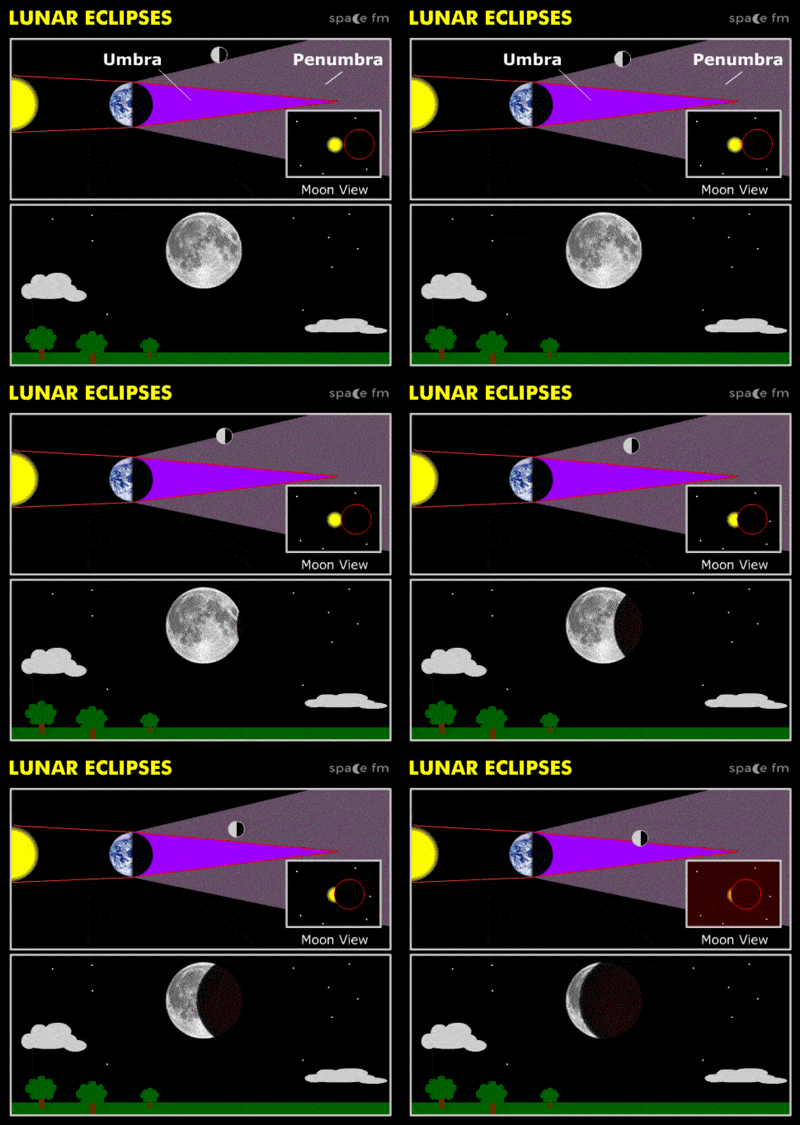
Different Shadows

  • UMBRA - the fully shaded inner region of a shadow cast by an opaque object

  • PENUMBRA - the partially shaded outer region of the shadow cast by an opaque object.

media

4

media

5

media

6

7

Multiple Select

Question image

What do we call the darker part of the shadow?

1

Umbra

2

Penumbra

3

Thanos

4

Darth

8

Multiple Select

Question image

___________ is the lighter part on the edges of the shadow.

1

Umbra

2

Penumbra

3

Opaque object

4

Screen

9

Multiple Select

Question image

Light ________ pass through an opaque object.

1

Can

2

Will

3

Cannot

4

Must

10

Multiple Select

Question image

The size of the shadow changes according to the ___________ between the object and the light source.

1

Distance

2

Brightness

3

Orientation

4

Screen

11

What is an Eclipse?

  •  The total or partial obscuring of one celestial body by another.

  • An eclipse is an astronomical event; one object in the sky moves into the shadow of another object.

  • Solar eclipse = New moon shadow crosses the Earth's surface

  • Lunar eclipse = Earth shadow darkens the full moon

media

12

13

Open Ended

Question image

What happens during a SOLAR eclipse?

14

What type of ECLIPSE is shown here?

media

15

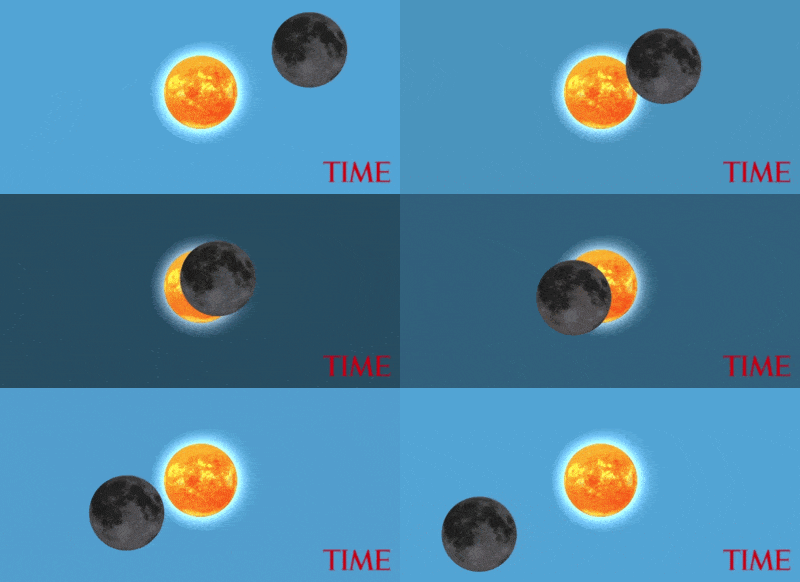
Solar Eclipses

  • Only happen during NEW MOON phase

  • Happen 2-5 times per year on different parts of Mother Earth

  • There are different types of solar eclipses: total, partial, & annual.

media

16

Total Solar Eclipse

  • Happen when the sun is completely blocked by the moon.

  • Only visible from a specific part of the Earth. The moon is considerably smaller and this its shadow will only pass through a narrow path on Earth’s surface.

  • Areas around that path will only see a partial solar eclipse.

media

17

Partial Solar Eclipses

  • When the Moon doesn’t completely cover the Sun.

  • The Moon passes off-center and only a portion of the Sun is obscured.

media

18

Annular Eclipse

  • The Moon doesn’t cover the entirety of the Sun, even if the Moon’s completely centered in front of it. This happens because the Moon’s orbit is an elliptical and the Moon is closer to the Earth.

  • During this kind of eclipse, the bright ring around the Moon is called the “ring of fire.”

media
media

19

During this kind of eclipse, the bright ring around the Moon is called the “ring of fire.”

media

20

Eclipses look different depending on your location/viewpoint.

media

21

Multiple Choice

Question image

A _________ is the blocking of the Sun's light that occurs during a new moon when the moon's shadow falls on earth.

1

solar eclipse

2

lunar eclipse

3

umbra

4

penumbra

22

Multiple Choice

Question image

A solar eclipse only happens during the day.

1

True

2

False

23

Multiple Choice

Question image

The moon phase for a solar eclipse is a full moon.

1

True

2

False

24

Multiple Choice

Question image

For a solar eclipse to occur, the alignment must be ?

1

none of the above

2

Sun, moon, Earth

3

Earth, sun, moon

4

sun, Earth, moon

25

Multiple Choice

Question image

What type of eclipse is this an example of?

1

Lunar Eclipse

2

Solar Eclipse

26

Multiple Choice

Question image

The moon's orbit is tilted about _____ degrees relative to Earth's orbit around the sun.

1

5

2

23.5

3

27.3

4

29.5

27

Multiple Choice

Question image

A total solar eclipse is visible from

1

only within the moon's penumbra.

2

only within the moon's umbra.

3

only the dark side of Earth.

4

all over Earth.

28

Open Ended

Question image

What happens during a LUNAR eclipse?

29

media

30

ECLIPSES

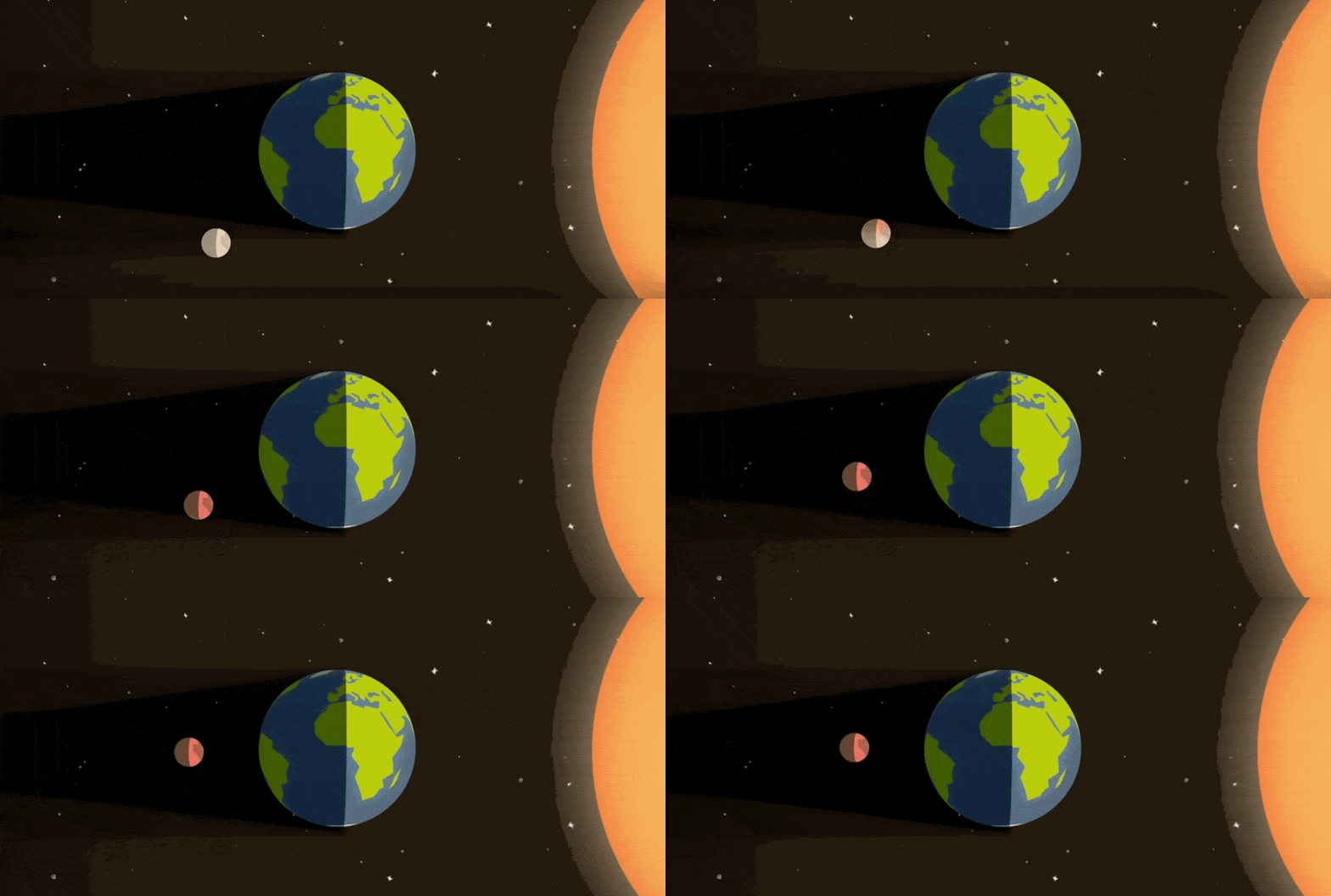
  • lunar eclipse happens when the earth passes in between the moon and the sun. EARTH SHADOW

  • solar eclipse happens when the moon passes in between the earth and the sun. MOON SHADOW

media

31

32

SOLAR vs. LUNAR

  • SOLAR eclipse = NEW MOON

  • Part of the earth darkens

  • LUNAR eclipse = FULL MOON

  • Moon darkens/changes color

media

33

Solar eclipse = MOON SHADOW

media

34

LUNAR ECLIPSE = FULL MOON

media

35

  • TOTAL - Earth's shadow completely covers the moon

  • PARTIAL - part of the Moon's visible surface moves into the umbra of the Earth's shadow.

  • PENUMBRAL - only the more diffuse outer shadow of Earth falls on moon’s face. 

media

36

TOTAL - Moon is completely covered by Earth's shadow

media

37

PENUMBRAL - moon passes through Earth's penumbra

media

38

media

39

Blood Moons...

  • During a lunar eclipse, Earth gets in the way of the sun's light hitting the moon. The moon can also look reddish because Earth's atmosphere absorbs the other colors while it bends some sunlight toward the moon.

media

40

BLOOD MOONS

media

41

media

42

Multiple Choice

Question image

What type of eclipse is this an example of?

1

Lunar Eclipse

2

Solar Eclipse

43

Open Ended

What happens during a LUNAR eclipse?

44

Open Ended

What happens during a SOLAR eclipse?

Solar Eclipses vs. Lunar Eclipses

Do you know the difference?

media

Show answer

Auto Play

Slide 1 / 44

SLIDE