
PMA 3 - Life Science Review
Presentation
•
Science
•
6th - 8th Grade
•
Practice Problem
•
Hard
+4
Standards-aligned
Fabiola Guillaume
Used 7+ times
FREE Resource
1 Slide • 7 Questions
1
PMA 3 Review - Life Science Part A
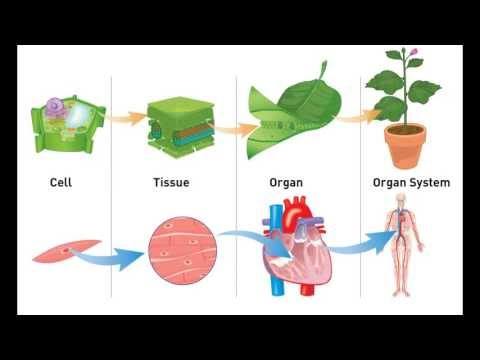
Hierarchical Organization of Life, Cells, & Homeostasis
2
Multiple Choice
Which of the following is correct about structure L?
It holds chlorophyll.
It stores the cell's DNA.
It is only found in plant cells.
It is composed of lipids and proteins.
3
Multiple Choice
All cells must carry out three basic functions to grow and pass on life. How do cells perform these three basic functions?
They utilize a source of energy, release waste, and form new cells.
They send out signals, extract food, and breathe carbon dioxide.
They develop new tissues, make fats, and form new cells.
They drink water, breathe oxygen, and release waste.
4
Multiple Choice
The table below shows the characteristics of a plant leaf cell and an animal skin cell. Which characteristic is missing from the table?
Have a cell life of five to ten days
Perform photosynthesis to make energy
Get rid of waste to maintain homeostasis
Communicate with cells of different organisms
5
Multiple Choice
Which of the following is an example of an organ system?
A heart, arteries and veins all working together
The living materials that lines the inside of a cheek
A human bladder, which stores waste for removal
The top layer of cells on a plant leaf
6
Multiple Choice
The picture below shows a cross-section of a plant stem viewed through a microscope. The enriched region Y, of the cross-section is involved in creating support for the plant. Which level of organization is best represented by region Y?
Cell
Tissue
Molecule
Organ System
7
Multiple Choice
The heart is made of several types of tissues, each having a separate function in pumping blood throughout the body. At which level of organization would the heart be placed?
Cell
Atom
Organ
Organ System
8
Multiple Choice
Chloroplasts are the organelles responsible for photosynthesis in plants. If all the chloroplasts in a plant lose function as a result of a genetic disorder, what will happen to the plant?
It will find energy in the soil instead of from sunlight.
It will evolve a new mechanism for generating food.
Its growth rate will slow or stop.
it will grow longer roots in search of food.
PMA 3 Review - Life Science Part A
Hierarchical Organization of Life, Cells, & Homeostasis
Show answer
Auto Play
Slide 1 / 8
SLIDE

Similar Resources on Wayground
6 questions
Experimental Design Pt2
Lesson
•
6th - 8th Grade
6 questions
Water on Earth and in a lab
Lesson
•
6th - 8th Grade
9 questions
Exothermic & Endothermic Reactions
Lesson
•
5th - 8th Grade
7 questions
Conjunctive Adverbs
Lesson
•
6th - 8th Grade
6 questions
How Do Chemicals Benefit Society?
Lesson
•
6th - 8th Grade
6 questions
Untitled Lesson
Lesson
•
KG
6 questions
Ciri Khusus Tanaman Kelas 6
Lesson
•
6th - 8th Grade
6 questions
Measuring and Data
Lesson
•
KG
Popular Resources on Wayground
15 questions
Fractions on a Number Line
Quiz
•
3rd Grade
14 questions
Boundaries & Healthy Relationships
Lesson
•
6th - 8th Grade
13 questions
SMS Cafeteria Expectations Quiz
Quiz
•
6th - 8th Grade
20 questions
Equivalent Fractions
Quiz
•
3rd Grade
25 questions
Multiplication Facts
Quiz
•
5th Grade
12 questions
SMS Restroom Expectations Quiz
Quiz
•
6th - 8th Grade
20 questions
Main Idea and Details
Quiz
•
5th Grade
10 questions
Pi Day Trivia!
Quiz
•
6th - 9th Grade
Discover more resources for Science
20 questions
Rocks and The Rock Cycle
Quiz
•
6th Grade
20 questions
Cell Organelles and Functions
Quiz
•
6th - 8th Grade
10 questions
Exploring the Layers of the Earth
Interactive video
•
6th - 10th Grade
21 questions
Waves and Wave Properties
Quiz
•
6th - 8th Grade
20 questions
Newton's Laws of Motion
Quiz
•
8th Grade
16 questions
Photosynthesis and Cellular Respiration Review
Quiz
•
7th Grade
20 questions
Heredity Punnett square review
Quiz
•
8th Grade
15 questions
Punnett Squares
Quiz
•
6th Grade