

Injury Evaluation - HOPS & SOAP

Presentation
•
Physical Ed
•
10th - 12th Grade
•
Medium

Christina Florence
Used 18+ times
FREE Resource
9 Slides • 17 Questions
1
Secondary Procedures Procedures
INJURY EVALUATION


2
Quick assessment - less than 2 minutes
DETERMINE:
Seriousness of injury
How injured athlete will be transported from playing field
Type of first aid/immobilization
Shoulder injuries - use the sling/swathe technique to immobilize.
If suspect a cervical fracture, use jaw thrust
If injury warrants referral to physician
Secondary Assessment: On-field


3
SECONDARY ASSESSMENT:
Off Field Injury Assessment - THOROUGH
History (mechanism, pain scale, sport specific, changes in training, symptoms)
Observation (deformity, swelling, postural, alignment) **ALWAYS COMPARE BILATERALLY!
Palpation (bony & soft tissue)
Special Tests (fractures, ligaments, muscles, body alignment, ROM)
--> Active, Passive, Resistive ROM
4
Multiple Choice
Where does this information belong?
Patient is limping when they walk into the room.
History
Observation
Palpation
Special Tests
5
Multiple Choice
Where does this information belong?
Crepitus (crunching feeling when touched)
History
Observation
Palpation
Special Tests
6
Multiple Choice
Where does this information belong?
Patient is feeling numbness & tingling going down his arm.
History
Observation
Palpation
Special Tests
7
Multiple Choice
Where does this information belong?
Active ROM Measurement
History
Observation
Palpation
Special Tests
8
Multiple Choice
Where does this information belong?
Feeling localized heat
History
Observation
Palpation
Special Tests
9
Match
Match ROM's
Active
Passive
Resistive
athlete moves joint
clinician moves athlete's joint
athlete pushes against a force
athlete moves joint
clinician moves athlete's joint
athlete pushes against a force
10


11


12
Multiple Select
Which parts of HOPS would be documented in the "S" portion of a SOAP Note? Select ALL that apply.
History
Observation
Palpation
Special Tests
13
Multiple Choice
Medications the patient is prescribed for the injury would go under what category?
S
O
A
P
14
Multiple Select
Which parts of HOPS would be documented in the "O" portion of a SOAP Note? Select ALL that apply.
History
Observation
Palpation
Special Tests
15
**RICE =
R - rest
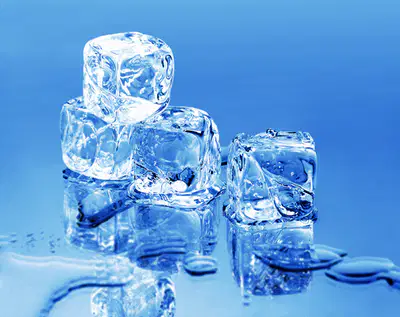
I – ice
C – compression
E – elevation (above the heart!)
Treatment after Injury =
16
SPLINTING
If a fracture is suspected, splint:
ABOVE & BELOW the joint ... in the position it was found
CHECK distal pulses.
Types:
rapid form vacuum immobilizer (angulated fx)
air
anatomical
soft
rigid


17
Multiple Choice
You should always splint joints ______ and _______ the injured site.
On and under
proximal and distal
above and below
interior and exterior
18
Multiple Choice
Checking _______ pulses (further away) once the splint is in place is done to make sure there is still adequate blood flow.
Proximal
Distal
Superior
Inferior
19
TRANSPORTING AN INJURED ATHLETE
Spine board (spinal injury) – MD instruction
Stretcher (short distances)
Ambulatory aid (support bilaterally for short distance)
Manual conveyance (long distance – 2 person carry)
Crutches (lower limb injury)
20
Multiple Choice
Which would be used to transport an athlete with a suspected spinal injury?
spine board
stretcher
ambulatory aid
crutches
21
Multiple Choice
Which is used to assist an athlete who is able to walk short distances?
spine board
stretcher
ambulatory aid
crutches
22
Multiple Choice
Which is used to transport an athlete long distances who cannot walk?
manual conveyance
stretcher
ambulatory aid
crutches
23
When walking, crutches should go no more than 12-15 inches in front of the foot.
CRUTCH-FITTING PROCEDURES
6 inches from outside of shoe & 2 inches in frontof foot
Underarm 1 inch below anterior fold of axilla (armpit)
Hand brace even with athlete’s hand, elbow at a 30°angle (at the greater trochanter of femur)
24
Multiple Choice
What angle should the elbow be in when measuring and using the crutches?
15 degrees
30 degrees
45 degrees
25
Multiple Choice
When walking with crutches, how far should crutches go out when attempting a step?
10-12 inches
12-15 inches
13-16 inches
less then 12 inches
26
Multiple Choice
Tips of crutches should be located where (when deciding the length of crutches)?
6" out, 2" up from foot
2" out, 6" up from foot
30 degrees from foot
Shoulder width apart
Secondary Procedures Procedures
INJURY EVALUATION
Show answer
Auto Play
Slide 1 / 26
SLIDE
Similar Resources on Wayground

20 questions
PHYSICAL ACTIVITY - WEEK 2
Presentation
•
11th Grade
23 questions
Weight Training Safety
Presentation
•
9th - 12th Grade
17 questions
Personality Types
Presentation
•
9th - 12th Grade
21 questions
Quiz 1 Unit 1 Review
Presentation
•
9th - 12th Grade
21 questions
Woodshop Safety Summative
Presentation
•
9th - 12th Grade
20 questions
Momentum and Collisions
Presentation
•
9th - 12th Grade
21 questions
Scientific Method, Laws, and Theories
Presentation
•
9th - 12th Grade
23 questions
Forensics: Observation
Presentation
•
9th - 12th Grade
Popular Resources on Wayground
10 questions
HCS SCI 03 Summer School Review 4

Quiz
•
3rd Grade
11 questions
HSMS - Standard Response Protocol
Quiz
•
6th - 8th Grade
16 questions
1.1-1.2 Quiz Review
Quiz
•
9th - 12th Grade
12 questions
Exponent Expressions
Quiz
•
6th Grade
20 questions
Adding and Subtracting Integers
Quiz
•
6th - 7th Grade
11 questions
Northeast States
Quiz
•
3rd - 4th Grade
10 questions
Characterization
Quiz
•
3rd - 7th Grade
10 questions
Common Denominators
Quiz
•
5th Grade