
CH 27 Lesson 1 Human Body Organization
Presentation
•
Biology
•
10th Grade
•
Practice Problem
•
Easy
Standards-aligned
Ghadia El Badaoui
Used 20+ times
FREE Resource
19 Slides • 2 Questions
1
CH 27 Lesson 1 Human Body Organization
2
Objectives
5.1.1 Describe in details how multicellular organisms are organized
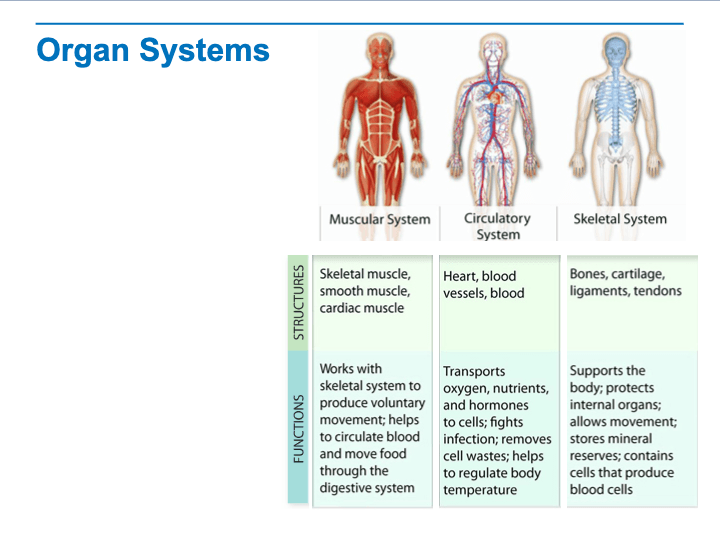
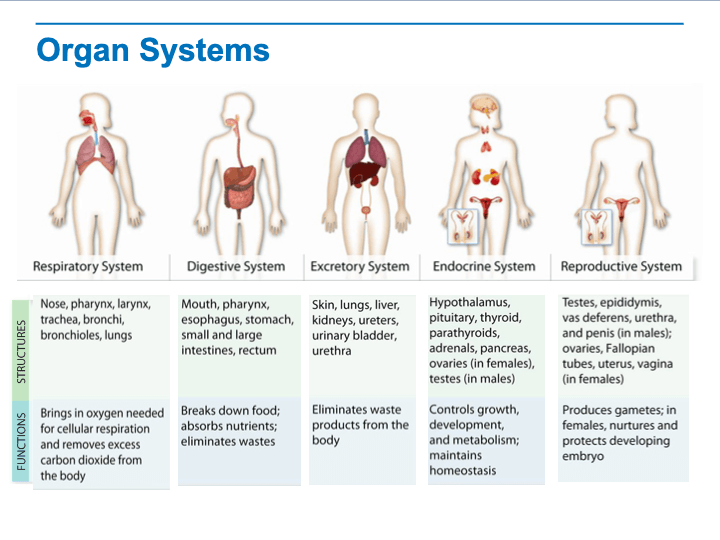
5.1.2 List the levels of organization in human body
5.1.3 Describe types of human tissues with examples of each, including: epithelial,
connective, nervous and muscular tissues
5.1.4 Describe by example how different tissues work together to achieve one function
5.1.5 Illustrate by example how different organs work together to achieve one function
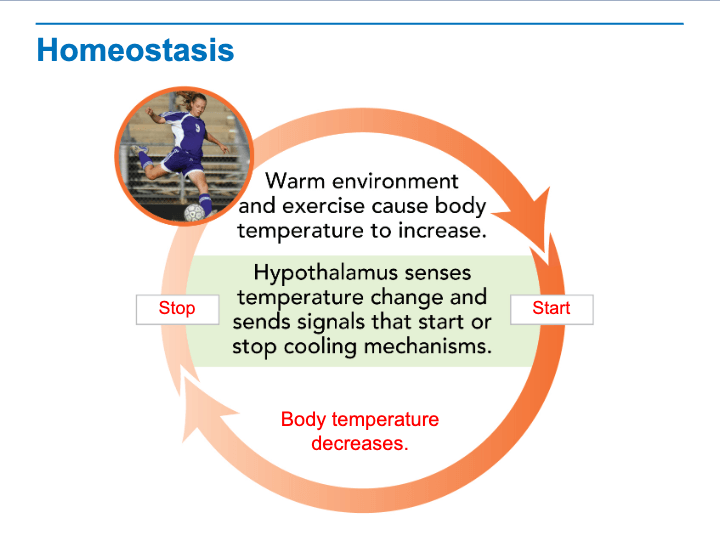
5.1.6 Explain homeostasis as a process to maintain stable internal environment
5.1.7 Relate how different tissues, organs and organ systems work together to achieve
homeostasis
5.1.8 Explain how homeostasis contributes to organisms’ survival
5.1.9 Illustrate by using examples how body systems coordinate in order to maintain
body homeostasis
5.1.10 Analyze a given diagram to predict how the body will perform feedback inhibition
to maintain homeostasis
5.1.11 Demonstrate understanding of the role of the liver in regulating blood glucose
concentration
Lab 7: Investigate, through inquiry-based activity, “how Do You Respond to an External Stimulus?”
3
Pre knowledge Test
Quizziz evaluation
4
Class Discussion
27.1 What Do I Know About the Human Body, So Far?
Humans are endotherms, which means they generate heat from within their bodies. Other chordates, such as reptiles, control their body temperature by behavior—these are extotherms. Endotherms eat much more food and use much more oxygen than ectotherms with the same body mass.
Working with a partner, answer the following question: Why do you think endotherms must eat more food and use more oxygen than ectotherms of the same body mass?
5
Open Ended
Working with a partner, answer the following question: Why do you think endotherms must eat more food and use more oxygen than ectotherms of the same body mass?
6
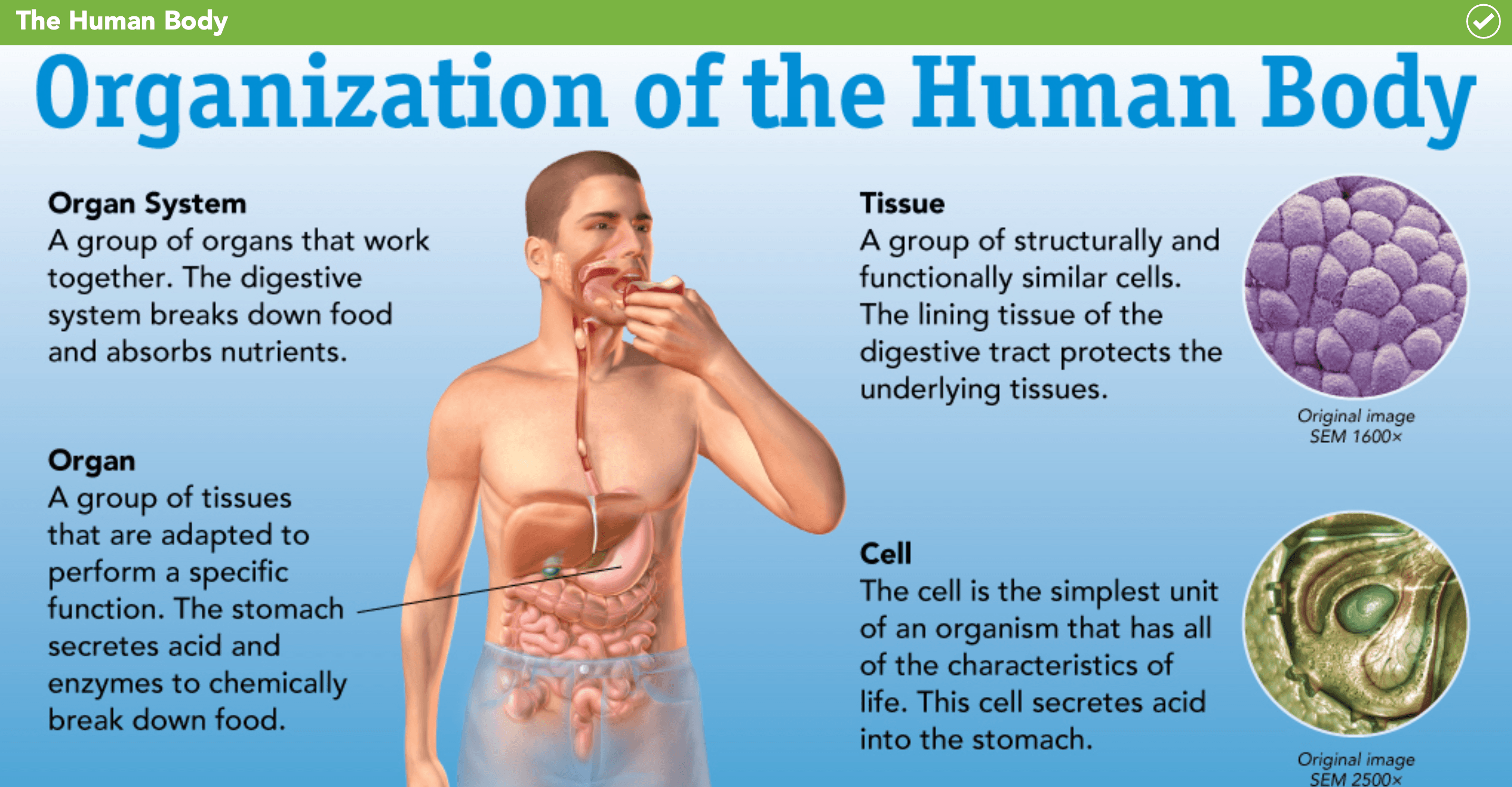
Interactivity: The Human Body
SAVVA Pearson Realize
CH 27 Lesson 1
7
Multiple Choice
Which of the below is the correct organization of Human Body from smallest to Larget.
cell-organ-tissue- organ system
cell-organ system- organ - tissue
cell - tissue- organ- organ system
Organ system-organ- tissue-cell
8
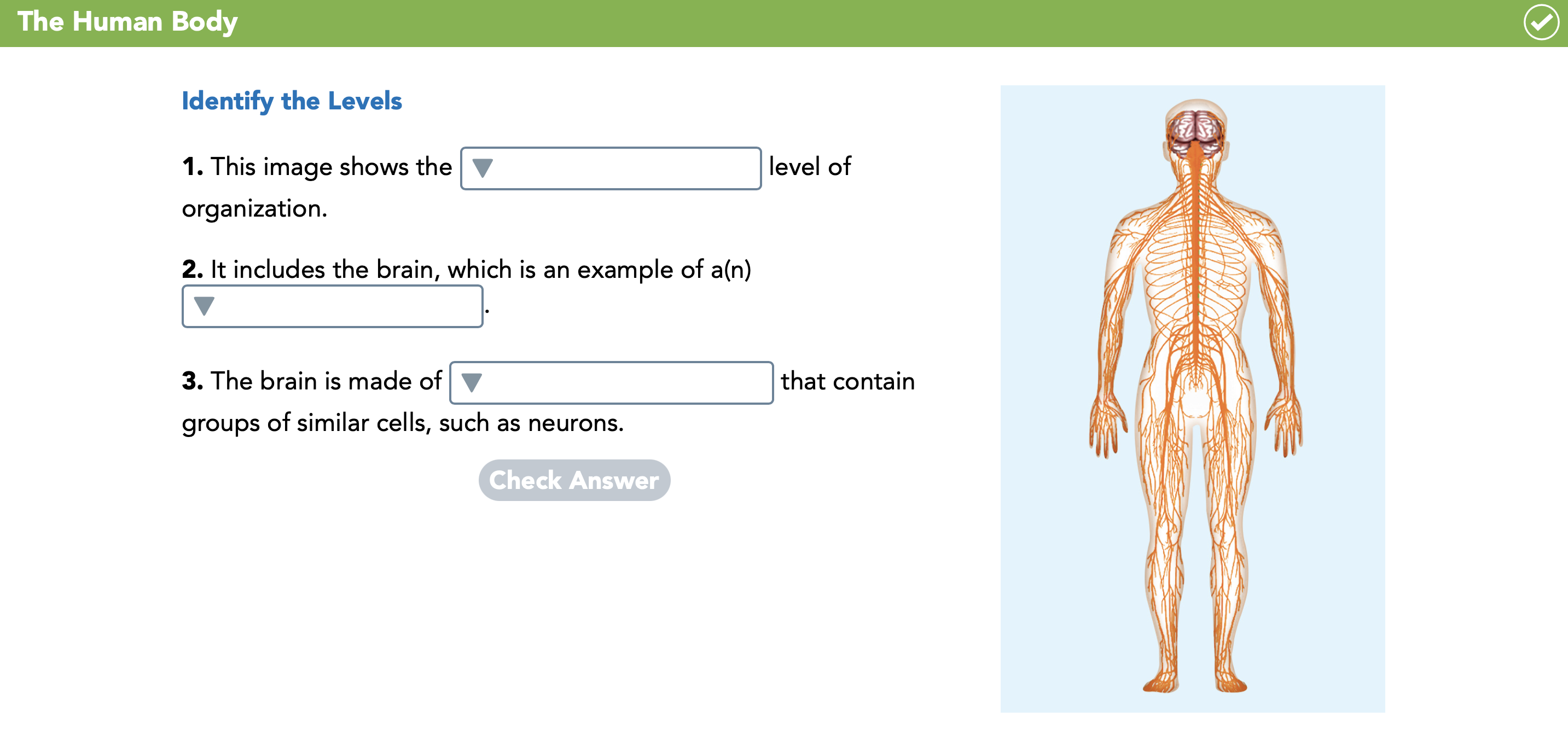
Interactivity: The Human Body
SAVVA Pearson Realize
CH 27 Lesson 1
9
Group Work (4 members) 5mins
Prepare 4 slides where each member cover 1 slide and 1 type of tissue
Use the link: https://www.khanacademy.org/science/high-school-biology/hs-human-body-systems/hs-body-structure-and-homeostasis/a/tissues-organs-organ-systems
Describe types of human tissues with examples of each, including:
1. epithelial
2. connective
3. nervous
4. muscular tissues
10
11
Interactivity: The Human Body
SAVVA Pearson Realize
CH 27 Lesson 1
12
13
14
15
16
17
18
19
Interactivity: The Human Body
SAVVA Pearson Realize
CH 27 Lesson 1
20
21
CH 27 Lesson 1 Human Body Organization
Show answer
Auto Play
Slide 1 / 21
SLIDE

Similar Resources on Wayground
18 questions
The Scientific Method
Presentation
•
10th Grade
18 questions
Mendel's Laws
Presentation
•
9th - 10th Grade
12 questions
Pedigrees
Presentation
•
10th Grade
19 questions
DNA Replication
Presentation
•
9th - 10th Grade
16 questions
Sex-linked traits
Presentation
•
10th Grade
17 questions
Mitosis y meiosis
Presentation
•
10th Grade
19 questions
The study of cells using the Microscope
Presentation
•
10th Grade
17 questions
Cell Division
Presentation
•
9th - 10th Grade
Popular Resources on Wayground
11 questions
Hallway & Bathroom Expectations
Quiz
•
6th - 8th Grade
10 questions
HCS SCI 03 Summer School Assessment 2
Quiz
•
3rd Grade
11 questions
Home Scope
Quiz
•
7th - 8th Grade
12 questions
2026 TAP Technology in the Classroom
Presentation
•
Professional Development
15 questions
HCS SCI 05 Summer School Assessment 2 Review
Quiz
•
5th Grade
15 questions
HCS SCI 04 Summer School Review 2
Quiz
•
4th Grade
59 questions
Geometry Unit 3 Review
Quiz
•
9th - 12th Grade
14 questions
FAST ELA READING SMAPLE TEST MATERIALS
Passage
•
3rd Grade