Search Header Logo
Heat Transfer Lesson & Quiz

Heat Transfer Lesson & Quiz

Assessment

Presentation

Science

6th Grade

Medium

NGSS
MS-ESS2-5, MS-PS1-4, MS-PS3-3

+3

Standards-aligned

Created by

Melissa Nelson

Used 40+ times

FREE Resource

23 Slides • 18 Questions

1

Heat Transfer Lesson

TAKE NOTES as you move through the lesson AND watch the videos - they will help you with the quiz questions at the end!

Slide image

2

Heat Transfer

Have you ever wondered how heat travels? In this unit, we will explore how heat is transferred at different rates.  

3

Imagine you have a hot bowl of soup.

Before adding the soup to the bowl the bowl was not warm.

After you added the hot soup the bowl became warm.

Why do you think the bowl became warm?

Where did the heat come from?


Slide image

4

Thermal Energy

Heat or thermal energy is created by the movement of particles. Thermal energy can be transferred through conduction, convection, and radiation.

Slide image

5

What is Heat Transfer?

Heat (energy) always moves from a warmer substance to a cooler substance.

Slide image

6

What is Heat Transfer?

The heat will continue to move until both substances are at the same temperature.

Slide image

7

Examples:

  • You touch a black car in the summer and the heat from the car transfers into your hand.

  • A breeze makes you feel cooler because the wind transfers heat away from your body.

Slide image

8

NON Examples:

  • You feel the cold of a winter day because the cold air transfers into you.

  • Your Coke in a cooler gets cold because the cold from the ice moves into the Coke.

Slide image

9

The greater the difference in temperature between the substances, the faster the heat will transfer!

This is what creates WIND!

10

There are three types of heat transfer.

Watch the video to learn more.

Take notes!

  • Conduction

  • Convection

  • Radiation

11

Multiple Choice

The name for heat transfer between two solids that are in direct contact or touching on another is...

1

insulation

2

radiation

3

convection

4

conduction

12

Conduction

  • Heat transfer by conduction is the transfer of heat through direct contact.

  • Molecules transfer energy to the molecules next to them.

  • The molecules do not have to be the same substance.

Slide image

13

Slide image

14

Slide image

15

No matter what it feels like, cold does not transfer into your body.

  • What is really happening here?

  • Why do you wear heavy clothes when it’s cold outside?

Slide image

16

17

Radiation

Heat transfer by radiation is the transfer of heat through electromagnetic waves.

Slide image

18

Radiation

There is no direct contact between the substances.

Slide image

19

Slide image

Example 1

20

Slide image


21

Convection

Heat transfer by convection is the transfer of heat through the fluid (liquids and gases) movement of currents.


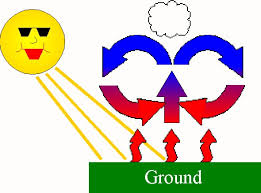
Warm fluids (liquids & gases) rise, cool down, sink, and then are warmed again.

Slide image

22

Slide image

The radiator warms the room by warming the air around it. Then the warm air transfers heat to the rest of the room through convection.


23

24

As air above the road warms up, it rises and is replaced by cooler air, forming a convection current.

Slide image

25

Multiple Choice

Question image

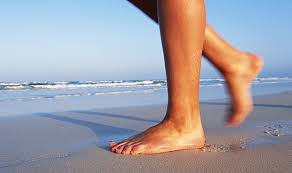
Walking on the warm sand sand with your bare feet demonstrates this type of heat transfer.

1

conduction

2

convection

3

radiation

26

Multiple Choice

___________________ is the type of heat transfer that occurs in fluids, such as warm air rising and cold air sinking; creating wind.

1

Convection

2

Conduction

3

Radiation

4

insulation.

27

Multiple Choice

Why do we wear sweaters in cold weather?

1

To keep cold out.

2

To generate heat.

3

To reduce heat loss.

4

All of the above.

28

Multiple Choice

Near the ceiling of a room the air is warmer; the warm air rises because of

1

conduction

2

convection

3

radiation

29

Multiple Choice

Transfer of thermal energy through "space"

1

conduction

2

convection

3

radiation

30

Multiple Choice

Question image

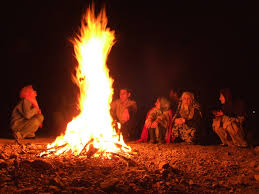
A group of friends gather around a fire to stay warm.

1

conduction

2

convection

3

radiation

31

Multiple Choice

Question image

Johnny accidentally grabbed the handle of the hot pot.

1

conduction

2

convection

3

radiation

32

Multiple Choice

Question image

What happens when ice cubes melt in a glass?

1

Heat travels from the ice to the warmer water.

2

No energy is transferred.

3

Heat is transferred from the warmer water to the ice cubes.

4

The water warms up due to the humidity

33

Multiple Choice

Question image

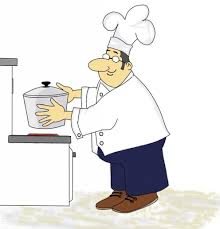
The man goes to take the hot pot off the stove with his bare hands.

1

conduction

2

convection

3

radiation

34

Multiple Choice

Warm air is __________ dense than cold air and rises creating convection currents.

1

more

2

less

35

Multiple Choice

Question image

Warm air rises and the cool air sinks demonstrates this type of heat transfer.

1

conduction

2

convection

3

radiation

4

Insolation

36

Multiple Choice

All of the following are examples of convection currents, except:

1

Warm air rising in a house

2

Cold water sinking to the bottom of the lake

3

Water flowing through pipes

4

Steam from hot soup rising into the air

37

Multiple Choice

Convection currents occur:

1

Only in liquids

2

When a dense substance is warmer than a less dense substance

3

In both liquids and gases

4

Weakly in solids

38

Multiple Choice

Heat from the Sun reaches Earth through which type of heat transfer?

1

Conduction

2

Radiation

3

Convection

4

All of the above

39

Multiple Choice

When you heat a pot on a stove, the handle gets warm. Which type of heat transfer is responsible?

1

Conduction

2

Radiation

3

Convection

4

All of the above

40

Multiple Choice

When two things are the same temperature:

1

They have the same number of molecules

2

Their molecules stop moving

3

Their molecules move at the same average speed

4

Heat transfer between the two things stops

41

Multiple Choice

What happens when a cold drink sits in a hot room?

1

It remains cold

2

It gets warmer

3

It starts boiling

4

It starts to freeze

Heat Transfer Lesson

TAKE NOTES as you move through the lesson AND watch the videos - they will help you with the quiz questions at the end!

Slide image

Show answer

Auto Play

Slide 1 / 41

SLIDE