

Science Grade 6 - Chapter 4.2 - Light

Presentation
•
Science
•
6th Grade
•
Practice Problem
•
Medium
+3
Standards-aligned

Rafe Hawkins-Hill
Used 39+ times
FREE Resource
7 Slides • 11 Questions
1
Science Grade 6 - Chapter 4.2 - Light
Science Grade 6 Revision Period

2
Light Waves
Peak or crest is the top of a wavelength
Trough is the bottom of the wave length
The amplitude of a wave is the maximum distance between the equilibrium position of a wave and its peak or trough.
The wavelength is the distance between two successive crests or troughs of a wave.

3
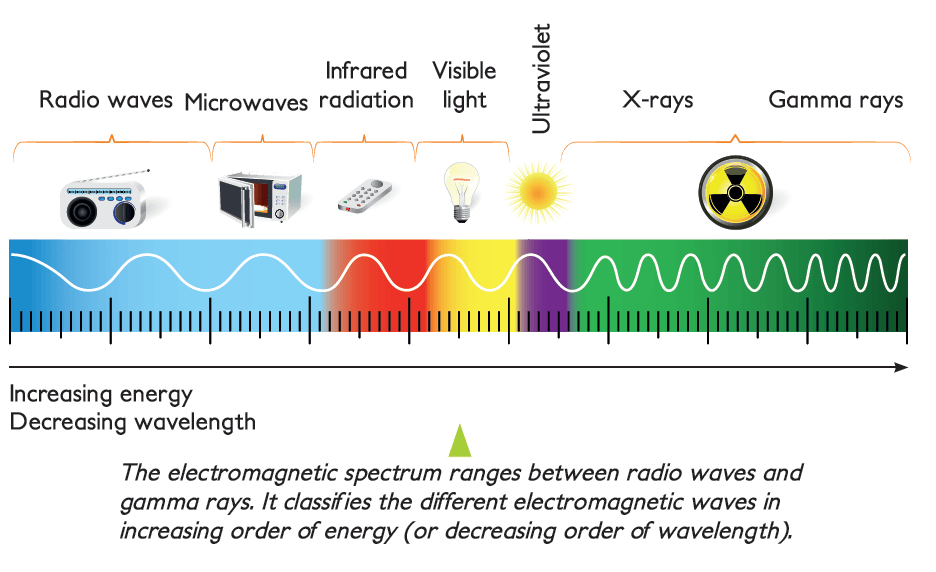
Electromagnetic Waves
Light is energy
Light is carried by electromagnetic waves through empty space and matter.
All the electromagnetic waves from the electromagnetic spectrum
All light travels in straight lines.
4
Visible light spectrum
The visible light spectrum is the part of the electromagnetic spectrum that humans can see.
Violet light - most energy - Short wavelength
Red light - least energy - long wavelength

5
Light and shadows
A shadow is formed when an object reflects or absorbs light
It is affected by the angle and distance of the light source.

6
Absorption, Reflection, Refraction
Absorption - When an object absorbs light - Particles move faster - objects get warmer!
Reflection - When light bounces off an object - a red apple looks red because it reflects mostly red light.
Refraction - bending of light - When light moves from one material to another the speed changes, causing refraction.

7
Types of lenses
Concave - Looks like a cave entrance - Thin in the middle - Light bends outwards.
Convex - Large in the middle - Light bends inwards.

8
Multiple Choice

Which of the following colours on the visible light spectrum has the greatest amount of energy?
9
Multiple Choice
Which of the following colours on the visible light spectrum has the least amount of energy?
10
Fill in the Blanks

What is the name of the dark area behind the tree, labeled A?
Type answer...
11
Multiple Choice
How would the size of the dark area change when the sun reaches position 1? Choose the answer.
12
Fill in the Blanks
13
Fill in the Blanks
14
Multiple Select
15
Multiple Choice

Light rays strike the left side of the lens shown below.
Select the letter that best shows how the light rays emerge from the right side.
16
Multiple Select

Which of the following factors affect shadows?
17
Multiple Select

Which of the following are true about this lens?
18
Multiple Select

Which of the following are true about this lens?
Science Grade 6 - Chapter 4.2 - Light
Science Grade 6 Revision Period
Show answer
Auto Play
Slide 1 / 18
SLIDE


