Search Header Logo
  1. Resource Library
  2. Science
  3. Biology
  4. Natural Selection
  5. Evolution And Natural Selection
evolution and natural selection

evolution and natural selection

Assessment

Presentation

•

Science

•

7th Grade

•

Medium

•
NGSS
MS-LS4-4, MS-LS4-2, MS-LS3-1

+3

Standards-aligned
Created by

Marva Atterberry

Used 569+ times

FREE Resource

1 Slide • 12 Questions

1

evolution and natural selection
Slide image

2

Multiple Choice

Any inherited trait that gives an organism an advantage in its environment is called ___.
1
a mutation
2
an adaptation
3
evolution
4
natural selection

3

Multiple Choice

___ are mistakes in the DNA that cause variation within a species.
1
mutations
2
adaptations
3
speciations
4
isolations

4

Multiple Choice

The differences among a species, like different bird beaks, are called
1
theories
2
variations
3
adaptations
4
genes

5

Multiple Choice

Which of the following means "change over time"
1
natural selection
2
speciation
3
evolution
4
isolation

6

Multiple Choice

Which is necessary for speciation to occur?
1
adaptation
2
mass extinction
3
isolation
4
acquired traits

7

Multiple Choice

____ is when members of a species that are best suited for their environment survive and reproduce at a higher rate than other members of the species
1
natural selection
2
artificial selection
3
speciation
4
adaptation

8

Multiple Choice

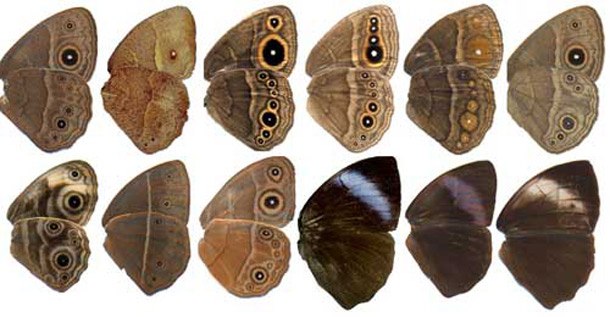
Question image
These moths are all the same species. The differences between their wings is an example of ________________
1
Natural Selection
2
Variation
3
Homeostasis
4
Extinction

9

Multiple Choice

Mutations are a change in what?
1
DNA
2
tRNA
3
genotype
4
phenotype

10

Multiple Choice

The theory of evolution by natural selection means that what is changing over time?
1
The inherited traits of a population.
2
The acquired traits of a population.
3
Hair color and eye color
4
Attractive features.

11

Multiple Choice

Question image

What is suggested by the similary of early embryos of different species of vertebrates?

1

No evolutionary relationship between the groups

2

A recent common ancestry

3

Similar environments in the past

4

Evolution from a distant common ancestor

12

Multiple Choice

Structures with no function that are remnants of an organism’s evolutionary past are

1

Not visible organisms

2

Young in origin

3

Vestigial

4

Useful to the organism

13

Multiple Choice

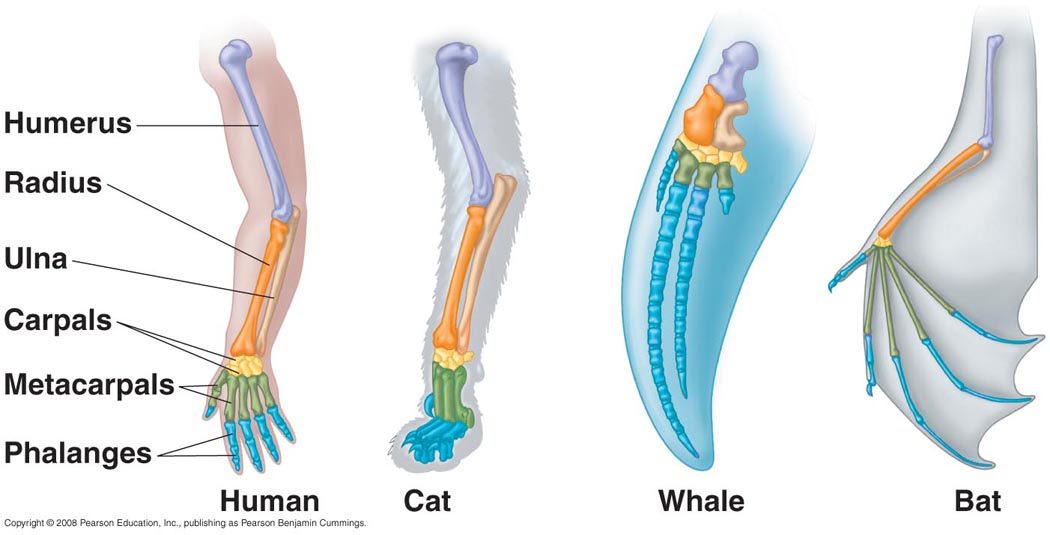
Question image

Structures with the same parts but have different functions, suggesting that organisms with a backbone share common ancestry is called…

1

Not related

2

Not homologous

3

Homologous

4

Young in origin

pattern-tertiary

evolution and natural selection

Slide image

Show answer

Auto Play

Slide 1 / 13

SLIDE