
- Resource Library
- Science
- Earth & Space Science
- Environmental Studies
- Short & Long Term Environmental Changes
Short & Long Term Environmental Changes
Presentation
•
Science
•
7th - 8th Grade
•
Practice Problem
•
Medium
+3
Standards-aligned
Constance Bond
Used 485+ times
FREE Resource
5 Slides • 13 Questions
1
Effects of
Short & Long Term Environmental Changes
2
Multiple Select
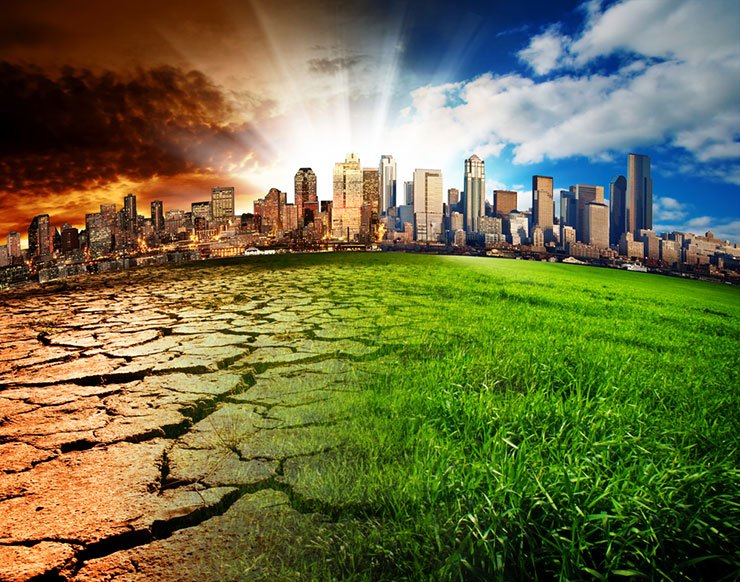
Environmental change: a change or disturbance of the environment most often caused by human influences and natural ecological processes.
Which do you think are examples of environmental changes?
(Click all that apply)
Floods
Droughts
Fires
Deforestation
Overpopulation
3
Short Term Environmental Changes
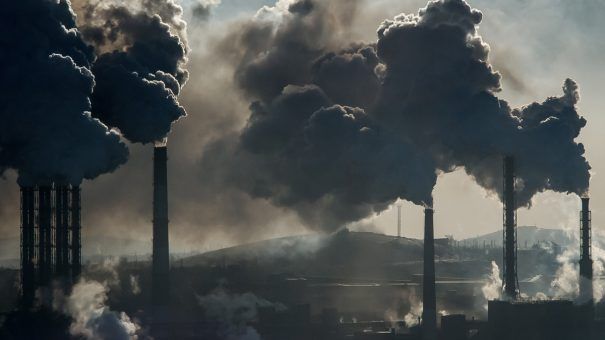
Occurs quickly
Affects organisms immediately
Organisms move away or die
4
Long Term Environmental Changes
Occurs gradually
Affects organisms slowly
Organisms adapt or go extinct
5
Effects of Environmental changes
YOU will need to determine the effect (results) of the environmental changes.
Think of the environmental change as the "problem"
and the effect is how the organism will try to "fix it"
6
Open Ended
"If annual rainfall increased and caused ponds in a habitat to become deeper, how, after many generations might the traits of water lilies change?"
What is the environmental change in the question above?
7
Open Ended
"If annual rainfall increased and caused ponds in a habitat to become deeper, how, after many generations might the traits of water lilies change?"
Which part of the water lily is going to be most affected by the ponds becoming deeper? (Hint: look at the picture)
8
Multiple Choice
If annual rainfall increased and caused ponds in a habitat to become deeper, how, after many generations might the traits of water lilies change?
Brighter flowers
Longer Stems
Wider leaves
Thick roots
9
Effects of Environmental changes
YOU will also need to predict the environmental change that caused the effect (results).
Think of the effect as the "fix" and the environmental change as what could have been the "problem"
10
Open Ended
"The Resurrection Fern can shrivel up into a ball and remain that way for many years. When moisture is abundant, the dry leaves absorb water and unroll. The plant will turn green and grow. Under which environmental conditions did his adaptation develop?"
What causes the resurrection fern to unroll?
11
Open Ended
"The Resurrection Fern can shrivel up into a ball and remain that way for many years. When moisture is abundant, the dry leaves absorb water and unroll. The plant will turn green and grow. Under which environmental conditions did his adaptation develop?"
What would cause the fern to shrivel back up into a ball?
12
Multiple Choice
The Resurrection Fern can shrivel up into a ball and remain that way for many years. When moisture is abundant, the dry leaves absorb water and unroll. The plant will turn green and grow. Under which environmental conditions did his adaptation develop?
Atmosphere with little carbon dioxide
High density of many competitor plant species
Abundant insect pollinators of many varieties
Climate including periods of prolonged drought
13
Multiple Choice
A description of the Eastern cottontail rabbit species is below. The environment that supports an Eastern cottontail population is changed due to urban development. Much of the land is cleared and covered in concrete. How is this urban development most likely to affect the population of rabbits?
The number of gray rabbits will increase because the brown rabbits will turn gray.
The number of brown rabbits will increase because the gray rabbits will turn brown.
The number of gray rabbits will increase because predators will see brown rabbits more easily.
The number of brown rabbits will increase because predators will see gray rabbits more easily.
14
Multiple Choice
The Dead Sea has a 33% salinity, which makes it inhospitable for many aquatic organisms. During periods of abundant rain, the concentration of salt decreases to a level that certain species of algae can tolerate and they begin to grow. What can be expected when the salinity returns to normal levels?
Increased algae growth
Plant life flourishes
Algae dies off
Animals return to the area
15
Multiple Choice
Three-toed tree sloths are mammals which thrive in the jungles of Central and South America. A sloth’s diet is consists entirely of leaves and buds from trees. How will these organisms be affected as rain forests are destroyed by deforestation?
Most sloths will become carnivores.
The sloth population will likely decrease.
Some sloths will start to hibernate.
A cave-dwelling population will appear.
16
Multiple Choice
Bank swallows are birds that make their nests on the edges of rivers. In the spring they lay four or five eggs. Bank swallows can’t swim or breathe underwater. What change in these birds will likely be brought about by flooding in their freshwater habitat?
Laying more eggs in the spring.
Building nests higher up the banks.
Eating different kinds of insects.
Learning to breathe underwater.
17
Multiple Choice
Catfish have dorsal fin spines to defend against predators and caudal fins, which help to propel the fish through the water. A swim bladder controls how high or low the fish sits in the water and gills allow the fish to breathe by taking oxygen out of the water. Catfish spend most of their lives at the bottom of freshwater lakes and streams. What catfish trait may change, over many generations, if the pond habitat in which it lives becomes significantly shallower?
Dorsal fin
Caudal fin
Swim bladder
Gills
18
Multiple Choice
Each year, an area of the Gulf of Mexico becomes very low in oxygen due to excessive runoff from the Mississippi River. How might marine organisms respond to this decrease in oxygen?
Acquire the ability to breathe carbon dioxide.
Migrate to an area with more oxygen.
Establish a niche in a terrestrial ecosystem
Compete with aquatic plants for space.
Effects of
Short & Long Term Environmental Changes
Show answer
Auto Play
Slide 1 / 18
SLIDE

Similar Resources on Wayground
13 questions
Mitosis
Lesson
•
7th Grade
10 questions
Sound Waves
Lesson
•
7th - 8th Grade
12 questions
Unit 6 Cells Pre-Assessment
Lesson
•
7th Grade
14 questions
Plate Tectonic Theory
Lesson
•
6th - 8th Grade
12 questions
Respiration in Organisms
Lesson
•
7th Grade
15 questions
Chemical Compounds
Lesson
•
7th Grade
15 questions
Levels of Ecological organization
Lesson
•
6th - 8th Grade
13 questions
The Five Senses
Lesson
•
7th Grade
Popular Resources on Wayground
10 questions
5.P.1.3 Distance/Time Graphs
Quiz
•
5th Grade
10 questions
Fire Drill
Quiz
•
2nd - 5th Grade
20 questions
Equivalent Fractions
Quiz
•
3rd Grade
15 questions
Hargrett House Quiz: Community & Service
Quiz
•
5th Grade
20 questions
Main Idea and Details
Quiz
•
5th Grade
20 questions
Context Clues
Quiz
•
6th Grade
20 questions
Inferences
Quiz
•
4th Grade
15 questions
Equivalent Fractions
Quiz
•
4th Grade
Discover more resources for Science
20 questions
Recognizing Violence and Being an Upstander
Quiz
•
8th Grade
19 questions
Introduction to Properties of Waves
Lesson
•
6th - 8th Grade
16 questions
Interactions within Ecosystems
Lesson
•
6th - 8th Grade
10 questions
Exploring the Layers of the Earth
Interactive video
•
6th - 10th Grade
20 questions
Electricity and Circuits
Quiz
•
7th Grade
20 questions
Newton's Laws of Motion
Quiz
•
8th Grade
16 questions
Photosynthesis and Cellular Respiration Review
Quiz
•
7th Grade
8 questions
VP #9: Amoeba Sisters Pedigrees
Interactive video
•
7th Grade