

Mughal Empire

Presentation
•
Social Studies
•
7th Grade
•
Medium

Suchismita Gupta
Used 53+ times
FREE Resource
12 Slides • 24 Questions
1
Mughal Empire

2
Mughal Descent
Mughal dynasty ruled most of northern India from the early 16th to the mid-18th century. They descended from Timur from their father’s side and Chengis Khan from their mother’s side The Mughal were proud of their Timurian descend than the Mongol descend , The reason was that Mongols were associated with mass massacre of the land conquered by them . A Mongol branch was the Uzbegs was also their competitors.
3
Mughal Emperors
BABUR
HUMAYUN
AKBAR
JAHANGIR
SHAH JAHAN
AURANGZEB
4
BABUR ( 1526-1530 )
Babur is the founder of the Mughal Empire in India.
He was a descendant of Timur (on his father’s side) and Genghis Khan (on his Mother’s side).
In 1494 at the age of 12, Babur became the ruler of Farghana succeeding his father.
He was forced to leave his ancestral throne due to the invasion of another Mongol group the Uzbegs After years of wandering he finally captured Kabul
5
First Battle of Panipat
1526, Babur defeated Ibrahim Lodi in the first Battle of Panipat and quickly occupied Delhi
Despite of vast and superior troop Ibrahim Lodi lost in the battle due to Babur’s superior strategy and use of artillery.
The First Battle of Panipat marked the foundation of Mughal dominion in India.
Babur conquered Delhi and sent his son Humayun to seize Agra. Babur announced himself as “Emperor of Hindustan”.
6
Multiple Choice
He invited Babur to invade India.
Ibrahim Lodi
Daulat Khan Lodi
Rana Sangha
Sher Shah
Daulat Khan Lodhi
7
Multiple Choice
What is the correct location of the Mughal Empire
8
Multiple Choice
_______________ was the first Mughal emperor
Akbar
Birbal
Babar
Humayun
9
Multiple Choice

Who is this ?
babur
akbar
shah jahan
I have no idea
10
Multiple Choice
Q1. Mughal means ____________?
muslim
mongol
Ghenghis Khan
Empire
11
Humayun
Humayun became king after Babur, but internal problems and his defeat to Sher Shah Suri at Chausa and Kannauj forced him to flee to Iran where he received the help of the Safavid Shah and recaptured Delhi in 1555.
But he died soon after, in an accident at his palace.
12
Multiple Choice
Whom did Babur defeat to take control of India?
Sikandar Lodi
Khizr khan
Alauddin khalji
Ibrahim Lodhi
13
Multiple Choice
Humayun was a keen ____________
Doctor
Artist
Astronomer
Architect
14
Succession Policy
Succession traditions of the Mughals: The succession tradition of Mughals was not that of primogeniture. Instead, they followed the Mughal and Timurid custom of coparcenary inheritance.
In primogeniture, the eldest son inherits his father’s estate.
In coparcenary, the inheritance is divided amongst all the sons. Of course one of them have to be the emperor
15
MUGHAL RELATIONS WITH OTHER RULERS
Many Indian rulers started accepting Mughal supremacy, and the Mughals campaigned and fought against rulers who did not obey them.
The Rajput married their daughters into Mughal families to get high positions in the Mughal Empire. The Sisiodiya Rajputs did not accept Mughal supremacy for a long time, but after they were defeated they were honourably given their land back and made vassals of the Mughal Empire.
This balance, where the Mughals defeated but did not humiliate the enemy helped them extend their rule over many parts of India.
16
MANSABDARS
The Mansabdari System was introduced by Mughal emperor Akbar The term mansabdar refers to an individual who hold a mansab or a rank
Those who joined the Mughal services were called the mansabdars and they were from diverse back grounds such as Turanis , Iranians , Rajputs , Marthas and Afghans etc The mansabdar’s military responsibility required him to maintain a specified number of sawars or calvarymen Mansabdars received their salaries as revenues from assignments called jagirs for maintaining the cavalry and their personal expenditures
In Abkar’s reign the jagir’s were carefully assessed so that the revenue collect from it a roughly equal to the mansabdar’s salary
In Aurangzeb’s time the number of mansabdars had increased so much that there was shortage of jagirs As a result the mansabdars became exploitative and tried to extract as much revenue from the jagirs as possible
17
Multiple Choice
The mughal ruler who was not able to manage the mansabdars and jagirdars was
Babur
Akbar
Aurangazeb
Jahangir
18
Multiple Choice
The military responsibility of the mansabdars did not include-
Maintaining horses and having them branded.
Maintain a specified number of sawars.
got the cavalrymen registered
Giving clothes to the people as charity.
19
Multiple Choice
Rank and salary were determined by a numerical value called_________
Rupayya
dehliwal
Zat
Rupees
20
Multiple Choice
The people who joined the mughal services were called__________
Mansabdars
Sultan
Governor General
Viceroy
21
FEATURES OF AKBAR’S GOVERNMENT
Akbar was an enlightened and successful administrator. It goes to the credit of Akbar that the subsequent Mughal rulers followed in principle the administrative policy developed by him.
Concentration of all power in the King: Akbar was the center of all powers—civil, judicial, military and religious. He was the Supreme Commander of the army. He established a centralized administration. All appointments, promotions or dismissals depended on his decision and orders. He meet the common people in an open court called the Diwan-i-am He consulted with the nobles in the Diwan- i- Khas
22
FEATURES OF AKBAR’S GOVERNMENT
He developed the Mansabdari system
Land revenue system Todar Mal, the revenue minister of Akbar played an important role in devising and introducing a very effective and efficient land revenue and record system.
Provincial Administration: Akbar divided his empire into fifteen provinces called the subas. They carried out all the military and administrative function
23
FEATURES OF AKBAR'S POLICY
Abul Fazl wrote a account of Akbar’s Akbar Nama which gives an account of Akbar’s reign Akbar’s Tolerant Religious Policy:
Akbar was very broadminded. He wanted to work out a synthesis of all religions. His treatment with the Hindus was very tolerant.
In fact he was so liberal in his religious outlook that he attempted to find a new religion on the basis of good points of all religions called Din-i-ilahi Of course he made no effort to force his religion on his subjects.
24
Multiple Choice
What is Akbar Nama
Volume 2
Volume 1
A there volume history of akbars reign
Volume 3
25
Multiple Choice
Name the revenue minister of Akbar who surveyed the crop yields.
Todar Mal
Abul Fazl
Tansen
Birbal
26
Multiple Choice
The first battle of Paniput is between whom and whom
Humayun and Sher Shah Suri
Gandhi and the British rulers
Babur and Ibrahim Lodi
Chandragupta Maurya and Kautilya
27
Multiple Choice
Which of the following is not a mughal emperor
Aurangzeb
Bahadur Shah Zafar
Sher Shah Suri
None of these
28
Multiple Choice
Akbar the Great improved his empire in all these areas EXCEPT:
tax system
religious tolerance
economic improvements
world wide exploration
29
Multiple Choice
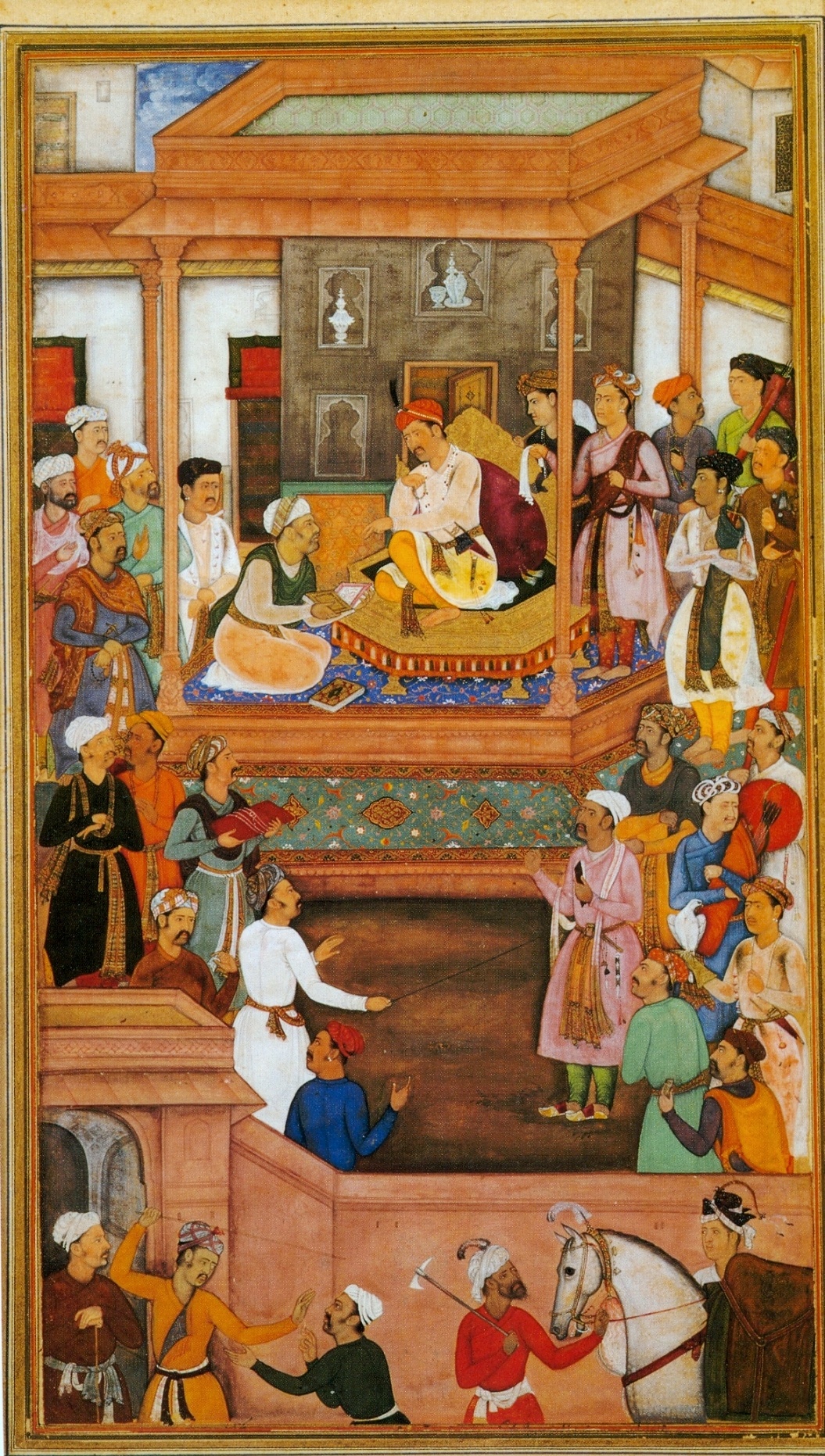
30
Multiple Choice
31
Multiple Choice
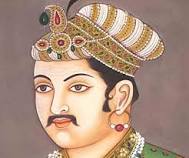
Who is this
Babur
Akbar
?
Humayun
32
Multiple Choice
Which emperor does the Nine jewels belong to ?
Jahangir
Akbar
Shah Jahan
Babar
33
Multiple Choice
Akbar became the ruler at the age of _____________
15
17
13
14
34
Multiple Choice

In which battle did Humayun and Sher Shah meet?
Battle of tarrain 1
Battle of tarrain 2
Battle of Chausa
35
Multiple Choice
Akbar was the son of ________________
Babur
Sher Shah
Jahangir
Humayun
36
Multiple Choice
The greatest mughal emperor was __________---
Jahangir
Akbar
Shah Alam
None
Mughal Empire
Show answer
Auto Play
Slide 1 / 36
SLIDE
Similar Resources on Wayground

29 questions
Battles and Events of the American Revolution
Presentation
•
8th Grade
30 questions
The Roman Catholic Church in Medieval Europe
Presentation
•
6th - 7th Grade
26 questions
Ethnic Groups of SW Asia - 7th Grade
Presentation
•
7th Grade
26 questions
South America Physical Geography
Presentation
•
7th Grade
31 questions
The Cold War Timeline
Presentation
•
6th Grade
31 questions
Ancient India
Presentation
•
6th Grade
31 questions
Chapter 13: Lesson 4
Presentation
•
8th Grade
30 questions
The Declaration of Independence
Presentation
•
8th Grade
Popular Resources on Wayground
6 questions
PRIDE Always and Everywhere
Presentation
•
12th Grade
20 questions
Lab Safety Quiz

Quiz
•
6th Grade
26 questions
KOR Review Kahoot Questions
Quiz
•
8th Grade
21 questions
Continents and Oceans
Quiz
•
6th Grade
12 questions
Unit Zero lesson 2 cafeteria
Presentation
•
9th - 12th Grade
20 questions
Parts of Speech
Quiz
•
5th Grade
10 questions
Riddles Riddles fun Riddles
Quiz
•
6th - 12th Grade
16 questions
Subject & Predicate
Quiz
•
5th Grade
Discover more resources for Social Studies
10 questions
Exploring the Age of Exploration: Key Events and Figures

Interactive video
•
6th - 10th Grade
20 questions
Primary and Secondary Sources
Quiz
•
7th Grade
21 questions
ss.7.cg.1.1- Ancient Influences
Quiz
•
7th Grade
13 questions
The French and Indian War
Interactive video
•
6th - 8th Grade
27 questions
SW Asia Geography Test Review
Quiz
•
7th Grade
25 questions
SS7G1 Africa Geography
Quiz
•
7th Grade
21 questions
Unit 2 Age of Contact 7th gr
Quiz
•
7th Grade
11 questions
Top 10 - B Cultural Diversity ME
Quiz
•
7th Grade