CHAPTER 2: CELLS AS BASIC UNIT OF LIFE (PART 2)
Presentation
•
Science
•
7th Grade
•
Hard
Norfadzilah Lee
Used 7+ times
FREE Resource
26 Slides • 20 Questions
1
CHAPTER 2: CELLS AS BASIC UNIT OF LIFE (PART 2)
2
3
4
5
6
7
8
9
10
11
12
13
14
15
16
17
18
19
20
21
22
23
24
25
26
27
Multiple Choice
The role of these specialised cells is to help fight off infection and foreign bodies.
Palisade Cells
Nerve Cells
White Blood Cells
Red Blood Cells
28
Multiple Choice
What cells have NO nucleus?
Leaf cells
Animal cells
Red blood cells
Egg cells
29
Multiple Choice
Which of the following tissues lines the interior and exterior of organs?
Epithelial
Connective
Muscle
Nervous
30
Multiple Choice
Which of the following tissues is made up of cells that contract and relax to move substances through the body and help the body move?
Epithelial
Connective
Muscle
31
Multiple Choice
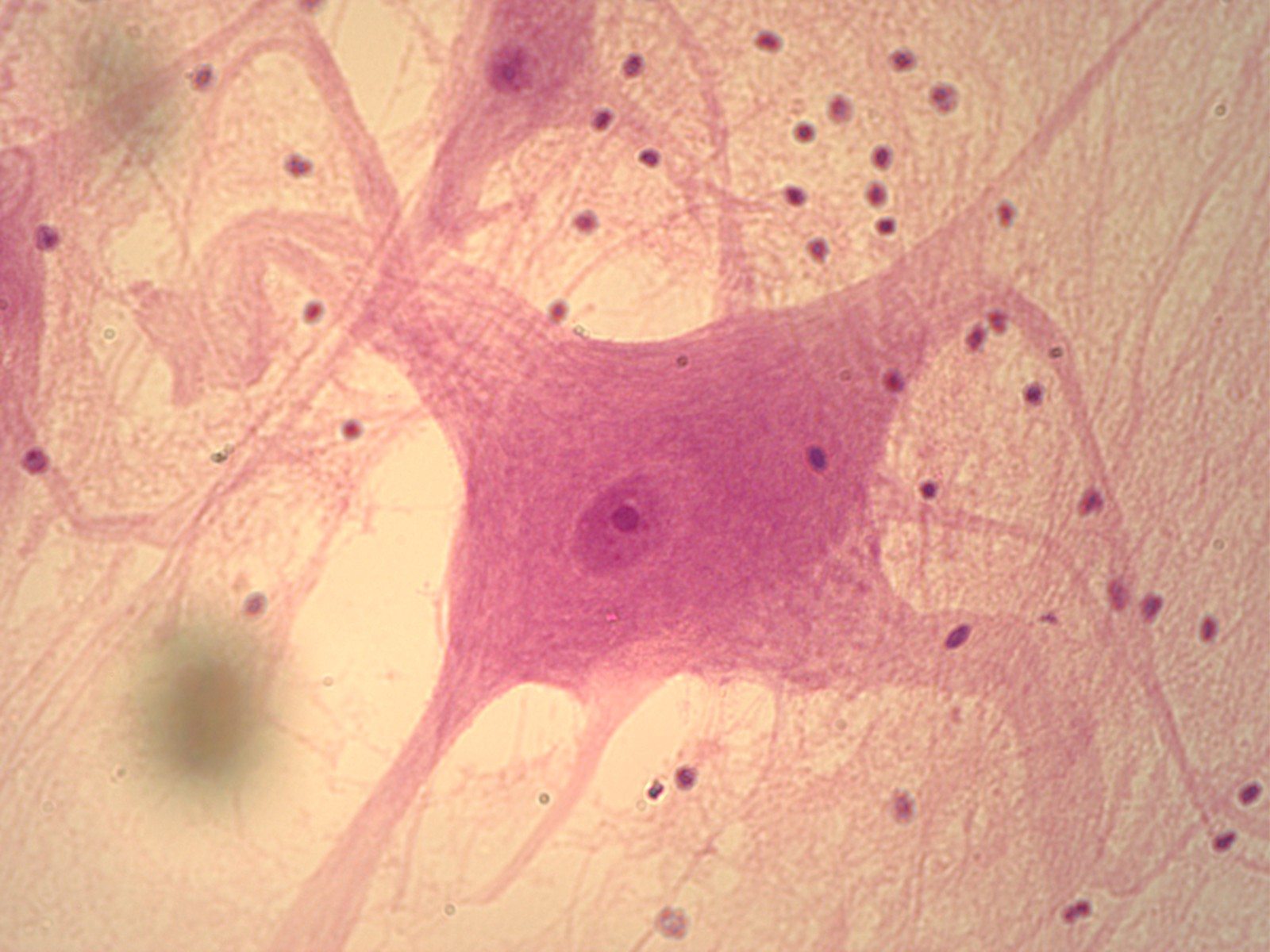
This type of tissue, shown in the picture, sends messages throughout the body, to and from the brain, in the form of electrical impulses.
Nervous Tissue
Connective Tissue
Muscular Tissue
32
Multiple Choice
What are the four main tissues found in the body?
Epithelial, Connective, Bone, Blood
Muscle, Connective, Blood, Epithelial
Nervous, Muscle, Connective, Epithelial
Nervous, Muscle, Connective, Bone
33
Multiple Choice
What is the correct order of organization?
cells->tissue->organs->organ systems-> organism
tissue->cells->organs->organ systems-> organism
organs->organ systems-> organism->cells->tissue
34
Multiple Choice
This is a example of........
an organ system
cells
organs
tissues
35
Multiple Choice
Every organ is made up of two or more:
Organ Systems
Tissues
Muscles
Cells
36
Multiple Choice
A specialised cell is a cell that has ...
the ability to divide/ replicate
a specific function
no specific function in the body
the ability to differentiate/ specialise
37
Multiple Choice
A group of similar cells that work together, to perform a function, make up _____.
An organism
An organ system
An organ
A tissue
38
Multiple Choice
What is a cell?
The smallest and most basic unit of life
A non living organism
A type of element
An atom
39
Multiple Choice
How are multi-celled and single-celled organisms different?
Multi-celled organisms need energy to survive, while single-celled organisms need no energy to survive.
Single-celled organisms can be seen without using a microscope, while multi-celled organisms are microscopic.
Multi-celled organisms have large numbers of specialized cells to perform a variety of life functions, while single-celled organisms complete life functions with one cell.
Single-celled organisms have large numbers of identical cells that all perform the same function, while multi-celled organisms have cells that are all different and perform different life functions.
40
Multiple Choice
Why do humans require many different types of cells to survive?
Human cells are identical and work together to perform the same function.
Human cells are specialized and work together to perform the same function.
Human cells are identical and work independently to perform different functions.
Human cells are specialized and work independently to perform different functions.
41
Multiple Choice
Fungi, Plants, and Animals
Unicellular organisms
Multicellular organisms
42
Multiple Choice
Which best describes the main job of most cells in multicellular organisms?
Cells work to keep themselves alive.
Cells work to keep the organism alive.
Cells work to release needed materials.
Cells work to store unneeded materials.
43
Multiple Choice
Is composed of a single cell
Unicellular
Multicellular
Both
44
Multiple Choice
The majority of living organisms on Earth can be classified as _______.
multicellular
unicellular
mammals
insects
45
Multiple Choice
5. Based on this image is the Euglena multicellular or unicellular?
1. Multicellular
2. Unicellular
46
Multiple Choice
Basic unit of life
Cell
Tissue
Organ
Organ System
CHAPTER 2: CELLS AS BASIC UNIT OF LIFE (PART 2)

Show answer
Auto Play
Slide 1 / 46
SLIDE

Similar Resources on Wayground
39 questions
Digestive and Excretory Body Systems
Presentation
•
7th Grade
37 questions
Genetic Engineering
Presentation
•
6th - 7th Grade
39 questions
Body Systems
Presentation
•
6th Grade
43 questions
Genes and Heredity
Presentation
•
8th Grade
41 questions
Science
Presentation
•
7th Grade
43 questions
Updated organelles part 2
Presentation
•
7th Grade
39 questions
Introduction to Human Body
Presentation
•
7th Grade
43 questions
The Cell System
Presentation
•
7th Grade
Popular Resources on Wayground
19 questions
Naming Polygons
Quiz
•
3rd Grade
10 questions
Prime Factorization
Quiz
•
6th Grade
20 questions
Math Review
Quiz
•
3rd Grade
15 questions
Fast food
Quiz
•
7th Grade
20 questions
Main Idea and Details
Quiz
•
5th Grade
20 questions
Context Clues
Quiz
•
6th Grade
20 questions
Inferences
Quiz
•
4th Grade
19 questions
Classifying Quadrilaterals
Quiz
•
3rd Grade
Discover more resources for Science
16 questions
Interactions within Ecosystems
Presentation
•
6th - 8th Grade
20 questions
Moon Phases and Eclipses
Quiz
•
6th - 8th Grade
16 questions
Photosynthesis and Cellular Respiration Review
Quiz
•
7th Grade
22 questions
6th & 8th Grade Science Material SOL Review
Quiz
•
6th - 8th Grade
20 questions
genetics, punnett squares, heredity
Quiz
•
7th Grade
17 questions
Human body systems
Quiz
•
7th Grade
20 questions
Food Webs + Energy Pyramids
Quiz
•
7th Grade
20 questions
Evolution and Natural Selection
Quiz
•
7th Grade