

Credit Cards

Presentation
•
English
•
9th Grade
•
Practice Problem
•
Medium
+10
Standards-aligned

John Palmer
Used 52+ times
FREE Resource
6 Slides • 6 Questions
1
Credit Cards
2
Poll
On a scale of 1-5 how much do you already know about credit cards?
1 (Nothing)
2
3
4
5 (Everything)
3
Credit Limits
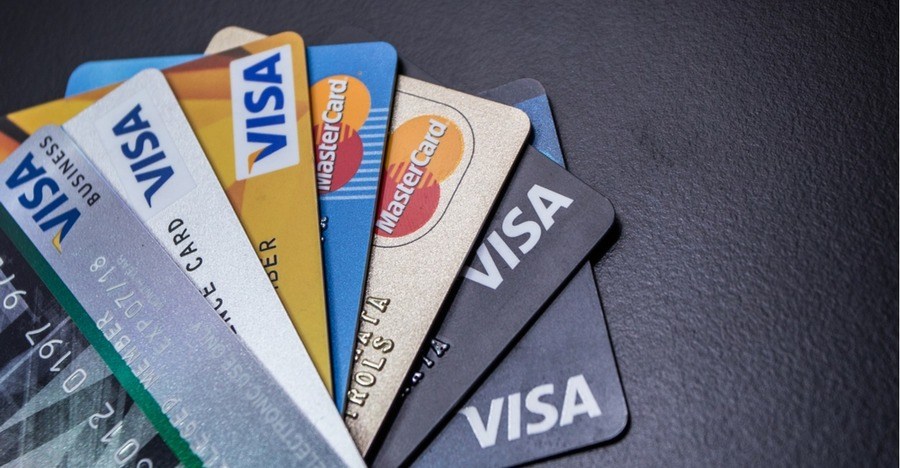
Credit cards buy things without paying for them right away. When you pay for something with credit, you are borrowing money and promising to pay it back. If you have an emergency or need to buy something expensive, they can be a big help. They let you build good credit if you pay your bills in full and on time. Credit cards come with limits. If your card’s credit limit is $2,000, you won’t be able to use it to buy something that costs $2,500.
When you buy something with a credit card, you don't necessarily need to pay that amount of money back that month, or even that year. Each month, you’ll get a bill from your credit card company with a required minimum payment. It will likely be a small portion of the total amount that you owe. Only paying the minimum might be tempting, but it’s a bad idea.
4
Multiple Choice
Which of the following statements is false?
Credit cards let you spend unlimited money.
Credit cards have minimum monthly payments.
Credit cards give you the chance to build good credit.
Credit cards let you spend money that you don’t have.
5
How to avoid paying interest
Credit card companies make money by charging interest on the money you owe. Interest is determined by the annual percentage rate (APR) for that particular card, and it applies to every purchase you make. Remember Melvin? If he only paid the minimum monthly payment, $25, it would take him over 7 years to pay off that $1,000. And that’s not all he’d owe. His credit card had a 25% APR, so at the end of 7 years he’ll owe more in interest than the amount he borrowed in the first place!
The bigger the payment that you make each time you pay your bill, the less interest you have to pay. If you pay the whole amount, you don't have to pay any interest at all! If you pay the minimum, though, you're going to rack up a lot of interest, so avoid doing that whenever you can.
6
Multiple Choice
How can you avoid paying interest on your credit card purchases?
by only paying the minimum each month
by only using your credit card for big purchases
by having a credit card with a high APR
by paying off your whole bill each month
7
Avoid cards with fees
In addition to interest, credit cards often come with assorted fees. There may be an introductory fee (to sign up), an annual fee (a yearly fee to have the card) and additional fees if you make a late payment or miss a payment altogether. It may be tempting to make large purchases and put off payments for later, but with interest and fees, your debt can add up quickly.
Some credit cards come with low introductory costs. This could be as low as 0% APR the first year, with no annual fee. If you see an offer that seems too good to be true, it probably is. Make sure to read the fine print so you know what the APR and fees will be after the introductory period.
8
Multiple Choice
Eduardo needs a credit card to a buy a computer that will probably take him a year to pay off completely. Which of these cards should he apply for?
a credit card with no introductory fee, no annual fee and a 45% APR
a credit card with a $100 introductory fee, a $25 annual fee and a 10% APR
a credit card with no introductory fee, a $25 annual fee and a 10% APR
a credit card that gives you $10 for signing up but charges a $30 annual fee and has a 15% APR
9
Credit Scores
How you use and pay your credit cards will determine if you have good or bad credit.
If you make the full payment every month, you won’t have to worry about accruing interest or fees for late or missed payments, and you’ll end up with good credit. If you have good credit, you're more likely to be approved for a credit card because lenders will know you’re reliable.
If you are irresponsible with your credit cards and fail to make payments, you’ll end up with bad credit, and possibly in debt. Bad credit will affect many aspects of your adult life. It makes you much less trustworthy in the eyes of creditors, so you'll have a hard time getting approved for loans, apartments or anything else that involves making significant payments on time. It might even make you less attractive to potential employers.
10
Multiple Choice
Why do lenders look at your credit?
to know what your income is
to know what you pay in rent
to know if you’re a reliable friend
to know if you’re financially responsible
11
Can credit cards be good?
With all of the dangers of bad credit, you may be wondering why you'd ever want to get a credit card in the first place. Why spend money you don't have? Well, while bad credit can hurt your chances of getting approved for loans or apartments, good credit does exactly the opposite. If you don’t establish any credit, it can be hard for you to get a loan because banks won’t know anything about your financial history. And there are some purchases--like buying a house--that are nearly impossible to make without getting a loan. If you build good credit now, you'll be able to borrow money when you need it in the future, and you will be able to do so at lower interest rates.
12
Multiple Choice
Without establishing good credit, it would be most difficult to
find a job.
buy lunch.
buy a house.
make a minimum payment.
Credit Cards
Show answer
Auto Play
Slide 1 / 12
SLIDE
Similar Resources on Wayground

10 questions
How to write an email
Presentation
•
9th Grade
10 questions
IF clauses
Presentation
•
9th Grade
8 questions
Are Facial Expressions Universal?
Presentation
•
10th Grade
10 questions
Claim/ Counterclaim/Rebuttal
Presentation
•
8th - 10th Grade
9 questions
Optical Illusions - Lesson on Perspective
Presentation
•
9th Grade
9 questions
Solving Systems: Substitution and Simple Elimination
Presentation
•
9th Grade
8 questions
Imagery Lecture
Presentation
•
9th Grade
10 questions
Parallel Structure
Presentation
•
9th - 10th Grade
Popular Resources on Wayground
6 questions
PRIDE Always and Everywhere
Presentation
•
12th Grade
20 questions
Lab Safety Quiz

Quiz
•
6th Grade
26 questions
KOR Review Kahoot Questions
Quiz
•
8th Grade
21 questions
Continents and Oceans
Quiz
•
6th Grade
12 questions
Unit Zero lesson 2 cafeteria
Presentation
•
9th - 12th Grade
20 questions
Parts of Speech
Quiz
•
5th Grade
10 questions
Riddles Riddles fun Riddles
Quiz
•
6th - 12th Grade
16 questions
Subject & Predicate
Quiz
•
5th Grade
Discover more resources for English
34 questions
Parts of Speech Review
Quiz
•
9th - 12th Grade
10 questions
Differentiating Primary and Secondary Sources in History

Interactive video
•
6th - 10th Grade
20 questions
Parts of Speech Review
Quiz
•
9th Grade
5 questions
9/4 RI 1 CCFU
Quiz
•
9th Grade
18 questions
"The Vietnam Wall" by Alberto Rios
Quiz
•
9th Grade
17 questions
Making Inferences
Quiz
•
8th - 9th Grade
20 questions
Denotation and Connotation Review
Quiz
•
7th - 9th Grade
20 questions
Compound Sentences
Quiz
•
9th Grade