Search Header Logo
Unit 6 Wrap-Up

Unit 6 Wrap-Up

Assessment

Presentation

Science

8th Grade

Medium

NGSS
MS-ESS1-1, MS-ESS2-6, MS-ESS1-2

+1

Standards-aligned

Created by

Amy Thomas

Used 14+ times

FREE Resource

4 Slides • 15 Questions

1

Unit 6 Wrap-Up

Slide image

2

Module 1: Earth's Motion and Seasons

Slide image

3

Multiple Choice

Question image

Which season is taking place in the Northern Hemisphere in Position 1?

1

Winter

2

Spring

3

Summer

4

Fall

4

Multiple Choice

Which of the following best describes the tilt of the earth when it is summer in the southern hemisphere?

1

The northern hemisphere is tilted toward the sun

2

The northern hemisphere is tilted away from the sun

3

The southern hemisphere is tilted toward the sun

4

The southern hemisphere is tilted away from the sun

5

Multiple Choice

Why is the Equator warmest?

1

Because it is closest to the sun.

2

Because it receives the most direct sunlight

3

Because no clouds form here.

4

Because it is far from the sun

6

Multiple Choice

What does the rotation of the earth cause us to experience?

1

Seasons

2

Day and night

3

Year

4

Summer

7

Multiple Choice

Use your model to demonstrate the following and choose the best answer.


During summer in the Northern Hemisphere, would you travel closer to the equator or away from the equator to experience longer hours of daylight?

1

Closer to

2

Away from

8

Module 2: Phases of the Moon

Slide image

9

Multiple Choice

About how long does it take the moon to make one complete cycle around the earth?

1

65 days

2

8 days

3

365 days

4

28 days

10

Multiple Choice

As the moon's shape appears to get smaller, we say that the moon is _.

1

swelling

2

waxing

3

waning

4

disappearing

11

Multiple Choice

Question image

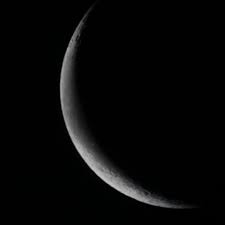
Name the moon phase

1

waning crescent

2

waxing crescent

3

waning gibbous

4

waxing gibbous

12

Multiple Choice

Use your model to demonstrate the following, then choose the best answer.


When we see the moon this evening it will be a waxing gibbous. What phase will people on the opposite side of the Earth see on the same day?

1

waning crescent

2

waxing gibbous

3

they won't see a moon

4

waning gibbous

13

Module 3: Eclipses and Tides

Slide image

14

Multiple Choice

Neap tides happen at _________ and _________ phases of the moon.

1

first quarter and new moon

2

last quarter and full moon

3

waxing and waning

4

1st quarter and 3rd quarter

15

Multiple Choice

High tides and low tides each happen _____ times per day.

1

4

2

2

3

1

4

24

16

Multiple Choice

Spring tides have the largest tidal ranges because...

1

the earth, moon, and sun are aligned for greater gravitational force.

2

the moon has the strongest gravitational force.

3

the sun has the most gravitational force.

4

none of the above

17

Multiple Choice

What type of eclipse occurs when the moon blocks the sun's light and cast a shadow on earth?

1

solar

2

lunar

18

Multiple Choice

lighter, outer part of the shadow

1

penumbra

2

umbra

19

Multiple Choice

Use your models to demonstrate the following, then choose the best answer.


Which statement would be true if Earth was flat instead of spherical?

1

The Earth would not have a shadow and a lunar eclipse would not be possible.

2

The Earth's shadow would be too small to cover the moon

3

The Earth's shadow on the moon during a lunar eclipse would not always look the same.

Unit 6 Wrap-Up

Slide image

Show answer

Auto Play

Slide 1 / 19

SLIDE