


20th Century Filipino Traditional Composers
Presentation
•
Education
•
1st - 10th Grade
•
Practice Problem
•
Easy

Kim Bonito
Used 12+ times
FREE Resource
43 Slides • 9 Questions
1
20th Century Filipino Traditional Composers
(Quarter 3 Week 1: LESSON 1)
2
At the end of this lesson your are able to;
Describe features of traditional and contemporary music.
Narrate the profiles of selected contemporary Philippine composers.
Listen perceptively to excerpts of major contemporary works.
Improvise a simple vocal/instrumental accompaniment to selected songs.
3
Music never stopped on changing. It continuously makes changes and accepting styles from different sources. As Filipino of your generation, you must be familiar with the 20th century Filipino traditional composers and their compositions. To show that you appreciate and value their works.
Let us check what you know about 20th century Filipino traditional composers and their compositions.
4
What I Know: Guess Sing
Directions: Sing the lyrics of the songs and identify the title of the songs. Write your answer on the blank provided.
5
Open Ended
Magmula no'ng ako'y natutong umawit
Naging makulay ang aking munting daigdig
Tila ilog pala ang paghimig Kung malalim, damdami'y pag-ibig
Kung umapaw, ang kaluluwa't tinig
Ay sadyang nanginginig
6
Open Ended
Sana'y di magmaliw ang dati kong araw
Nang munti pang bata sa piling ni nanay
Nais kong maulit ang awit ni inang mahal
Awit ng pag-ibig habang ako'y nasa duyan
7
Open Ended
Ang bayan ko’y tanging ikaw
Pilipinas kong mahal
Ang puso ko at buhay man
Sa iyo’y ibibigay
Tungkulin ko’y gagampanan
Na lagi kang paglingkuran
Ang laya mo’y babantayan
Pilipinas kong hirang
8
Open Ended
Iba't ibang palamuti
Ating isabit sa puno
Buhusan ng mga kulay
Tambakan ng mga regalo
Tumitibok-tibok, sumisinok-sinok
'Wag lang malunod, sasabihin (Pupulu-pulupot) Paikot nang paikot Koronahan ng palarang bituin
9
What's In?
Before we proceed to our new lesson let us review our previous lesson which is about Afro-Latin American music.
10
Multiple Choice
It is a dance style that began in Zaire in the late 1980s, popularized by Kanda Bongo Man. In this style, the hips move back and forth while arms follow the hip movements.
Kwassa kwassa
Marbi
Jive
Rumba
11
Multiple Choice
It is used to describe fusion of Western African with Black American music.
Axe
Apala
Afrobeat
Jit
12
Multiple Choice
It first surfaced in the African state of Pernambuco, combining the strong rhythm of African percussion instruments with Portuguese melodies.
Soul
Blues
Spiritual
Maracatu
13
Multiple Choice
It is an urban popular music and dance style that originated in Jamaica in the mid-1960s.
Paso Doble
Reggae
Foxtrot
Bosa Nova
14
Multiple Choice
It literally means “ music of the populace”, similar to traditional music of the past.
Traditional Music
Folk Music
Popular Music
Rock and Roll Music
15
What’s New? Today, another exciting lesson will be introduce to you. Surely you will learn and enjoy the lesson prepared for you. But before that I would like to ask you if you are familiar with the lyrics of the songs below? Can you sing it?
16
Kay ganda ng ating musika, Kay ganda ng ating musika Ito ay atin, sariling atin. At sa habang buhay awitin natin Kay ganda ng ating musika, Kay ganda ng ating musika Ito ay atin, Sariling atin ♫♫♪♪♫♪
17
Philippine music is rich and beyond compare. It comes from various styles and genre. They are different in terms of concept, form, and style. It represents a way of life that is uniquely Filipino. Philippines was colonized by Spain then America from early 1500s to the late 1800s. Because of this happening Western compositional techniques found their way into the works of the Filipino composers. Yet, 20th century Filipino composers was able to retain some traditional elements in their understanding of Western techniques.
18
What is Contemporary Philippine music?
Contemporary music in the Philippines usually refers to compositions that have adopted ideas and elements from twentieth century art music in the West, as well as the latest trends and musical styles in the entertainment industry. This brief introduction covers only the works written by the art music composers.
19
What is traditional Filipino music?
Every country in the world has their own traditional music, Filipino traditional music portrays the beliefs, customs, and traditions of the rural folks. Traditional music may be classified such as to glorify the beauty of nature, courtship music, or welcome songs.
20
What are the characteristics of traditional Philippine music?
Three main characteristics are exemplified by traditional ethnic music.
The first is the cantata form. A cantata is a vocal composition with an instrumental accompaniment and often contains more than one movement. (Homophonic)
Another characteristic that is exemplified is the use of acapella. An acapella song is a vocal composition without instrumental accompaniment. (Monophonic)
21
What are the characteristics of traditional Philippine music?
Lastly, the sonata form is used – a composition for one or more solo instruments, one of which is usually a keyboard instrument, and usually consisting of three or four independent movements varying in key, mood, and tempo (Anupol, 2007). (Polyphonic)
22
20th Century Traditional Filipino Composers and their works
23
Francisco B. Buencamino Sr. (1883 – 1952)
Born: November 5, 1883 - Died: October 16, 1952
Compositions: Harana, Pandanggo ni Neneng, Collar de Sampaguita, Dulces las Horas, Mayon (Fantasia de Concierto), Princesa ng Kumintang, Maligayang Bati and Himig ng Nayon.
24
Francisco B. Buencamino Sr. (1883 – 1952)
Founded the Centro Escolar de Senoritas, Conservatory of Music, and Buencamino Music Academy in 1930. His piano works have become staples in the Philippine repertoire of today’s performers. He ventured into musical direction and scoring for films, composing zarzuelas and kundiman.
25
Nicanor S. Abelardo (1893 – 1934)
Born: February 7, 1893 - Died: March 21, 1934
Compositions: Mutya ng Pasig, Nasaan ka Irog, Cavatina for Violoncello, U.P Naming Mahal, Cinderella Overture, Panorama
26
Nicanor S. Abelardo (1893 – 1934)
A 20th century modern composer, also a composer in the Romantic style. The Tanghalang Nicanor Abelardo (Main Theater) of the Cultural Center of the Philippines and Abelardo Hall of the UP College of Music are named after him.
27
Francisco S. Santiago (1889 – 1947)
Born: January 29, 1889 Died: September 28, 1947
Father: Felipe Santiago
Mother: Maria Santiago
Compositions: Pakiusap, Madaling Araw, Sakali Man, Hibik ng Pilipinas, Ano Kaya ang Kapalaran, Kundiman (Anak Dalita and Himutok
28
Francisco S. Santiago (1889 – 1947)
“Father of the Kundiman” and belongs to the “Triumvirate of the Filipino Composers”. His music was Romantic in style, incorporating Western forms and techniques with folk materials.
29
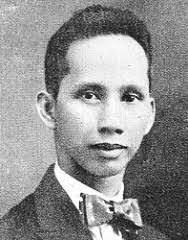
Antonio J. Molina (1894 – 1980)
Born: December 26, 1894 - Died: January 29, 1980
Compositions: Ang Batingaw, Hatinggabi, Kundiman-Kundangan, Awit ni Maria Clara, Magbalik ka Hirang, Kung sa iyong Gunita and Larawan Nitong Pilipinas
30
Antonio J. Molina (1894 – 1980)
A product of both Romantic and Impressionist style, and known as the “Father of Philippine Impressionist Music”. Fascinated by the dynamics and harmonies of Debussy, but retained much of the Romantic style in his melody.
31
Hilarion F. Rubio (1902 – 1985)
Born: October 21, 1902 - Died: December 28, 1985
Compositions: Unang Katas, Bulaklaken, Theme and Variation for Band, Ang Magsasaka, Bukang Liwayway, Filipinas kong Mahal, Hantulan Mo Ako, Ginintuang Araw, Mutya ng Silangan, Light Narra
32
Hilarion F. Rubio (1902 – 1985)
A composer, music teacher, conductor, and clarinetist. His name was closely identified with his works for the orchestra; as a conductor of opera, ballet, and dance recitals; and his music for movies.
33
Col. Antonino R. Buenaventura (1904 – 1996)
Born: May 4, 1904 Died: January 25, 1996
Father: Lucio Buenaventura
Compositions: Pandanggo sa Ilaw, Prinsesa ng Kumintang, Pandanggo ni Neneng
34
Col. Antonino R. Buenaventura (1904 – 1996)
He recorded folk and dance music around the country. He restored the Philippine Constabulary Band in 1945, which is considered “one of the best military bands in the world”. Declared National Artist for Music in 1988.
35
Rodolfo S. Cornejo (1909 -1991)
Born: May 15, 1909 - Died: August 11, 1991
Compositions: A la Juventud Filipina, Ibong Adarna, Kandingan, Kaluwalhatian, Malakas at Maganda overture, Okaka
36
Rodolfo S. Cornejo (1909 -1991)
He served as pianist-director of a USO concert unit that entertained the Allied Forces during World War II. He later became the soloist of several orchestras, and eventually the musical director of the Sampaguita and Vera-Perez movie companies.
37
Felipe P. De Leon Sr. (1912 – 1992)
Born: May 1, 1912 - Died: December 5, 1992
Compositions: Bulaklak Alitaptap, Bagong Lipunan, Payapang Daigdig, Pasko na Naman, Noche Buena, Kay Tamis ng Buhay, Sapagkat Mahal Kita
38
Felipe P. De Leon Sr. (1912 – 1992)
Known as a nationalist composer who expressed the Philippines’ cultural identity through his compositions. He wrote piano compositions, hymns, marches, art songs, chamber music, symphonic poems, overture, band music, school songs, orchestral works, operas, kundiman, and zarzuelas.
39
Lucio D. San Pedro (1913 – 2002)
Born: February 11, 1913 Died: March 31, 2002
Compositions: Ugoy ng Duyan, Suite Pastorale, and Lahing kayumanggi
40
Lucio D. San Pedro (1913 – 2002)
Known as a “Romantic nationalist”. He incorporated Philippine folk elements in his compositions with Western forms and harmony. His chords have a rich expressive tonality. Was declared National Artist for Music in 1991.
41
Rosendo E. Santos Jr. (1922 – 1994)
Born: September 3, 1922 Died: November 4, 1994
Compositions: Inday sa Balitaw, Melinda’s Masquerade
42
Rosendo E. Santos Jr. (1922 – 1994)
A prolific composer whose works include concerti, sonatas, symphonies, symphonic poems, five operas in a Philippine dialect, numerous band overtures, and over 200 marches. He also wrote 50 masses in Latin and 20 in English.
43
Alfredo S. Buenaventura (born 1929)
Born: October ber 14, 1929
Compositions: Prinsesa Urduha, Diego Silang, Maria Makiling, Ang Ating Watawat, Pasko ng Barangay, Dakilang Lahi, Pilipinas, Gomburza
44
Alfredo S. Buenaventura (born 1929)
His compositions combine contemporary and conventional styles, and contain melodies that are simple and understandable, while using contemporary harmonies that enhance their complexity.
45
Raymundo Cipriano “Ryan” P. Cayabyab (born 1954)
Born: May 4, 1954
Compositions: Misa, Four Poems for Soprano and Piano, Te Deum, Kay Ganda ng Ating Musika, Limang Dipang Tao, Alikabok and Kumukuti-kutitap
46
Raymundo Cipriano “Ryan” P. Cayabyab (born 1954)
A contemporary composer and conductor who spans both popular and classical worlds with his pop music, ballads, operas, zarzuelas, orchestral arrangements, masses, psalms, and choral compositions. His compositions are mostly of traditional Western influences.
47
What I have Learned?
✓ Contemporary Philipine music refers to compositions that have adopted ideas and elements from twentieth century art music in the West, as well as the latest trends and musical styles in the entertainment industry.
✓ Filipino traditional music portrays the beliefs, customs, and traditions of the rural folks. Traditional music may be classified such as to glorify the beauty of nature, courtship music, or welcome songs.
48
What I have Learned?
✓ Three main characteristics are exemplified by traditional ethnic music are cantata form, the use of acapella and lastly the sonata form is used.
✓ Some of the 20th century traditional Filipino composers are Ryan Cayabyab, Alfredo Buenaventura, Rosendo Santos Jr., Lucio San Pedro, Felipe De Leon Sr., Rodolfo Cornejo, Antonino, Buenaventura, Hilarion Rubio, Antonio Molina, Nicanor, Abelardo, Francisco Santiago, and Francisco Buencamino Sr.
49
As a Filipino, how will you show your appreciation in our own Traditional Music?
50
Quiz: I will put your quiz in our Google Classroom.
51
For your PERFORMANCE TASK
Directions: Listen and study the following songs below and then choose one that you like to sing. Record your performance and send it to your teacher through messenger. Be guided with the provided Rubrics.
Ugay ng Duyan: https://www.youtube.com/watch?v=YaKDDwarJyw
Kumukuti-kutitap: https://www.youtube.com/watch?v=cdDSIO_quKU
52
Rubric for the Singing Performance (Let’s Sing It)
20th Century Filipino Traditional Composers
(Quarter 3 Week 1: LESSON 1)

Show answer
Auto Play
Slide 1 / 52
SLIDE

Similar Resources on Wayground
45 questions
SS Chapter 4
Presentation
•
KG
52 questions
Wednesday
Presentation
•
KG
49 questions
2526 Session 5: Bianca's Big Secret
Presentation
•
KG
51 questions
7A La Ropa Vocabulario
Presentation
•
KG
52 questions
Work Place
Presentation
•
KG
42 questions
Grade 9- Congruent Triangles
Presentation
•
1st - 11th Grade
41 questions
AP4_3QW3_PPT
Presentation
•
KG
41 questions
My House 5-7
Presentation
•
KG
Popular Resources on Wayground
15 questions
Grade 3 Simulation Assessment 1
Quiz
•
3rd Grade
22 questions
HCS Grade 4 Simulation Assessment_1 2526sy
Quiz
•
4th Grade
16 questions
Grade 3 Simulation Assessment 2
Quiz
•
3rd Grade
19 questions
HCS Grade 5 Simulation Assessment_1 2526sy
Quiz
•
5th Grade
17 questions
HCS Grade 4 Simulation Assessment_2 2526sy
Quiz
•
4th Grade
20 questions
Equivalent Fractions
Quiz
•
3rd Grade
24 questions
HCS Grade 5 Simulation Assessment_2 2526sy
Quiz
•
5th Grade
20 questions
Math Review
Quiz
•
3rd Grade
Discover more resources for Education
21 questions
GMAS Review ELA
Presentation
•
6th - 8th Grade
25 questions
Fun Trivia Questions For Kids
Quiz
•
4th Grade
20 questions
Charlotte's Web Chapters 1-6 Quiz
Quiz
•
3rd Grade
16 questions
Equivalent Fractions
Quiz
•
5th Grade
10 questions
Adjectives
Quiz
•
3rd Grade
12 questions
3rd Grade Editing and Revising Practice Quiz
Quiz
•
3rd Grade
10 questions
Discover Your Career Personality Type
Interactive video
•
7th Grade
10 questions
FANBOYS
Quiz
•
3rd Grade