

Q3 Week/Lesson 2: Gravity

Presentation
•
Science
•
6th Grade
•
Hard

Roldan Roperos
Used 1+ times
FREE Resource
19 Slides • 21 Questions
1
Q3 Week/Lesson 2: Gravity
Grades Six- Science Module 2

2
Gravity
Science 6 - Q3 Week 2
3
Let's Try
You learned this topic from your previous lesson. Let’s us try to activate your prior learning by answering the following questions. Let’s do this.
4
Multiple Choice
1. Why did a coin throw to the air fall back to the ground?
The weight of the coin made it fall back.
Air caused the coin to fall on the ground.
The size of the coin affected its movement.
The force of gravity caused the coin to fall back.
5
Multiple Choice
How does gravity affect objects near Earth? It _____.
pulls them in.
pushes them away.
makes them bigger.
makes them move faster.
6
Multiple Choice
One of the hobbies developed by most people during this time of pandemic is cycling. It is one way of improving the body’s immune system to protect oneself against this Corona Virus 2019. Most cyclists have difficulty in running a bike uphill than downhill. Why does a bicycle travel faster in going down than in going up?
It is moving against gravity.
It is moving towards gravity.
It is being pushed by the wind.
It is being pushed by the weight of the bicycle.
7
Multiple Choice
When objects are closer together, what happens to its amount of gravitational force?
It decreases.
It disappears.
It increases.
It stays the same.
8
Multiple Choice
A coconut fruit falls from a tree. What makes it moves faster and faster as it approaches the ground?
Force of gravity.
Force of the wind.
Height of the tree.
The size of the fruit.
9
GRAVITY
Well done! Come on let’s find out more about this topic.
10
GRAVITY
Today, we will learn new concepts or ideas about the things around us. Are you ready?
They say that one of the traits of a scientist is being inquisitive and curious in its surroundings. Have you ever also wondered why certain things happen?
11
What is gravity?
Anything that goes up ultimately goes down. Things do not fly on the Earth’s surface. This is because Earth is exerting a strong attractive force on you and the things around you. This force is called gravity. (Sarte 2016)
12
Flashback (Gravity)
Sir Isaac Newton, a well-known scientist, discovered gravity about 300 years ago. Newton saw an apple fell from a tree towards the ground. At first, he thought, “Why didn’t an apple goes up?” Then, he realized that there was a force that made it fall on the ground and he called it gravity. (D'Souza 2015)
13
About Gravity
Gravity is an invisible (which means it cannot be seen) force that pulls objects toward each other. Earth’s gravity is what keeps you on the ground and what make things fall. (NASA 2020)
14
The principle of gravity states that, everything in the universe whether big or small, exerts gravity on other things. Since Earth is massive (large and heavy), it strongly attracts anything on its surface. The same concept keeps the planets and other heavenly bodies in place. Since the sun is more massive than all the planets, its gravity pulls them into around its orbit. (Sarte 2016) Thus, this gravity is what keeps the planets in orbit around the sun and the moon around the earth.
15
TRIVIA TIME!
Do you know that the tides in the sea and oceans happen because of the gravitational pull of the moon?
16
GRAVITATIONAL FORCE
Gravitational force is the force of attraction between all masses in the universe, especially the attraction of Earth’s surface. The more distant the body from the earth, the less the gravitational force of attraction is. (Padpad 2017)
Wow! Isn’t it amazing? That’s how gravity works!
17
Wow! Isn’t it amazing? That’s how gravity works!
If the boy will drop the objects of the same kind and mass, in of the same height and time, which do you think will hit the floor first, THE CRUMPLED PAPER OR THE PLAIN PAPER? Why?
18
In the above situation, the crumpled paper will land on the ground first. It shows that air resistance affects movement of falling objects. The sheet of paper falls slowly because of air resistance. The surface area of the sheet of paper is greater than the crumpled one. The surface area of the sheet of paper is affected by the air and causes it to drop slowly. The crumpled paper has a smaller surface area, which is not affected by air so it moves faster. The greater is the surface area of a falling object, the greater is the air resistance that affects its movement.
19
How about when there is no air resistance? What would happen to the falling objects?
The speed of falling objects will be different on Earth and on the moon. If air is removed, the air resistance will disappear. When a stick and a feather is dropped on Earth at the same time, the stick will fall faster than the feather. Air resistance acts against the feather, which slows down its falling. But if you drop the feather and the stick at the same time on the moon, the stick and the feather will fall at the same speed. The moon has no air, therefore, there is no air resistance acting on a falling object. ( (Padpad 2017)
20
So, do you know now why such things happen? How gravity affects movements of objects? Come on, let’s explore the following activities and experience the wonders of this force.
21
Hello kids! I hope you learn something from the discussion about gravity. Below is a poem about gravity. Read the poem and answer the comprehension questions below. Are you ready? You can do it.
22
Gravity (by Lorelyn A. Cosep)
Isaac Newton’s curiosity lead him in discovering this gravity.
It is when an apple fell from a tree that made him realized that a force set it free.
Gravity is an invisible force that keeps everything on the ground of course!
Take a coin and toss it high. It will fall back on the ground and you would wonder why!
23
Gravity (by Lorelyn A. Cosep)
The bigger the object, the more gravity it has. Planets and other heavenly bodies have different mass.
The sun’s massive size keeps them in its place Its gravitational pull attracts them in space.
Despite this strong attraction, barriers are all around The presence of air resistance affects object’s motion on the ground. It’s hard to imagine when gravity is missing. Weightlessness will happen on Earth’s surface and everything will float freely on space.
24
Open Ended
Comprehension check: Please have time to answer the following questions.
What is gravity and who discovered gravity?
25
Open Ended
Comprehension check up:
How does air affect the falling object? What would happen if air is removed?
26
Open Ended
Comprehension check up:
How does the mass of an object affect gravity?
27
Open Ended
Comprehension check-up:
What will happen if there were no gravity on Earth?
28
Multiple Select
Choose the statements by checking the box which describes about gravity. Come on, you start!
It is a non-contact force.
It pulls objects toward each other.
It is a force that can be seen everywhere.
It is a force that pulls things down to earth.
29
Multiple Select
Choose the statements by checking the box which describes about gravity. Come on, you start!
It keeps the things on the earth’s surface from floating
It holds the planets and other heavenly bodies to stay on its orbit.
It is a force that causes an object to move, stop or change direction.
30
Multiple Choice
There is gravity between the Milky Way Galaxy and other galaxies.
True
False
31
Multiple Choice
There is gravity between you and the moon.
True
False
32
Multiple Choice
Which of the following would have the most gravity between them?
two ping pong balls 1 meter apart
two ping pong balls 2 meters apart
two bowling balls 1 meter apart
two bowling balls 2 meters apart
33
Multiple Choice
Mass can be best defined as:
The weight of an object
The amount of matter in an object
The volume of an object
The size of an object
34
Multiple Choice
Which of the following would NOT be an example of the force of gravity?
The moon orbits around Earth
Earth revolves around the Sun
A ball hit in the air comes down into the outfielder's glove
All of the above are examples of gravity
35
Multiple Choice
When will the forces of gravity between two objects be the GREATEST?
when the masses of both objects are small and the objects are far apart
when the masses of both objects are large and the objects are close together
when the masses of both objects are small and the objects are close together
when the masses of both objects are large and the objects are far apart
36
Multiple Choice
Which statement about gravity is true?
gravity causes objects to pull towards one another
gravity causes objects to push away from each other
gravity only takes place between planets
the moon doesn't have any gravity
37
Multiple Choice
What two things determine the gravity of an object?
mass & weight
mass & distance
density & mass
volume & distance
38
Multiple Choice
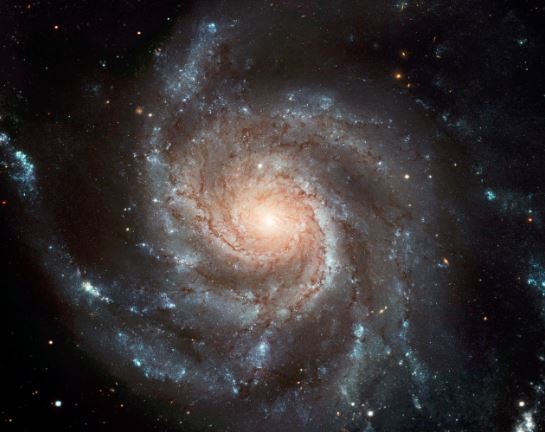
Without gravity, the stars, planets and all objects in the universe would _______.
continue to orbit each other
move in a random direction
move in a straight line
stop moving
39
Multiple Choice
Without gravity, the stars, planets and all objects in the universe would _______.
continue to orbit each other
move in a random direction
move in a straight line
stop moving
40
Congratulations! See you on the next lesson!
Q3 Week/Lesson 2: Gravity
Grades Six- Science Module 2
Show answer
Auto Play
Slide 1 / 40
SLIDE
Similar Resources on Wayground

32 questions
Planets in the Solar System
Presentation
•
6th Grade
39 questions
Living Things and the Environmnent
Presentation
•
6th Grade
36 questions
Forms of Energy
Presentation
•
5th Grade
34 questions
Energy
Presentation
•
6th Grade
33 questions
Organs & Organ Systems
Presentation
•
7th Grade
34 questions
Volume of a Right Rectangular Prism Study Guide
Presentation
•
5th Grade
37 questions
Turgor Pressure Tropisms and Homeostasis
Presentation
•
7th Grade
35 questions
Refraction and Lenses
Presentation
•
6th Grade
Popular Resources on Wayground
6 questions
PRIDE Always and Everywhere
Presentation
•
12th Grade
20 questions
Lab Safety Quiz

Quiz
•
6th Grade
26 questions
KOR Review Kahoot Questions
Quiz
•
8th Grade
21 questions
Continents and Oceans
Quiz
•
6th Grade
12 questions
Unit Zero lesson 2 cafeteria
Presentation
•
9th - 12th Grade
20 questions
Parts of Speech
Quiz
•
5th Grade
10 questions
Riddles Riddles fun Riddles
Quiz
•
6th - 12th Grade
16 questions
Subject & Predicate
Quiz
•
5th Grade
Discover more resources for Science
20 questions
Lab Safety Quiz
Quiz
•
6th Grade
20 questions
Lab Safety
Quiz
•
5th - 8th Grade
10 questions
6.6D - Relative Density Review
Quiz
•
6th Grade
10 questions
Scientific Method and Variables
Quiz
•
6th Grade
20 questions
Elements, compounds, and mixtures
Quiz
•
6th Grade
10 questions
Exploring Chemical and Physical Changes

Interactive video
•
6th - 10th Grade
20 questions
Distance, Displacement, Speed, Velocity
Quiz
•
6th Grade
10 questions
Exploring the States of Matter
Interactive video
•
6th - 10th Grade