Search Header Logo
Kinetic Molecular Theory, Pressure, & Temperature

Kinetic Molecular Theory, Pressure, & Temperature

Assessment

Presentation

Chemistry

9th - 12th Grade

Easy

NGSS
MS-PS1-4, HS-PS3-2, HS-PS3-4

+1

Standards-aligned

Created by

Michaela Bratsch

Used 30+ times

FREE Resource

13 Slides • 27 Questions

1

Gas Laws
Slide image

2

Slide image

3

4

Multiple Choice

Which of the following is an assumption of the kinetic-molecular theory of gases?

1

Collisions between gas particles are inelastic.

2

Gases consist of closely spaced particles.

3

Gas particles move around in an orderly manner.

4

The temperature of a gas depends on the average kinetic energy of the gas particles.

5

Multiple Choice

Question image

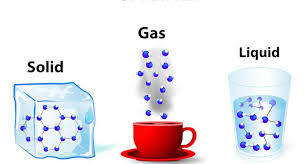
These properties describe a ___.

1

solid

2

liquid

3

gas

6

Multiple Choice

Question image

These properties describe a ___.

1

solid

2

liquid

3

gas

7

Multiple Choice

Question image

These properties describe a ___.

1

solid

2

liquid

3

gas

8

Slide image

9

Slide image

10

11

Slide image

12

Multiple Choice

How many mm Hg is a pressure of 1.05 atm?

1

529 mm Hg

2

798 mm Hg

3

104.8 mm Hg

4

760 mm Hg

13

Multiple Choice

What does STP (standard temperature and pressure) stand for?

1

0.0 degree Celcius and 1 atm

2

1.0 mmHg and 273 degree Kelvin

3

1.0 degree Celcius and 0 atm

4

1.0 atm 273 degree Celcius

14

Multiple Choice

A gas is at a pressure of 95 kPa. What is its pressure in atmospheres?

1

1.5 atm

2

1.09 atm

3

0.94 atm

4

0.82 atm

15

Multiple Choice

760 mmHg is equal to

1

1 torr

2

760 atm

3

760 torr

4

101 Pa

16

Multiple Choice

Which of the follow is NOT equal to 1 atm?

1

14.7 psi

2

760 mmHg

3

101325 Pa

4

101.325 torr

17

Multiple Choice

Solids are described as having a

1

definite shape and indefinite volume

2

indefinite shape and indefinite volume

3

definite shape and definite volume

4

indefinite shape and definite volume

18

Multiple Choice

Question image

Of these three states of matter, which one has the most kinetic energy?

1

Solid

2

Liquid

3

Gas

19

Multiple Select

The properties of liquids include (SELECT ALL THAT APPLY)

1

definite volume

2

take the shape of the container

3

can flow

4

are relatively incompressible

5

can diffuse and have surfacre tension

20

Multiple Select

According to the Kinetic Molecular Theory a liquid's (SELECT ALL THAT APPLY)

1

particles are held close together by intermolecular forces

2

particles are in constant motion

3

particles are vibrating in place and closely packed

4

particles are not moving

21

Multiple Choice

Question image
1

Flask 1 contain the most molecules

2

Flask 2 contain the most molecules

3

Flask 3 contain the most molecules

4

Flask 4 contain the most molecules

22

Multiple Choice

Gas pressure is caused by

1

gas molecules colliding with surfaces

2

gas molecules condensing to a liquid

3

gas molecules hitting other gas molecule

4

barometers

23

Slide image

24

Slide image

25

Slide image

26

Slide image

27

28

29

Multiple Choice

Convert: -45.9 C to K:

1

227.1 K

2

400 K

3

0 K

373 K

30

Multiple Choice

Convert: 186.5 K to C

1

-86.4 C

2

-50 C

3

-68.4 C

4

180 K

31

Multiple Choice

Convert: 0 K to C

1

-273 C

2

-273 K

3

273 C

4

273 K

32

Multiple Choice

Convert: 253 C to K:

1

526 K

2

625 K

3

0 K

4

186 K

33

Multiple Choice

Question image

Select the temperature in °C

1

50°C

2

10°C

3

20°C

4

60°C

34

Multiple Choice

Question image

Select the temperature in °C

1

30°C

2

100°C

3

90°C

4

40°C

35

Multiple Choice

Question image

The faster molecules move,

1

the higher the temperature

2

the less temperature

3

the same temperature

4

I don't know

36

Multiple Choice

Question image

The absolute coldest anything can get.

In Celsius it's at 273 degrees. Or 0 degrees Kelvin.

1

Absolute cold

2

Kelvin

3

Absolute zero

4

I don't know

37

Multiple Choice

Question image

Scientists' favorite temperature scale, because it begins at the absolute coldest anything can get.

1

Celsius

2

Fahrenheit

3

Kelvin

4

All of them

38

Multiple Choice

Question image

Which direction is heat flowing in the picture?

1

from the hand to the ice

2

from the ice to the hand

3

heat is not being transferred

4

there is no way to tell

39

Multiple Choice

The measure of average kinetic energy of all the particles within an object is called ____________.

1

temperature

2

conduction

3

radiation

4

heat

40

Multiple Choice

In nature, heat always flows from a:

1

cold object to a warm object.

2

small object to a big object.

3

warm object to a cold object.

4

large object to a small object.

Gas Laws

Slide image

Show answer

Auto Play

Slide 1 / 40

SLIDE