

Drafting an Editorial

Presentation
•
English
•
6th Grade
•
Medium

Adelfa Liwag
Used 10+ times
FREE Resource
33 Slides • 21 Questions
1
English 6, Third Quarter
Prepared by: Adelfa F. Liwag
2
Identify the steps in drafting an editorial.
Identify and distinguish the parts of an editorial.
Match the kinds of an editorial thru given topics.
3
What are the elements of a short story?
Name the parts of a plot and their functions.
4

5
Fill in the Blanks
1.
It is a propaganda device which uses celebrities as
product endorsers
Type answer...
6
Fill in the Blanks
2.
It is something of an opinion or generalization and not
supported with facts, favors one side, and opposes the other.
Type answer...
7
Fill in the Blanks
3.
It is a propaganda device which uses stereotyping and
labeling, usually practiced by politicians.
Type answer...
8
Fill in the Blanks
4.
It is an information, idea, or rumor deliberately spread
widely to help or harm a person, group, movement,
institution, nation, etc.
Type answer...
9
Fill in the Blanks
5.
It is a type of bias that inaccurately measures and
classifies the information of a person, place, thing or
phenomenon.
Type answer...
10
Multiple Select
1. LBC brand tagline is “Moving Smiles Around the World”
Bias
Propaganda
11
Multiple Select
2. Maine Mendoza endorses 555 Sardines.
Bias
Propaganda
12
Multiple Select
3. Roberta lives in the urban poor area and her classmates’ mother does not welcome her in their house.
Bias
Propaganda
13
Multiple Select
4. A famous actress said, “Use my brand of lipstick and you will become one of us -gorgeous, lovable and seductive!”
Bias
Propaganda
14
Multiple Select
5. I once applied abroad as an English teacher and the online interview went well. Unfortunately, when they learned of my citizenship, I heard no single word from them anymore.
Bias
Propaganda
15

16

17
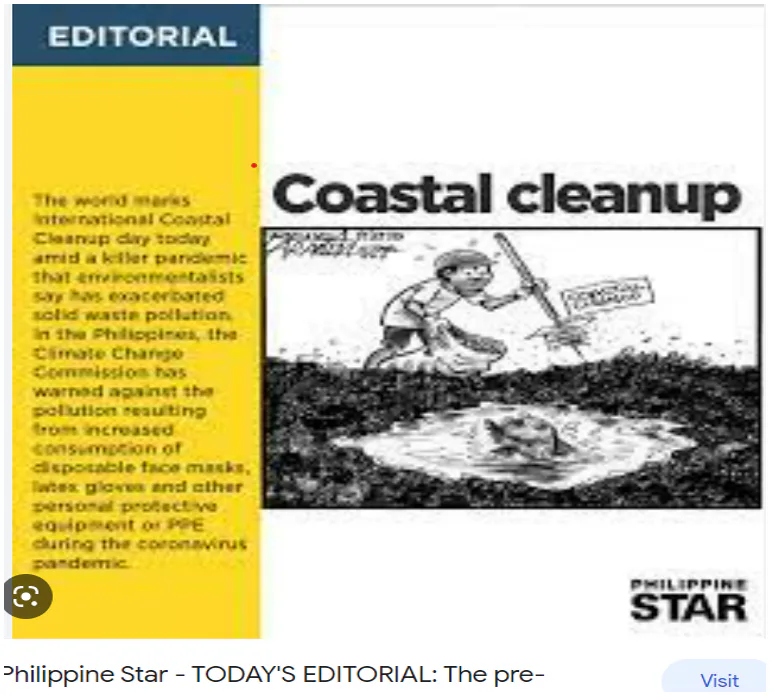
18
It is an article that states the newspaper’s stand on
a particular issue, which is basically, a persuasive essay that offers a
solution to a problem. It is meant to influence public opinion, promote critical
thinking, and sometimes cause people to take action on an issue. In
essence, an editorial is an opinionated news story. It is considered
the “voice of the newspaper” which uses “we” in expressing stand.
19
Introduction
Body
Conclusion
20
The opening paragraphs should get the reader started thinking. These one or two paragraphs should be a provocative, opening statement that captures the essence of the subject and gives a clue to the stand.

21
The main part of the editorial where facts are presented, the case
is built, and the reader becomes convinced. The writer may use information from direct quotes, statistics, similar situations and past experiences to support the stand. This must be organized logically, written clearly and concisely. Also, the body may introduce and present proof or the alternative point of view

22
The conclusion should serve to set the reader into motion to do something about the problem or issue. This “call to action” gives the reader a sense of direction. It should synthesize the arguments, re-emphasize the stand and suggest a course of action.

23
1. Decide on a topic. Start with one specific idea as your topic. It should be arguable and have multiple points of view. Keep in mind that your topic should be specific.

24
Even though an editorial is opinion-based, it is still important to provide your readers with well-researched evidence to back up your ideas.
(GIF Source:https://ggle.io/3xEz)

25
After selecting and researching an issue, write an outline to keep your ideas organized and ensure that the main points of your editorial flow well.

26

27
Once you finish the planning portion of writing your editorial, start to write by adding details to your outline.

28
Before submitting your editorial, proofread your own work to make sure you have created a professional, quality piece of writing.

29
1. Editorial of Information and Interpretation - informs and attempts to explain the meaning or significance of a situation or news event.

30
This is oftentimes called editorial of persuasion. The editor argues in order to convince or persuade the reader to accept his stand on
the issue.

31
aims to immediately see the solution, not the problem. Readers are encouraged to take a specific, positive action.

32
constructively criticize actions, decisions or situations while providing solutions to the problem identified.
The main purpose is to have readers see the problem, not the solution.

33
commends people and organizations for something done well.

34
It has two categories. One is the short humorous treatment of a light topic. The second is a slightly satirical treatment of a serious subject.

35
matching, pairing, comparing companies which business are on search engine’s outputs like
Facebook and Google.

36

37
It is an article that states the newspaper’s stand on
a particular issue which is meant to influence public opinion, promote critical
thinking, and sometimes cause people to take action on an issue.
It is an opinionated news story. It is considered
the “voice of the newspaper”
38
1. Introduction
2. Body
3. Conclusion
39
1. Decide on a topic.
2. Research your topic
3. Create an outline
4. Start to write
5. Proofread
40
1. Editorial of Information and Interpretation
2. Editorial of Argumentation
3. Editorial of Persuasion
4. Editorial of Criticism
5. Editorial of Commendation, Appreciation & Tribute
6. Editorial of Entertainment
7. Editorial of Analogy
41

42
Multiple Select
Which is the proper sequence of steps in drafting an editorial? Use numbers 1-5.
_________ A.
Organize your ideas by writing an outline. Each paragraph should only
have one main idea.
_________ B.
Be sure to read your draft, not only once but many times as needed to
ensure that errors in spelling and grammar are not left uncorrected.
_________ C.
A specific idea should be chosen as the topic to be developed.
_________ D. After writing an outline, you can start writing by adding details. Then, editing follows.
_________ E.
After deciding on a topic, make a research on your topic to support your ideas.
3-5-1-4-2
1-2-3-4-5
4-3-1-2-5
3-2-4-5-1
43
Multiple Select
1. It suggests to the reader a course of action or sense of direction.
Introduction - IP
Body- BP
Conclusion - CL
44
Multiple Select
2. It presents facts to support the stand of the writer on a certain
argument or point of view.
Introduction - IP
Body - BP
Conclusion - CL
45
Multiple Select
3. It synthesizes the arguments and re-emphasizes the writer’s stand
on an issue.
Introduction - IP
Body - BP
Conclusion - CL
46
Multiple Select
4. It captures the essence of the subject and gives a clue to the editor’s
stance.
Introduction - IP
Body- BP
Conclusion - CL
47
Multiple Select
5. It introduces and rebuts the alternative point of view.
Introduction - IP
Body - BP
Conclusion - CL
48
Multiple Select
1. An editorial which cites all the environmental threatening
consequences about Manila Bay’s new white sand coast to
marine life.
Editorial of Criticism - EOC
Editorial of Analogy - EAW
49
Multiple Select
2. An editorial providing the readers of helpful information on how
they can cope up with the deadly presence of COVID 19 on this
pandemic time.
Editorial of Commendation, Appreciation nd Tribute - CAT
Editorial of Information and Interpretation - EII
50
Multiple Select
3. An editorial citing some of the significant contributions of Pope
Francis in his efforts to establish cooperation with other major
religions of the world expressing an utmost gratitude for this
exemplary gesture.
Editorial od Commendation, Appreciation and Tribute - CAT
Editorial of Entertainment - EOE
51
Multiple Select
4. An editorial presenting the possibilities of life in Planet Mars and
convincing that the planet can be the only alternative home for
Earthling human race.
Editorial of Persuasion - EOP
Editorial of Analogy - EOA
52
Multiple Select
5. An editorial providing grounds on plagiarism and its suggestions
on how to avoid this crime in harvesting resources using online
search engine platform.
Editorial of Entertainment - EOE
Editorial of Analogy Writing - EAW
53
54

English 6, Third Quarter
Prepared by: Adelfa F. Liwag
Show answer
Auto Play
Slide 1 / 54
SLIDE
Similar Resources on Wayground

49 questions
Hobbies and interests - 6.klases
Presentation
•
6th Grade
46 questions
FAST Nonfiction Round 3
Presentation
•
6th Grade
49 questions
Canada (U3L7-9)
Presentation
•
6th Grade
48 questions
body parts
Presentation
•
KG
51 questions
Possessive adjectives and possessive pronouns
Presentation
•
6th Grade
47 questions
Comparative and Superlative of adjectives, lesson
Presentation
•
6th Grade
47 questions
The Rise of Democracy
Presentation
•
6th - 7th Grade
45 questions
Spotlight 6 Control work 1
Presentation
•
6th Grade
Popular Resources on Wayground
10 questions
Safety Day 2026 – Student Review

Quiz
•
9th Grade
21 questions
Continents and Oceans
Quiz
•
6th Grade
20 questions
Parts of Speech
Quiz
•
5th Grade
16 questions
Subject & Predicate
Quiz
•
5th Grade
25 questions
Multiplication Facts
Quiz
•
5th Grade
12 questions
Map Skills
Quiz
•
3rd Grade
22 questions
Continents and Oceans
Quiz
•
5th Grade
15 questions
Rounding Decimals
Quiz
•
5th Grade
Discover more resources for English
20 questions
Context Clues
Quiz
•
6th Grade
25 questions
Making Inferences
Quiz
•
6th - 8th Grade
20 questions
Figurative Language Review
Quiz
•
6th Grade
15 questions
Plot Elements
Quiz
•
6th Grade
10 questions
Main Idea and Supporting Details
Quiz
•
3rd - 6th Grade
14 questions
3 Types of Sentences
Presentation
•
6th - 7th Grade
16 questions
Plot elements
Quiz
•
6th Grade
16 questions
Nonfiction Text Features (Flocabulary)
Quiz
•
6th Grade