

7U4L4a Renewable Resources

Presentation
•
Science
•
7th Grade
•
Medium
+4
Standards-aligned

Stacy-Michelle Reid
Used 406+ times
FREE Resource
23 Slides • 17 Questions
1
7U4L4a Renewable Resources

2
Renewable Energy Resource
Energy sources that renew or replenish themselves over time
Energy sources that are not depleted or used up when you use them

3
What do we mean by Advantages or Disadvantages?
Advantage means good effect, favorable gain, or desired end
Disadvantage means bad effect, unfavorable, or undesired end

4
Multiple Choice
5
Multiple Choice
6
Biomass
Energy from any material that comes from plants or microorganisms that were recently living
Trees, branches, scraps of bark, and recycled paper are examples of biomass energy
The energy comes from burning it
It becomes biofuel when mixed with gasoline, such as ethonol

7
Biomass Advantages
Can be stored and used when needed
Releases less harmful pollutants than gasoline
Uses materials that might normally be discarded (including trash!)

8
Biomass Disadvantages
Growing crops for biofuels requires large amounts of land and pesticides
Land could be used for food growing
Pesticides can pollute

9
Multiple Choice
10
Wind
Wind energy is captured with wind turbines
The blades turn a generator (located inside the tower), which creates electricity
Groups of wind turbines are known as wind farms
Found near farmland, in narrow mountain passes, and even in oceans!

11
Advantages of Wind
Can be very efficient and cheap in places with steady winds
It's clean, no pollutants

12
Disadvantages of Wind
Wind is inconsistent
Not a good source of energy in all locations
Dangerous for bats and birds

13
Multiple Choice
14

15
Multiple Choice
16
Multiple Choice
17
Multiple Select
18
Multiple Choice

19
Hydroelectric
Energy made by flowing water
Hydroelectric plants plants are located on large dams, which control the flow of a river
A controlled amount of water flows through the tunnels and turns huge turbines which generate electricity

20
Hydroelectric Advantages
Energy is inexpensive to harness
Because rivers are everywhere, it's an available resource
Reliable because engineers control the flow of water

21
Hydroelectric Disadvantages
Damming a river causes a great environmental impact for people, plants, and wildlife
Dependent on rainfall to fill the reservoir
Expensive to build a dam

22
Multiple Choice

23
Multiple Choice
24
Geothermal
Heat energy from deep within the earth
Water is warmed by magma and pumped to the surface
Geothermal heat pumps create heat for houses and other buildings
Steam can also be brought to the surface and used to turn a turbine to generate electricity

25
90% of people in iceland use this as a heat source

26
Geothermal Advantages
Clean
Does not require another fuel source to produce it
Does not emit any harmful pollutants into the air

27
Geothermal Disadvantages
Not a wide spread source of energy
High installment costs to built power plants
Not easily transported

28
Multiple Choice
29
Solar
Energy from the sun
Active solar energy uses technology to capture the sun's rays (solar cells)
Passive solar energy gets energy from the way sunlight naturally changes throughout the day (A house might face a certain way to capture more of the sun's rays)

30
Solar Advantages
Relatively simple technology
Little maintenance
Reliable and quiet
Free energy after purchasing solar panels

31
Solar Disadvantages
Energy cannot be created at night
Cloud cover reduces power
Works best if at the optimal angle towards the sun
Only converts 20% of the suns energy to electricity

32
Multiple Choice
33
Renewable Energy Resource

34
Multiple Choice
35
Multiple Choice
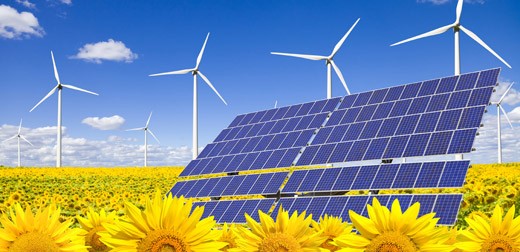
__________ is an energy resource that WILL NOT run out in the next several hundred years.
36
Multiple Choice

What type of energy is created from flowing or moving water usually through a dam.
37
Multiple Choice
38
Multiple Choice

What type of energy comes from burning plant waste or animal manure?
39
40
7U4L4a Renewable Resources
Show answer
Auto Play
Slide 1 / 40
SLIDE


