Search Header Logo
Organism and Environments Review

Organism and Environments Review

Assessment

Presentation

Science

5th Grade

Medium

NGSS
MS-LS2-3, MS-LS1-6, MS-LS2-1

+13

Standards-aligned

Created by

James Fossier

Used 31+ times

FREE Resource

16 Slides • 71 Questions

1

Organisms and Environments Review

5th Grade

Slide image

2

Watch the videos provided and answer the questions after each one.

  • You may pause the video to take notes (or write questions to ask your teacher) during the videos.

  • Remember that this is a review so be sure and ask your teacher the questions you wrote down after the videos.

3

Slide image

4

5

Multiple Choice

Question image
In the example from the video, what was at the top of the food chain?
1
the sun
2
grass
3
a rabbit
4
a hawk 

6

Multiple Choice

Question image
Plants take the energy from the sun's rays and change it into _____
1
light
2
water
3
chemical energy
4
plants

7

Multiple Choice

Question image
All of the energy that's in a food chain starts with _____
1
decomposers
2
plants
3
animals
4
the sun

8

Multiple Choice

Question image
A system of living things and their environment is called _____
1
an ecosystem
2
a food chain
3
a habitat
4
a neighborhood

9

Multiple Choice

Question image
A self-contained collection of different things that all work together as a whole is called _____
1
a system
2
a habitat
3
a food chain
4
a neighborhood

10

Multiple Choice

Question image
What is the scientific name for the area in which plants and animals live?
1
a habitat
2
an ecosystem
3
a neighborhood
4
a food chain

11

Multiple Choice

Question image
A food chain is a model that shows how energy flows between _____
1
plants and bugs
2
living things
3
Earth's spheres
4
bears and monsters

12

Multiple Choice

Question image
Which animal is often said to be at the "top of the food chain"?
1
raccoons
2
bugs
3
hawks
4
humans

13

Multiple Choice

Question image
The flow of energy between living things is often described as _____
1
the water cycle
2
a food chain
3
the carbon cycle
4
an ecosystem

14

Multiple Choice

Question image
The power needed to do work, such as staying alive, is called _____
1
food
2
energy
3
food chains
4
pizza

15

Slide image

16

17

Multiple Choice

Question image
Losing the decomposers in a food chain would completely mess up ___
1
the Lion King movie
2
a clean desk
3
the nice balance
4
the garbage

18

Multiple Choice

Question image
Which organisms keep waste from piling up in an ecosystem?
1
decomposers
2
plants
3
mice
4
owls

19

Multiple Choice

Question image
In an ecosystem, decomposers break down ___
1
nutrients
2
waste
3
insects
4
worms

20

Multiple Choice

Question image
Chemicals go into the ground and are taken up by ___
1
the sun
2
plants
3
decomposers
4
animals

21

Multiple Choice

Question image
Decomposers break waste down into ___
1
bacteria and some fungi
2
nutrients and other chemicals
3
plants and trees
4
insects and worms

22

Multiple Choice

Question image
Where do decomposers fit in a food chain?
1
at the beginning
2
at the end
3
in the middle
4
any time there's waste

23

Multiple Choice

Question image
The food chain example, from the video, had energy flowing from the mouse to the ___
1
tree
2
raccoon
3
apple
4
owl

24

Multiple Choice

Question image
Energy flows through a system of living things in a "what eats what" model called ___
1
the carbon cycle
2
a food chain
3
the water cycle
4
an energy line

25

Multiple Choice

Question image
Organisms, like bacteria, insects and worms, that break down waste are called ___
1
carnivores
2
herbivores
3
decomposers
4
omnivores

26

Multiple Choice

Question image
For lots of different living things, waste is actually a good source of ___ 
1
shelter
2
energy
3
water
4
life

27

Slide image

28

29

Multiple Choice

Question image
What are the main decomposers in arctic climates?
1
bugs
2
earthworms
3
fungi
4
bacteria

30

Multiple Choice

Question image
Really small creatures that eat phytoplankton are called ___
1
fish
2
zooplankton 
3
krill
4
beluga whales

31

Multiple Choice

Question image
The tiny plants in arctic seawater, that convert energy from the sun, are called ___
1
phytoplankton
2
zooplankton
3
fungi
4
bacteria

32

Multiple Choice

Question image
Insects, fungi, and bacteria that break down waste matter are called ___
1
plants
2
decomposers
3
animals
4
habitats

33

Multiple Choice

Question image
Trees, grass, and other plants change energy from the sun into ___
1
salt
2
sugar
3
oil
4
protein

34

Multiple Choice

Question image
A big tangled system that includes every plant and animal in a habitat is called ___
1
a food web
2
a food chain
3
an energy pyramid
4
a habitat

35

Multiple Choice

Question image
How many food chains is a polar bear part of?
1
one food chain
2
two food chains
3
three food chains
4
multiple food chains

36

Multiple Choice

Question image
A model to describe the flow of energy between living things is called ___
1
a space to live
2
an ecosystem
3
a habitat
4
a food chain

37

Multiple Choice

Question image
Food, water, shelter, and space to live are all part of a ___
1
food chain
2
home
3
habitat
4
Crash Course video

38

Multiple Choice

Question image
The place where a plant or animal normally lives and grows is called ___
1
a garden
2
a home
3
a habitat
4
a territory

39

Multiple Choice

Question image

Why was the polar bear in the desert so miserable?

1

he missed his sunglasses

2

he wasn't where he belonged

3

he didn't have swim trunks

4

he was scratched by a cactus

40

Multiple Choice

Question image
Why was the polar bear in the desert so miserable?
1
he missed his sunglasses
2
he wasn't where he belonged
3
he didn't have swim trunks
4
he was scratched by a cactus

41

Slide image

42

43

Multiple Choice

Question image
The good news is that ecosystems tend to be ___
1
in decline
2
out of balance
3
delicate
4
in balance

44

Multiple Choice

Question image
In every ___, the plants and animals are connected.
1
ecosystem
2
organization
3
entanglement
4
spider web

45

Multiple Choice

Question image
In the example, none of the animals had enough to eat, all because of the loss of ___
1
one species
2
two species
3
three species
4
several species

46

Multiple Choice

Question image
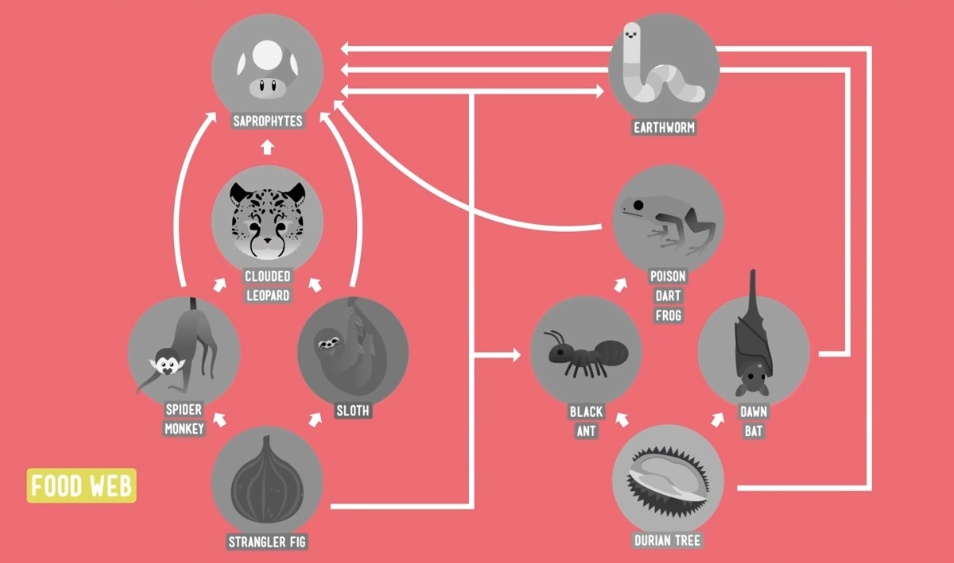
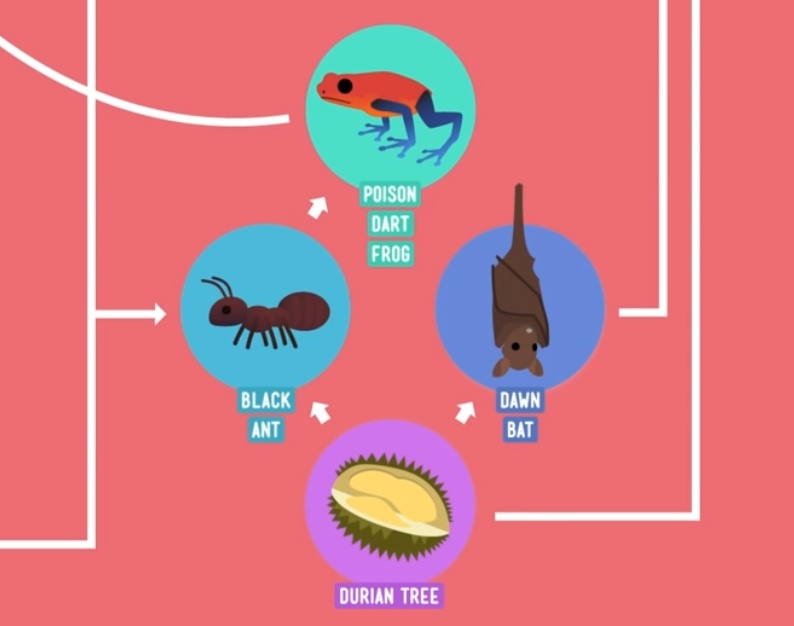
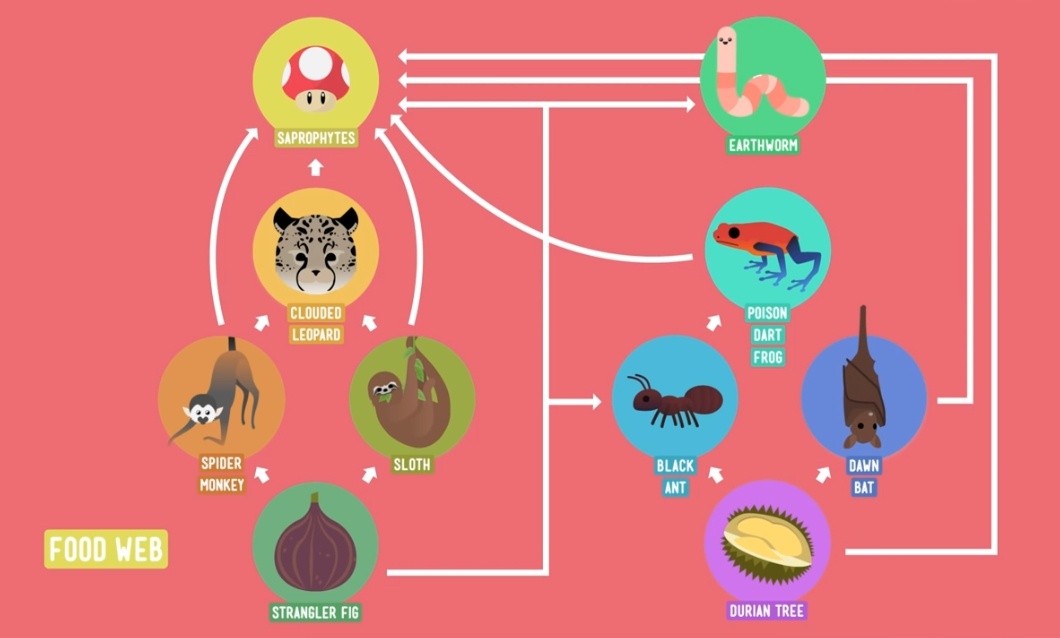
Frogs eat ___
1
bats
2
insects
3
spider monkeys
4
strangler figs

47

Multiple Choice

Question image
Leopards dine on ___
1
figs and spider monkeys
2
sloths and strangler figs
3
sloths and spider monkeys
4
ants and bats

48

Multiple Choice

Question image
What is distributed by spider monkeys as they travel throughout the forest?
1
whole fruit
2
fruit seeds 
3
dried leaves
4
insects

49

Multiple Choice

Question image
Spider monkeys eat mostly ___
1
leaves
2
toucans
3
nuts
4
fruit

50

Multiple Choice

Question image
The things in an ecosystem are all ___
1
separate
2
connected
3
scattered
4
unrelated

51

Multiple Choice

Question image

A habitat is home to a tangle of food chains called ___

1

a nutrient hub

2

an energy chain

3

a food web

4

the carbon cycle

52

Multiple Choice

Question image

A habitat is home to a tangle of food chains called ___

1

a nutrient hub

2

an energy chain

3

a food web

4

the carbon cycle

53

Slide image

54

55

Multiple Choice

Question image

New York City is an extreme example of human's ability to ___

1

change an environment

2

change their mind

3

build farms and fortifications

4

clear space for crops

56

Multiple Choice

Question image
After a couple hundred years, the wilderness of New York became paved with over ___
1
96 kilometers of streets
2
960 kilometers of streets
3
9,600 kilometers of streets
4
96,000 kilometers of streets

57

Multiple Choice

Question image

What kind of organism changes its environment?

1

only plants

2

only animals

3

only humans

4

everything that's alive

58

Multiple Choice

Question image
The action of moving water from one place to another is called ___
1
the natural environment
2
irrigation
3
the human environment
4
natural resources

59

Multiple Choice

Question image
Things that are taken from parts of the world and shaped by people are called ___ 
1
the natural environment
2
human intervention
3
the human environment
4
natural resources

60

Multiple Choice

Question image

We usually refer to nature, the wild outdoors, as ___

1

the human environment

2

the natural environment

3

our everyday environment

4

resources

61

Slide image

62

63

Multiple Choice

Question image
Over the last 50 years, as pollution has decreased, the number of light colored moths ___
1
has decreased
2
has stabilized
3
has flip-flopped
4
has increased

64

Multiple Choice

Question image
After the environment had been polluted for a long time, there were ___
1
more dark moths than light ones
2
more light moths than dark ones
3
more dark birds than light ones
4
more light birds than dark ones

65

Multiple Choice

Question image
The peppered moth comes in two types: ___
1
hairy and bald
2
short and long
3
large and small
4
light and dark

66

Multiple Choice

Question image
Plants make chemical energy through the process of ___
1
respiration
2
oxidation
3
photosynthesis
4
reduction

67

Multiple Choice

Question image
About 300 million years ago, what condition caused many plants to become extinct?
1
the climate became drier and cooler 
2
the giant insects died out
3
too much oxygen in the atmosphere
4
the large animals became extinct

68

Multiple Choice

Question image
About 360 million years ago, there were dragonflies that were the size of ___
1
mosquitos
2
small birds
3
large birds
4
airplanes

69

Multiple Choice

Question image
About 360 million years ago, the Earth was much warmer, and the land was covered with ___
1
hills and mountains
2
forests and swamps
3
rivers and streams
4
glaciers and permafrost

70

Multiple Choice

Question image
A characteristic that helps an organism live in its environment is called ___
1
an alteration
2
an adaptation
3
a mutation
4
a transformation

71

Multiple Choice

Question image
A system of living things and their environment is called ___
1
the geosphere
2
an ecosystem
3
the water cycle
4
ecology

72

Multiple Choice

Question image

The non-living conditions around a living thing are called its ___

1

environment

2

ecosystem

3

food chain

4

food web

73

Multiple Choice

Question image

The non-living conditions around a living thing are called its ___

1

environment

2

ecosystem

3

food chain

4

food web

74

Slide image

75

76

Multiple Choice

Question image
What is the main gas that is trapping more heat close to the Earth, acting like a blanket?
1
carbon dioxide
2
oxygen
3
nitrogen
4
argon

77

Multiple Choice

Question image
The layer of gases surrounding our planet is called ___
1
the biosphere
2
the atmosphere
3
the hydrosphere
4
the geosphere

78

Multiple Choice

Question image
What adaptation do desert snakes have that helps them retain water?
1
a moist tongue
2
scales
3
venom
4
heat receptors

79

Multiple Choice

Question image
Taking out the bottom of the food chain is like taking the wrong block in ___
1
Jenga
2
Tetris
3
LEGO
4
Lincoln Logs

80

Multiple Choice

Question image
A model of how energy flows between living things in this ecosystem is called ___
1
an energy cone
2
a food chain
3
a power pyramid
4
a nutrition web

81

Multiple Choice

Question image
When weather patterns change over a long period of time, we call it ___
1
climate adaptation
2
weather change
3
climate change
4
weather adaptation

82

Multiple Choice

Question image
The waxy and tough outer layer of a cactus helps it save ___
1
time
2
water
3
food
4
its needles

83

Multiple Choice

Question image
In Yuma, Arizona most of the days are ___
1
cold and wet
2
cold and dry
3
hot and wet
4
hot and dry

84

Multiple Choice

Question image
A characteristic that helps an organism live in its environment is called ___
1
a configuration
2
a mutation
3
an adaptation
4
a translation

85

Multiple Choice

Question image
In Yuma, Arizona most of the days are ___
1
cold and wet
2
cold and dry
3
hot and wet
4
hot and dry

86

Multiple Choice

Question image

The condition of the atmosphere on different parts of the planet is called ___

1

weather

2

climate

3

geosphere

4

humidity

87

Multiple Choice

Question image
The condition of the atmosphere on different parts of the planet is called ___
1
weather
2
climate
3
geosphere
4
humidity

Organisms and Environments Review

5th Grade

Slide image

Show answer

Auto Play

Slide 1 / 87

SLIDE