

Search Header Logo
Level 5: Advance Pigeon Genetics

Level 5: Advance Pigeon Genetics

Assessment

Presentation

•

Science

•

9th Grade

•

Medium

•
NGSS
HS-LS3-3, HS-LS3-1, HS-LS3-2

Standards-aligned

Created by

Jose Villafuerte

Used 7+ times

FREE Resource

19 Slides • 13 Questions

1

Level 5: Advance Pigeon Genetics

Source: https://learn.genetics.utah.edu/content/pigeons
Slide image

2

The genes in this activity are epistatic

  • Epistasis is when a gene masks another gene

3

Spread

The spread gene is epistatic to the wing pattern gene.


In other words; the spread gene masks the wing pattern gene. Wing pattern does not show.

Slide image

4

Spread alleles

The spread allele is dominant (S) to the no spread allele (s).


The spread allele masks the wing pattern by spreading the color of the bird hiding the wing pattern. (see picture on the right)

Slide image

5

Quick review before you get the graded questions

  • What phenotype will a pigeon have if its genotype is (Ss)??

  • answer on the next slide...

6

Spread phenotype

Will this pigeon have a visible wing pattern?

answer on next slide

7

No visible wing pattern because the spread phenotype masks wing pattern

one more review question on next slide

8

I have one gene that controls the number of fingers in an organism. The dominant allele (5 fingers) masks the recessive allele (3 fingers).

Is this an example of epistasis???

answer on next page...

9

NO!

Epistasis is when one gene masks a different gene. In the previous example, an allele was masking another allele but they were still the same gene (Number of fingers).

10

Fill in the Blank

Fill in the blank with True or False

The statement "A bird with a genotype Ss will have a visible wing patter" is _

11

Fill in the Blank

Fill in the blank with True or False

The statement "A bird with a genotype ss will have a visible wing patter" is _

12

Fill in the Blank

Fill in the blank with True or False

The statement "Epistasis is when a gene masks another gene" is _

13

Multiple Choice

Is the following an example of epistasis:

The color gene has two alleles. The black fur allele is dominant and masks the White fur allele.

1

yes

2

no

14

Multiple Choice

Is the following an example of epistasis:

The black fur allele is dominant and masks the curly hair allele. These alleles belong to different genes; fur color gene or hair shape gene.

1

yes

2

no

15

On a piece of paper draw a Punnett square for the parent pigeons below

  • A Parent with spread and a parent with no spread (Ss) X (ss)

  • Once you have completed your punnet square move on to the next slide. You will need your punnett square to answer the questions.

16

Multiple Choice

What is the probability that they will have offspring with a visible wing pattern?

1

0%

2

25%

3

50%

4

75%

5

100%

17

Multiple Choice

What is the probability that they will have offspring with a spread phenotype?

1

0%

2

25%

3

50%

4

75%

5

100%

18

On a piece of paper draw a Punnett square for the parent pigeons below

  • A parent with spread and a parent with spread (Ss) X (Ss)

  • Once you have completed your punnet square move on to the next slide. You will need your punnett square to answer the questions.

19

Multiple Choice

What is the probability that they will have offspring with a (SS) genotype?

1

0%

2

25%

3

50%

4

75%

5

100%

20

Multiple Choice

What is the probability that they will have offspring with a visible wing pattern?

1

0%

2

25%

3

50%

4

75%

5

100%

21

Recessive red

This gene is a completely different gene and not a part of the color gene (Blue, Brown, & Ash-red)

Top picture: Color gene

Bottom picture: Recessive red gene

Slide image

22

Recessive red

The Not recessive red allele is dominant (N) to Recessive red allele is recessive (n)

If a bird has 2 recessive red alleles the bird will look red. A darker red than a bird with the ash-red color phenotype. (see picture on the right)

Slide image

23

Recessive red is epistatic to...

Color, spread, and wing pattern.


*remember that spread is epistatic to pattern

Slide image

24

Read the following statement:

"Recessive red is epistatic to color, spread, and pattern"

Now answer the following questions in your head...

What does that mean to you?

How will this affect the way a pigeon looks?

Go to the next slide to check your understanding

25


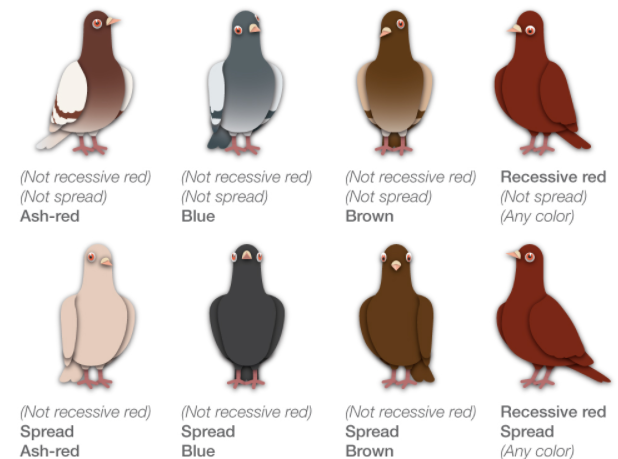
When a bird has a recessive red phenotype it will mask the bird's color, spread, and wing pattern.


See the picture on the right to see how it affects the way a pigeon looks.

*Not recessive red (although it is the dominant allele) does not create any color which means no visible effect on the pigeon's appearance.
Slide image

26

The next slides will have questions about the recessive red gene

  • Make sure you understand the recessive red gene before moving forward

  • If you need to go back and review the recessive red slides

  • Take a second look at the picture from the previous slide. Do you understand what it is showing? did you read every description under each bird?

27

I guess you are ready then

good luck

28

On a piece of paper draw a Punnett square for the parent pigeons below

  • A Not recessive red parent and a not recessive red parent (Nn) X (Nn)

  • Once you have completed your punnet square move on to the next slide. You will need your punnett square to answer the questions.

29

Multiple Choice

If all the offspring have alleles for a bar wing pattern phenotype, based on your recessive red Punnett square (Nn X Nn), what is the probability that they will have offspring with a visible wing pattern?

1

0%

2

25%

3

50%

4

75%

5

100%

30

Multiple Choice

If all the offspring have alleles for a spread phenotype, based on your recessive red Punnett square (Nn X Nn), what is the probability that they will have offspring with a spread appereance?

1

0%

2

25%

3

50%

4

75%

5

100%

31

Multiple Choice

If all the offspring have alleles for a blue color phenotype, based on your recessive red Punnett square (Nn X Nn), what is the probability that they will have offspring that will be blue?

1

0%

2

25%

3

50%

4

75%

5

100%

32

Multiple Choice

Based on your recessive red Punnett square (Nn X Nn), what is the probability that they will have offspring that will have a Not recessive red phenotype?

1

0%

2

25%

3

50%

4

75%

5

100%

Level 5: Advance Pigeon Genetics

Source: https://learn.genetics.utah.edu/content/pigeons

Slide image

Show answer

Auto Play

Slide 1 / 32

SLIDE
