

Ecosystems-EOG Review

Presentation
•
Science
•
5th Grade
•
Easy
+6
Standards-aligned

Charles Bullins
Used 11+ times
FREE Resource
47 Slides • 21 Questions
1
Ecosystems-EOG Review
Use the slides to help you review for the EOG. Remember, you need to make above a 70 in order to get your Infinity Stone for this standard.

2
Biotic Factors
A living part of an ecosystem. Animals and plants (Yes, trees, grass, and bushes are living)

3
Abiotic Factors
Non-Living things like Sun, Soil, Water, Temperature

4
5
6
7
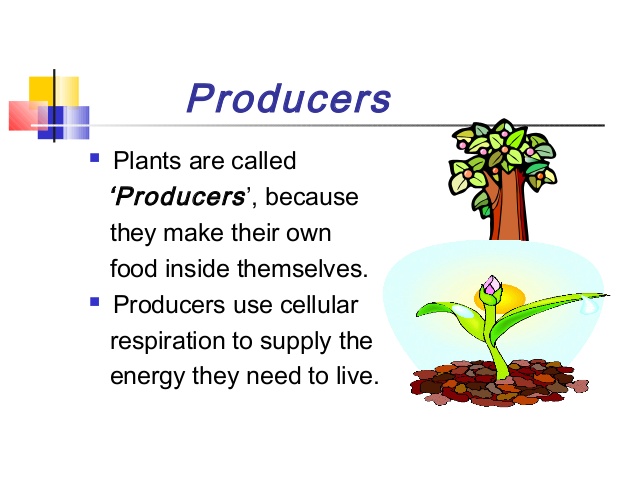
Producers
Producers are plants. An organism that makes its own food using photosynthesis.
8
Consumers
An animal that eats plants. An animal that eats other plant-eating animals (meat). An animal that eats both meat and plants. There are 3 main types of consumers.

9
Herbivore
Deer, horses, rabbits, cows, sheep and koalas are herbivores. They are considered herbivores because they are an animal that eats plants, algae, and other producers

10
Carnivore
Lions, sharks, snakes, and eagles are carnivores. They are considered carnivores because they are an animal that eats another animal (Meat).

11
Omnivore
Most Humans, Bears & Primates are omnivores. This means that they are an animal that eats both plants and animals

12
13
Scavenger
Scavengers eat the meat and bones of dead animals for energy.

14
Decomposers
Earthworms, Bacteria & Fungi (Mushrooms) are all decomposers. They break down dead plants and animals into useful things like minerals and rich soil.

15
Niche
The role of an organism in a community.
Ex. bears eat deer and keep deer population in balance.
Deer eat grasses, and keep them from growing too much and taking over an area.
Spiders eat insects and keep the insect population in balance.

16
17
Predator
An animal that hunts other animals for food.

18
Prey
a living thing that is hunted for food.
How to remember the difference between predator and prey. The prey is praying "PLEASE don't let that predator eat me!!"

19
20
Commensalism
Commensalism is a relationship between two kinds of organisms that benefits one without harming the other.
The remora hangs on and around the shark. It gets scraps of food when the shark feeds. This does no harm, nor does it help the shark.
The only one getting a benefit is the remora.

21
Mutualism
A Mutualistic relationship is when two kinds of organisms that benefits each other.
For example, the clown fish and the anemone. The sea anemone offers a place to live for the clown fish and the clown fish protects the anemone from other fish that might harm it.

22
Parasitism
Now, the creepiest of all....Parasitism.
Parasitism is a relationship in which one organism lives in or on another organism and benefits from that relationship while the other organism may be harmed by it.
A great, albeit kind of skin-crawling example is ticks. The tick lives on a host, and very often the host is harmed by diseases the tick carries.

23

Symbiosis- Mutualism, Commensalism, and Parasitism on VimeoMenuSearchSearch
You can open this webpage in a new tab.
24
25
Terrestrial
Terrestrial Biomes are all the biomes that are on land.
Terrestrial means "having to do with land".

26
Grasslands
The most important plants in this biome are grasses! There is not enough rain to support many trees here.
Grasslands have some of the darkest, nutrient rich soil of all Biomes. People who live in grassland regions often use these soils for farming. In North America we call temperate grasslands prairies.

27
28
Most important plant life is grass
Plants: As stated, the main plant-life is grass, and they have an amazing adaptation that shrubs and trees do not. Grasses will grow back after fires and being eaten by herbivores because their bulbs are underground.
Animals: Many herbivores. Deer adaptations are long, strong legs so they can get away from predators. Groundhogs and Prairie Dogs live underground. This helps them with predators and during fires.

29
Tundra
The tundra biome is the coldest of all biomes. It also covers about one fifth of the land on earth, that's HUGE. Tundra biome is located in the artic circle, which is a circle that surrounds the north pole, but this is not the only place we can find freezing cold temperatures and a few animals. In Antarctica, and other cold environments, there are areas that can be described as part of a tundra biome as well.

30
Taiga
Long, cold winters, and short, mild, wet summers Fire is not uncommon in the taiga during the summer. Fires may seem destructive, but they actually help this biome by removing old sick trees, making room for new growth. Precipitation is relatively high in the taiga and falls as snow during the winter and rain during the summer.

31
32
Tropical Rainforest
Tropical rainforests are lush and warm all year long! This is because they are close to the equator. The environment is pretty wet in tropical rainforests, maintaining a high humidity of 77% to 88% year-round. The yearly rainfall ranges from 80 to 400 inches (200 to 1000 cm), and it can rain hard. It can downpour as much as 2 inches (5 cm) in an hour!

33
Deserts
The seasons in hot and dry deserts are usually very hot during the summer and warm during the rest of the year. During winter these deserts get little rainfall. Rain is often light, or in short concentrated bursts. Most of the time evaporation rates are faster than rainfall rates. Sometimes the rain evaporates before even hitting the ground. This is the reason for the dry characteristic of this type of desert.

34
Deciduous Forest
When drawing pictures of the seasons, what do you usually draw to show autumn? I bet you draw a tree with colorful leaves! This is a tree that can be found in a deciduous forest. Every fall, the leaves lose their green color and change to red, orange, or yellow before falling to the ground.

35
Deciduous Forest
This biome has four changing seasons including winter, spring, summer, and fall. These seasons happen because of the tilt of the Earth’s axis. Temperate deciduous forests also have quite a wet environment. Following rainforests, temperate deciduous forests are the second-rainiest biome.
36
Aquatic Biomes
Having to do with water

37
38
Marine
Marine Biome: Largest biome. (Oceans)
Include any region of the Earth’s surface that is covered with salt water.
Salt water has salt in it.

39
Marine
The marine biome is the biggest biome in the world! It covers about 70% of the earth. It includes five main oceans: the Pacific, Atlantic, Indian, Arctic, and Southern. Marine regions are usually very salty!
PLANTS: Over 1 million species of plants and animals have been discovered in the oceans. One reason the ocean is very important is because of all the algae. If it weren't for marine algae we would not be able to breathe!
40
Estuary
An estuary is a body of water where freshwater and saltwater meet and mingle. This mixture of fresh and saltwater is called brackish water.
Estuaries are typically located along coasts, where freshwater rivers meet saltwater oceans. Swamps, beaches, and coral reefs can surround an estuary.

41
42
Freshwater
Water with little to no salt in it.

43
44
Rivers and Streams
Aquatic Biome: Having to do with Water
Freshwater: Little to no salt
Abiotic Factors -Soil -Rocks -Sun -Climate-Water
Biotic Factors -Trout -Fish -Reptiles - River Otters - Turtles
Plants Algae Ferns
Adaptations needed: These animals/plants need to be freshwater animals

45
46
Food Chain
The path of the energy in food from one organism to another.

47
Food Chain
What would happen if the bird population increased?
If the bird population went up, grasshoppers (their food) population would certainly decrease. If grasshoppers decrease, there would be more plants.
48
Multiple Choice

This picture shows the path of energy in an ecosystem. What term BEST describes this picture?
49
Multiple Choice

The arctic fox uses their keen sense of smell to find hares hiding under the snow. When they smell one they jump up and pounce on them through the snow. Because the arctic fox hunts for its food, it is considered which of the following?
50
Multiple Choice

Arctic Hares are herbivores that eat plants. They are hunted by arctic fox. Because they are hunted as food, we would consider an arctic hare as which of the following?
51
Multiple Choice

Estuaries have this type of water...
52
Multiple Choice

Deer, squirrels, and woodpeckers can all be found in a forest biome with many kinds of trees that lose their
leaves each autumn.
53
Multiple Choice
54
Multiple Choice
55
Multiple Choice

These vultures feed off the remains of dead things. They get their energy from this. They DO NOT turn dead things into good soil. How do we label these vultures?
56
Multiple Choice

Bob Ross loved painting Happy Trees. Trees are able to make their own food, which makes them a..
57
Multiple Choice

Tigers only eat meat, so scientists label them as a..
58
Multiple Choice

All of these animals only eat plants (producers) so they are considered which of the following?
59
Multiple Choice

Owls, deer, worms, grass and mice are all living parts of an ecosystem and are considered...
60
Multiple Choice

Hi there! I'm a bear. I like to eat fish and berries. Because I eat both producers (plants) and animals (meat) I am a(n)...
61
Multiple Choice

Earthworms, Mushrooms, some insects & bacteria are useful because they break down dead plants and animals into useful things like minerals and rich soil, so they are considered which of the following?
62
Multiple Choice
63
Multiple Choice
64
Multiple Choice

A dry area with little or no precipitation or vegetation
65
Multiple Choice

Where fresh water mixes with salt water (Brackish)
66
Multiple Choice

A biome in which grass is the dominant form of plant life.
67
Multiple Choice
68
Multiple Choice

Related to land biomes
Ecosystems-EOG Review
Use the slides to help you review for the EOG. Remember, you need to make above a 70 in order to get your Infinity Stone for this standard.
Show answer
Auto Play
Slide 1 / 68
SLIDE


