Search Header Logo
Module 3.4 - Evidence of Evolution

Module 3.4 - Evidence of Evolution

Assessment

Presentation

•

Biology

•

11th Grade

•

Medium

Created by

Jeremy Soumpholphakdy

Used 4+ times

FREE Resource

63 Slides • 29 Questions

1

Module 3.4 - Evidence of Evolution
Slide image

2

Slide image

3

Open Ended

What is some evidence of evolution (Hint: structures!)

4

Slide image

5

Slide image

6

Slide image

7

Slide image

8

Slide image

9

Slide image

10

Slide image

11

Slide image

12

Slide image

13

Open Ended

Describe what fossils are.

14

Slide image

15

Slide image

16

Slide image

17

Slide image

18

Slide image

19

Slide image

20

Slide image

21

Slide image

22

Multiple Choice

Question image
Which of the following is the oldest?
1
Layer L
2
Intrusion D
3
Intrusion H
4
Layer E

23

Slide image

24

Slide image

25

Slide image

26

Multiple Choice

Which of the following determines a specific date for a fossil using chemical information?
1
absolute dating
2
relative dating

27

Multiple Choice

Which of the following is defined as determining the relative order of past events, without necessarily determining the exact age?
1
relative dating
2
absolute dating

28

Slide image

29

Multiple Choice

Question image

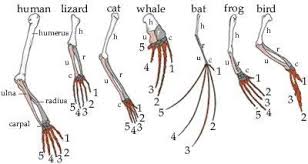
Identify the image. How does this image provide evidence for evolution?

1

Homologous structures show that even animals from different species have the same basic structure, suggesting they may share one common ancestor.

2

Homologous structures show that animals for different species have a variety of different structures, suggesting that each has a different ancestor.

3

Analogous structures show that bones length plays a vital role in the evolution of various species.

4

Analogous structures show that the same basic bone structure may be used in a variety of different functions.

30

Multiple Choice

The forelimbs of penguin, alligator, bat, human are which of the following?
1
homologous structures
2
vestigial structures

31

Multiple Choice

Which of the following pieces of evolution evidence deals with aged and identified fossils?
1
fossil record
2
comparative embryology
3
comparative biochemistry
4
comparative anatomy

32

Multiple Choice

What mechanism did Darwin propose for evolution?
1
natural selection
2
fossil record
3
use it or lose it
4
biochemistry

33

Slide image

34

Slide image

35

Slide image

36

Slide image

37

Slide image

38

Slide image

39

Slide image

40

Slide image

41

Multiple Choice

Question image

What is this an example of?

1

Homologous structure

2

Analogous structure

3

Vestigial organs

4

Functional adaption

42

Multiple Choice

Question image

How does the study of embryology provide evidence for evolution?

1

Even for species that look very different as adults, many species look very similar as embryos, suggesting they may share one common ancestor.

2

The variety in embryo structure and form suggests that their are many different ancestors for each distinct type.

3

All organisms must undergo an embryo stage of development. This suggests some degree of relatedness between species.

4

Embryology shows that organisms that appear similar as embryos will also share the same similarities as adults.

43

Multiple Choice

Some organisms that share a common ancestor have features that have different functions, but similar structures. These are known as

1

vestigial structures

2

analogous structures

3

homologous structures

4

embryology

44

Multiple Choice

Question image
What is this an example of?
1
vestigial structures
2
embryology
3
homologous structures
4
fossil record

45

Open Ended

Compare and contrast homologous and analogous structures.

46

Slide image

47

Open Ended

Define the term biogeography

48

Slide image

49

Slide image

50

Slide image

51

Slide image

52

Multiple Choice

What is is the study of how and why plants and animals live where they do?

1

Evolution

2

Adaptive Radiation

3

Biogeography

4

Biogeology

53

Multiple Select

Which of the following are evidence to support the theory that Pangaea existed ? Select all that apply

1

Similar fossils

2

Similar glaciers

3

Similar rock evidence

4

Same/similar mountain ranges

5

Similar ocean levels

54

Multiple Choice

What was Pangaea?

1

An extinct species of fish

2

A super-continent (all the continents connected)

3

A large desert that covered all of Africa at one point

4

A layer of rock in the rock record from 3.4 million years ago

55

Multiple Choice

What was Pangaea?

1

An extinct species of fish

2

A super-continent (all the continents connected)

3

A large desert that covered all of Africa at one point

4

A layer of rock in the rock record from 3.4 million years ago

56

Slide image

57

Slide image

58

Slide image

59

Slide image

60

Slide image

61

Slide image

62

Slide image

63

Slide image

64

Slide image

65

Multiple Choice

Individuals that survive long enough to reproduce have a high level of
1
fitness
2
adaptation
3
hormones
4
stamina

66

Multiple Choice

How is genetic drift different from natural selection?

1

Genetic drift prevents natural selection.

2

Genetic drift occurs by chance alone.

3

Genetic drift only occurs in marine species.

4

Genetic drift is a method used for breeding.

67

Multiple Choice

What is convergent evolution?
1
evolution toward similar traits in unrelated species
2
evolution toward different traits in closely related species
3
elimination of a species from Earth
4
the rise of two or more species from one existing species

68

Multiple Choice

All of the genetic information found in a population.
1
population
2
genetic drift
3
evolution
4
gene pool

69

Multiple Choice

Question image
What type of evolution is demonstrated in this photo?  (Hint: the bee and the flower have evolved in response to each other)
1
Coevolution
2
Convergent evolution
3
Punctuated evolution
4
Gradualistic evolution

70

Multiple Choice

A bumble bee has just enough weight to open up the snapdragon flower and get the nectar/pollen inside.  Other insects cannot do this. This adaption is an example of........
1
convergent evolution
2
co-evolution
3
divergent evolution
4
speciation

71

Multiple Choice

In convergent evolution, organisms share physical similarities because they

1

have a common ancestor

2

live in similar environments

3

develop homologous structures

4

are closely related

72

Multiple Choice

In convergent evolution, organisms share physical similarities because they

1

have a common ancestor

2

live in similar environments

3

develop homologous structures

4

are closely related

73

Slide image

74

Slide image

75

Slide image

76

Slide image

77

Slide image

78

Slide image

79

Slide image

80

Slide image

81

Slide image

82

Slide image

83

Slide image

84

Multiple Choice

An ancestral species is

1

a species that is the "parent" of many others

2

your ancestor

3

a human's predecessor

4

still living today

85

Multiple Choice

Microevolution happens in

1

species

2

individuals

3

populations

4

households

86

Slide image

87

Slide image

88

Slide image

89

Slide image

90

Slide image

91

Slide image

92

Slide image

Module 3.4 - Evidence of Evolution

Slide image

Show answer

Auto Play

Slide 1 / 92

SLIDE