Science (Biology) Pre-Prelim Mega Quiz
Presentation
•
Biology
•
9th - 10th Grade
•
Medium
Johanna Santarossa
Used 2+ times
FREE Resource
17 Slides • 41 Questions
1
Science (Biology) Pre-Prelim Mega Quiz
by Johanna Santarossa
2
Cellular Structures
​
3
Fill in the Blank
The diagram shows an electron micograph image of part of a cell from the brain of a rat.
Identify the part labelled A.
4
Open Ended
Name two structures in a cell only visible only under an electron microscope.
5
Movement of Substances
​
6
Multiple Choice
The diagrams show a cell in solution X and the same cell after it had been in solution Y for 20 minutes.
What caused the change and what was the relative water potential of solution Y to solution X?
The change was caused by water diffusing into the cell. The water potential of solution Y is higher than solution X.
The change was caused by water diffusing into the cell. The water potential of solution Y is lower than solution X.
The change was caused by water diffusing out of the cell. The water potential of solution Y is higher than solution X.
The change was caused by water diffusing out of the cell. The water potential of solution Y is lower than solution X.
7
Open Ended
Transdermal patches are adhesive patched which are stuck on the skin.
The patches contain small amounts of medicines.
The inner protective layer is peeled off and the patch is stuck on the skin.
The diagram below shows a section of a transdermal patch with the protective layer being peeled off.
Suggest how the medicine in the patch reaches the blood stream.
8
Nutrients
​
9
Multiple Choice
Three properties of water are listed:
Water cools a surface from which it evaporates.
Water is used as a solvent for many chemicals.
Water is involved in many metabolic reactions.
Which of these properties make water suitable to use in a blood transport system?
1 and 2 only
1 and 3 only
2 only
3 only
10
Multiple Choice
A food gives the following results on testing:
purple colour in the biuret test
blue colour when heated with Benedict's solution
yellow colour with iodine
white emulsion with ethanol
Which nutrients does the food contain?
fat and protein
protein and reducing sugar
reducing sugar and starch
starch and fat
11
Multiple Choice
Which chemical element forms part of all protein molecules?
calcium
iron
magnesium
nitrogen
12
Enzymes
​
13
Multiple Choice
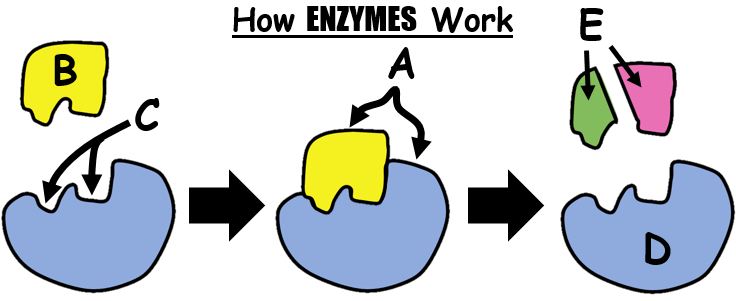
In the diagram, what is letter A?
product
substrate
enzyme-substrate complex
active site
14
Multiple Choice
Which of the following best explains why enzymes are necessary for many cellular reactions?
Enzymes supply the oxygen necessary for the reactions
Enzymes change reactants from solid to liquids during the reactions.
The reactions take up too much space in the cell if the enzymes are missing.
The reactions are too slow to meet the needs of the cell if enzymes are missing.
15
Multiple Choice
Enzymes are...
nucleic acids
proteins
lipids
carbohydrates
16
Nutrition in Humans
​
17
Multiple Choice
The diagram shows some of the organs of the human abdomen.
What would happen if there was a blockage at P?
Digestion of fats would slow down.
Insulin from the pancreas would no longer reach the liver.
Protein digestion in the duodenum would stop.
The liver would no longer be able to produce bile.
18
Multiple Choice
Which blood vessel carries most of the absorbed food from the small intestine?
aorta
hepatic portal vein
renal artery
vena cava
19
Multiple Choice
Alcohol is broken down in the human body.
Where does the breakdown take place?
gall bladder
kidneys
liver
stomach
20
Transport in Humans
​
21
Multiple Choice
What type of blood vessel is shown in figure number 2?
vein
artery
capilary
aorta
22
Multiple Choice
The diagram shows the front view of a human heart.
Letters P, Q, R and S indicate the different chambers of the heart.
Which of the following shows the sequence in which a blood cell returning from other parts of the body passes through the four chambers of the heart?
R-S-P-Q
Q-S-R-P
P-R-Q-S
S-R-P-Q
23
Multiple Choice
The figure shows pressure changes in the aorta, left atrium, left ventricle during one complete heartbeat.
What causes the increase in pressure in point X?
contraction in left atrium
contraction in left ventricle
relaxation in left atrium
relaxation in left ventricle
24
Respiration
​
25
Multiple Choice
The composition of the oxygen in inhaled air is
21%
16%
4%
0.04%
26
Multiple Choice
What disease results in the destruction of the alveolus making breathing very difficult?
lung cancer
emphysema
cancer
27
Reproduction in Humans
​
28
Multiple Select
what is/are the function(s) of testes?
produce sperms
produce testosterone
produce progesterone
keep a lower body temperature
29
Multiple Choice
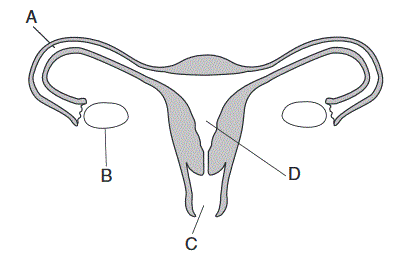
The diagram below represents structures found in the female reproductive system. If the areas labeled A were completely blocked on both sides, the most likely result would be that
egg production would stop
sperm production would stop
fertilization would not occur
an embryo would develop
30
Nutrition in Plants
​
31
Multiple Select
Which part of the plant takes in carbon
dioxide from the air for photosynthesis
Root
hair
stomata
leafveins
sepals
32
Multiple Choice
The equation for photosynthesis is
oxygen + water --> glucose + carbon dioxide
oxygen + glucose --> carbon dioxide + water
carbon dioxide + water --> glucose + oxygen
carbon dioxide + glucose --> oxygen + water
33
Transport in Plants
​
34
Multiple Choice
The rate of translocation in the phloem was observed to decrease steadily after a plant was placed in an environment without oxygen for several minutes. Why did this happen?
The cells in the plants stop respiring.
The xylem no longer takes in water for the plant.
Active transport of mineral salts can no longer occur.
The plant can no longer synthesize sugars to provide energy.
35
Multiple Choice
Why does temperature have an effect on the rate of photosynthesis?
Higher temperature allows carbon dioxide to diffuse into the leaves faster.
Higher temperature allows water to be transported to the leaves faster.
Higher temperature allows the stomata to open wider.
Higher temperature allows the enzymes to function better.
36
Reproduction in Plants
​
37
Multiple Choice
Which of the following describes Self-Pollination?
Pollen grains are transferred from anther to stigma of another flower.
Pollen grains are transferred from filament to stigma of the same flower.
Pollen grains are transferred from anther to stigma of the same flower.
Pollen grains are transferred from stigma to anther of the same flower.
38
Multiple Choice
Which is true about Asexual reproduction?
Insects are needed to transfer pollen.
New plants grow from seeds.
Offspring are genetically identical to their parent.
Two types of gametes are involved.
39
Multiple Choice
Gametes are produced in _____ .
1 and 3
1 and 4
2 and 3
2 and 4
40
Nervous System
​
41
Multiple Choice
What are the two divisions of the nervous system?
Central and Lower nervous systems
Central and Peripheral nervous systems
Lower and Cerebral nervous systems
Central and Muscular nervous systems
42
Multiple Choice
The space between an axon of a neuron that is communicating with a dendrite of another neuron is called a ________________.
Neuron
Brain message
Stimulus
Synapse
43
Multiple Choice
What is true about nerves?
Nerves all have the same job - to send messages TO the brain and spinal cord.
Nerves all have the same job - to send messages AWAY the brain and spinal cord.
Nerves all have different jobs -some only send messages TO to the brain and spinal cord with other only send messages AWAY from the brain and spinal cord.
44
Human Eye
​
45
Multiple Choice
The first part of the eye that light hits.
lens
cornea
pupil
retina
46
Multiple Choice
The vitreous humor is a liquid inside of your eye. When light passes from the lens into the vitreous, the light changes medium. What happens to light because of this medium change?
Light is transmitted.
Light is reflected.
Light is refracted.
Light is absorbed.
47
Multiple Choice
These are the structures in the eye that perceives color
Rods
Cones
Blind Spot
Pupil
48
Hormones
​
49
Multiple Choice
Insulin and glucagon are produced by
the liver
the pancreas
the kidneys
50
Multiple Choice
A hormone is
a chemical substance produced by a gland and carried by the lymph.
an enzyme produced by a gland and carried by the blood.
a chemical substance produced by an organ and carried by the blood.
a chemical substance produced by a gland and carried by the blood.
51
Heredity
​
52
Multiple Choice
This trait always shows up in an organism when the allele is present
dominant allele
codominance
probability
recessive allele
53
Multiple Choice
An organism's physical appearance or visible traits
fertilization
genotype
phenotype
homozygous
54
Multiple Choice
In peas, yellow pod color is dominant to green pod color. Two heterozygous parents are crossed. What are the chances that the offspring will have green pods?
25%
50%
75%
100%
55
Molecular Genetics
​
56
Multiple Choice
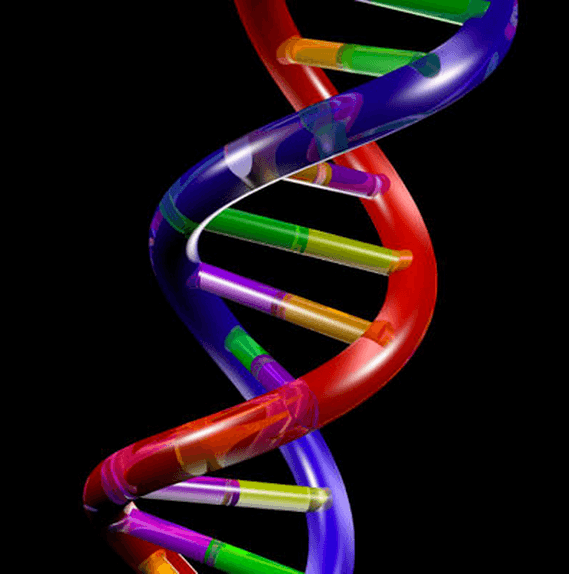
What determines the code, or information, of a DNA molecule?
the shape (structure) of the nitrogen bases
the order (sequence) of the nitrogen bases
the color of the nitrogen bases
the frequency (number) of nitrogen bases
57
Multiple Choice
TRANSCRIPTION:
Transcription occurs in the:
nucleus
cytoplasm
ribosomes
kitchen
58
Multiple Choice
In transcription, a DNA template strand is used to form mRNA.
True
False
Science (Biology) Pre-Prelim Mega Quiz
by Johanna Santarossa
Show answer
Auto Play
Slide 1 / 58
SLIDE

Similar Resources on Wayground
54 questions
Evidence for Evolution Notes & Review
Lesson
•
9th - 10th Grade
54 questions
Cladograms and Evidence for Evolution
Lesson
•
9th - 10th Grade
53 questions
Mutations Review & Mendelian Genetics
Lesson
•
10th Grade
56 questions
Willowridge Transcription Translation codon Chart
Lesson
•
8th - 10th Grade
55 questions
Science 9 - Unit A Review Slides
Lesson
•
9th Grade
53 questions
The Laws of Exponents
Lesson
•
9th Grade
52 questions
Ribosomes and Protein Synthesis
Lesson
•
9th Grade
52 questions
Enzymes and Proteins
Lesson
•
9th Grade
Popular Resources on Wayground
10 questions
5.P.1.3 Distance/Time Graphs
Quiz
•
5th Grade
10 questions
Fire Drill
Quiz
•
2nd - 5th Grade
20 questions
Equivalent Fractions
Quiz
•
3rd Grade
15 questions
Hargrett House Quiz: Community & Service
Quiz
•
5th Grade
20 questions
Main Idea and Details
Quiz
•
5th Grade
20 questions
Context Clues
Quiz
•
6th Grade
20 questions
Inferences
Quiz
•
4th Grade
15 questions
Equivalent Fractions
Quiz
•
4th Grade
Discover more resources for Biology
14 questions
Ecological Succession: Primary and Secondary
Quiz
•
9th Grade
20 questions
Cladogram Practice
Quiz
•
10th Grade
20 questions
Evolution and Natural Selection
Quiz
•
9th Grade
21 questions
Cell Cycle and mitosis
Quiz
•
9th - 10th Grade
45 questions
Unit 9 Review: Biosphere
Quiz
•
9th Grade
20 questions
Food Chains and Food Webs
Quiz
•
7th - 12th Grade
20 questions
Sex-Linked Traits
Quiz
•
9th - 12th Grade
22 questions
AP Biology: Unit 7 Review (CED)
Quiz
•
9th - 12th Grade