Planetary Motion
Presentation
•
Science
•
6th Grade
•
Medium
+3
Standards-aligned
Alice Richards
Used 32+ times
FREE Resource
16 Slides • 17 Questions
1
by Alice Richards
2
3
4
5
Multiple Choice
What is the name of this model?
Heliocentric Model
Geocentric Model
Circle Model
Aristotle Model
6
7
8
Multiple Choice
Earth's spinning on its axis is called its _____________.
orbit
revolution
rotation
cycle
9
Multiple Choice
When a body in space travels around a larger body in space it is said to _____________ around the larger body.
rotate
revolve
axis
10
11
12
13
Multiple Choice
Planets orbit the Sun in a shape called a(n)
circle
ellipse
focus
perihelion
14
Multiple Choice
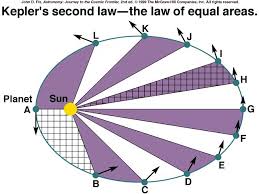
Where is the planet moving faster
Position A to B
Position B to C
Position H to I
Position I to J
15
Multiple Choice
When do planets move the fastest?
Close to the sun
Far away from the sun
16
Multiple Choice
A year on Jupiter is 4,344 days long. This tells you how long it takes
Jupiter to orbit the sun.
Jupiter to rotate one time on its axis.
the sun to orbit Jupiter.
Earth to orbit Jupiter.
17
Multiple Choice
What causes Earth’s year to be shorter than Jupiter’s year?
the gravitational pull of Jupiter’s moons
the shape of Earth’s orbit around the Sun
the distance between Earth and the Sun
the mass and density of Jupiter
18
19
20
Multiple Choice
The law of universal gravitation is credited to whom?
Einstein
Galileo
Darwin
Newton
21
Multiple Choice
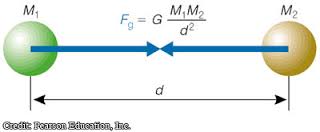
Two factors effecting the magnitude of the force of gravity between 2 objects are _____ and _______.
mass and distance
mass and matter
distance and weight
weight and mass
22
Multiple Choice
Complete the following statement: The farther away two planets are the _______ the gravitational force between them.
more
same
dosen't matter
less
23
Multiple Choice
If one of two objects increases its mass, it _________ the gravitational pull between the two objects
increases
decreases
has no effect on
eliminates
24
25
26
27
28
Multiple Choice
the tendency of an object to resist a change in its motion
acceleration
inertia
mass
frame of reference
29
Multiple Choice
Because of inertia, a moving object will keep ________.
at rest
moving
in one spot
inertia
30
Multiple Choice
What keeps the planets in orbit around the sun?
gravity and inertia together
gravity
inertia
neither gravity or inertia
31
Multiple Choice
What would happen to Earth if there were no inertia?
Earth would crash into the sun
Earth would fly out to space
Earth would collapse
Earth would orbit the moon
32
Multiple Choice
What would happen to Earth if there were no gravity?
Earth would crash into the sun
Earth would fly out to space
Earth would collapse
Earth would orbit the moon
33
​
by Alice Richards
Show answer
Auto Play
Slide 1 / 33
SLIDE

Similar Resources on Wayground
29 questions
6.11A Celestial Objects
Presentation
•
6th Grade
28 questions
Solar System Review Lesson
Presentation
•
6th Grade
23 questions
Convergent Boundaries Review
Presentation
•
6th Grade
22 questions
Energy Resources
Presentation
•
6th Grade
28 questions
Human Impact Climate change
Presentation
•
6th Grade
24 questions
The Engineering Design Process (1.6)
Presentation
•
6th Grade
24 questions
Space
Presentation
•
6th Grade
25 questions
The Moon
Presentation
•
6th Grade
Popular Resources on Wayground
10 questions
How much do you know about our Portrait of an Eagle?
Quiz
•
10th Grade
10 questions
Fast Food Slogans
Quiz
•
6th - 8th Grade
21 questions
Continents and Oceans
Quiz
•
6th Grade
20 questions
Parts of Speech
Quiz
•
5th Grade
16 questions
Subject & Predicate
Quiz
•
5th Grade
25 questions
Multiplication Facts
Quiz
•
5th Grade
12 questions
Map Skills
Quiz
•
3rd Grade
22 questions
Continents and Oceans
Quiz
•
5th Grade
Discover more resources for Science
10 questions
6.6D - Relative Density Review
Quiz
•
6th Grade
20 questions
Claim, Evidence and Reasoning (CER)
Quiz
•
6th - 8th Grade
20 questions
Density
Quiz
•
6th Grade
10 questions
Exploring Chemical and Physical Changes
Interactive video
•
6th - 10th Grade
20 questions
Food Chains & Food Webs
Quiz
•
5th - 7th Grade
18 questions
Interpreting Distance/Time Graphs
Quiz
•
6th Grade
10 questions
Decoding the Periodic Table of Elements
Interactive video
•
6th - 10th Grade
15 questions
Potential and Kinetic Energy
Quiz
•
6th Grade