Search Header Logo
CH 2 Test Review

CH 2 Test Review

Assessment

Presentation

Science

11th - 12th Grade

Medium

NGSS
MS-ESS1-1, MS-ESS2-4, MS-LS1-2

+13

Standards-aligned

Created by

Stacy King

Used 5+ times

FREE Resource

10 Slides • 39 Questions

1

CH 2 Review

by Stacy King

2

​Macromolecules and Cells

  • Macromolecules​

    • ​lipids

    • ​carbohydrates

    • ​protein

    • ​Nucleic acids

  • ​Organelles

  • ​Transport

  • ​Cell division

  • Cellular attachment​

media

3

Multiple Choice

The DNA material is housed in this eukaryote organelle

1

nucleus

2

ribosome

3

endoplasmic reticulum

4

lysosome

4

Multiple Choice

The part of a cell that regulates the movement of ions and molecules in and out of the cell

1

mitochondria

2

cell membrane

3

cytoplasm

4

nucleus

5

Multiple Choice

Question image

Match the image to the term(s)

1

phospholipids

2

amino acids

3

nucleotides

4

polysaccharides

5

proteins

6

Multiple Choice

Check all that apply

Cholesterol

1

protein

2

monosaccharide

3

increases cell membrane permeability

4

increases cell membrane fluidity

5

decreases cell membrane fluidity

7

Multiple Choice

What type of cellular transport requires the use of cellular energy to move molecules or ions against the concentration gradient?

1

active

2

passive

3

osmosis

4

the bus

8

Multiple Choice

What type of cellular transport is specific to water movement across a membrane

1

active

2

passive

3

osmosis

4

the bus

9

Multiple Choice

Question image

Which of these is one example of the cytoskeleton that provides intracellular transportation infrastructure

1

microtubules

2

macrofilaments

3

intermediate filaments

4

lateral filaments

5

intratubules

10

Multiple Choice

Monosaccharides are monomers of

1

Carbohydrates

2

Lipid

3

Protein

4

Nucleic acid

11

Multiple Choice

the fatty acid tails that make up the interior of the cell membrane are hydrophobic because

1

the bonds are non-polar so they won't be attracted to the polar water molecules

2

the bonds are polar so they won't be attracted to the non-polar water molecules

12

Multiple Select

Match the term with the correct physiological and anatomical function(s)

Cell/plasma membrane

1

regulates movement of molecules and ions in and out of the cell

2

composed of Proteins

3

specialized water channels

4

consists of both a proteins and a carbohydrates

5

composed of amino acids and passively moves ions and molecules along the concentration gradient

13

Multiple Choice

Question image

What is this phase of Mitosis?

1

Prophase

2

Metaphase

3

Anaphase

4

Telophase

14

Multiple Choice

Question image

This junction are anchoring junctions that use protein filaments to buttonlike thickenings of adjacent membranes.

1

Desmosomes

2

Tight Junctions

3

Gap Junctions

4

Plasmodesmata

15

​Types of Tissues

  • ​Epithelial

  • ​Connective Tissue

  • ​Muscle

  • ​Nerve

media

16

Multiple Choice

the functions of muscle tissue include

1

binding structures together

2

forms glands

3

help move substances and structures in the body

4

conduct impulses

17

Multiple Choice

This type of tissue is composed of specialized cells which not only receive stimuli but also conduct impulses to and from all parts of the body.

1

Epithelial

2

Nervous

3

Connective

4

Muscle

18

Multiple Choice

This type of tissue covers the body surface and forms the lining for most internal cavities.

1

Epithelial

2

Nervous

3

Muscle

4

Connective

19

Multiple Choice

This type of tissue is the most abundant and the most widely distributed of the tissues. They perform a variety of functions including support and protection.

1

Epithelial

2

Connective

3

Muscle

4

Nervous

20

Multiple Choice

This type of tissue forms the outer layer of our skin, lines our mouth and lines body cavities.

1

Epithelial

2

Muscle

3

Nervous

4

Connective

21

​Epithelial

  • ​Cell shapes

    • ​Squamous

    • ​Cuboidal

    • ​Columnar

  • ​Arrangement

    • ​Simple

    • ​Stratified

    • ​Pseudostratified

media

22

​Layers

  • ​Basal

    • ​attached at the lamina

  • ​Apical

    • ​outer surface

media

23

​Epithelial Glands

  • ​Endocrine

    • ​inside

  • ​Exocrine

    • ​outside

media

24

Multiple Choice

Epithelial cell TYPE that Absorbs nutrients in the digestive tract

1

Columnar

2

Cuboidal

3

Squamous

4

stratified

25

Multiple Choice

Used in places needing protection from scrapes and abrasions such as the skin and esophagus

1

Cuboidal

2

Pseudostratified

3

Simple Squamous

4

Stratified Squamous

26

Multiple Select

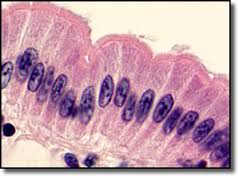
Question image

Identify: Cell Type and Arrangement 

1

Simple

2

Stratified

3

Squamous

4

Columnar

5

Cuboidal

27

Multiple Choice

The difference between endocrine and exocrine glands can best be described by which of the following?

1

exocrine secretions are released into surrounding tissues and blood whereas endocrine secretions are discharged onto the surface of the skin or other epithelial surfaces

2

endocrine secretions are released into the surrounding tissues and blood whereas exocrine secretions are discharged onto the surface of the skin or other epithelial surfaces

3

exocrine secretions and endocrine secretions are both released directly into the blood at all times

4

exocrine secretions and endocrine secretions are both released directly onto the surface of the skin at all times

28

​Connective Tissues

  • ​Components

    • ​Specialized Cells

    • ​Protein Fibers

    • ​Ground Substance

media

29

​Types

  • ​Connective Tissue Proper

    • ​Loose

    • ​Dense

  • Fluid

  • ​Supportive

media

30

Multiple Choice

Which of the following is not a type of connective tissue fiber?

1

collagen fibers

2

reticular fibers

3

elastic fibers

4

fibroblasts

31

Multiple Choice

This supportive connective tissue is found in the trachea, sternum, and ribs.

1

Hyaline

2

Elastic Cartilage

3

Adipose

4

Reticular

32

Multiple Choice

This cartilage is springy, yellow, and resists deformation. It is found in the internal support of the external ear and in the epiglottis.

1

Hyaline

2

Fibrocartilage

3

Elastic

4

Spongy

33

Multiple Choice

Question image

Identify this tissue type

1

Loose connective tissue areolar

2

Dense connective tissue elastic

3

Nervous tissue

4

Supportive connective tissue hyaline

5

Smooth muscle tissue

34

Multiple Choice

Question image

Identify this tissue type

1

Loose connective tissue reticular

2

Stratified cuboidal epithelial

3

Nervous tissue

4

Supportive connective tissue elastic

5

skeletal muscle tissue

35

Multiple Choice

Question image

Identify the material within the circle

1

ground substance

2

connective jelly

3

empty space

4

cytoplasm

36

Multiple Choice

A form of connective tissue in which the cells are specialized for the synthesis and storage of energy-rich reserves of fat, or lipid.

1

Adipose

2

Reticular

3

Hyaline

4

Elastic Cartilage

37

Fill in the Blank

Question image

Which type of tissue is shown?

38

​Muscle Tissue

  • ​Skeletal

  • ​Cardiac

  • ​Smooth

media

39

Multiple Choice

Muscle tissue

1

Is tissue that functions in lining, covering, and glandular tissue

2

Is tissue involved in protecting, supporting, and binding together other body tissues

3

Is tissue that contracts and shortens to produce movement 

4

Tissue that receives and conducts electrochemical impulses from one part of the body to another

40

Multiple Choice

Which types of muscle tissue are voluntary

1

Skeletal 

2

Cardiac

3

Smooth

41

Multiple Choice

This type of muscle tissue is found in the walls of hollow organs such as the stomach 

1

Sm

2

Cardiac

3

Skeletal

42

Multiple Choice

This type of muscle tissue is attached to bones and helps control voluntary movement of the body

1

Skeletal 

2

Sm

3

cardiac

43

Multiple Choice

Question image

What type of muscle tissue is this?

1

Smooth

2

Skeletal

3

Cardiac

44

​Nervous Tissue

  • ​Neurons

  • ​Glial Cells

media

45

Multiple Choice

What is the function of the nerve cells?

1

They are responsable of your defense mechanism.

2

They transmit signals or messages to other neurons, organs or glands.

3

They transmit substances to your endocrine system to produce hormones.

46

Multiple Choice

The two major parts of the nervous system are the

1

brain and spinal cord

2

central and somatic nervous systems

3

sympathetic and parasympathetic systems.

4

peripheral and central nervous systems

47

Multiple Choice

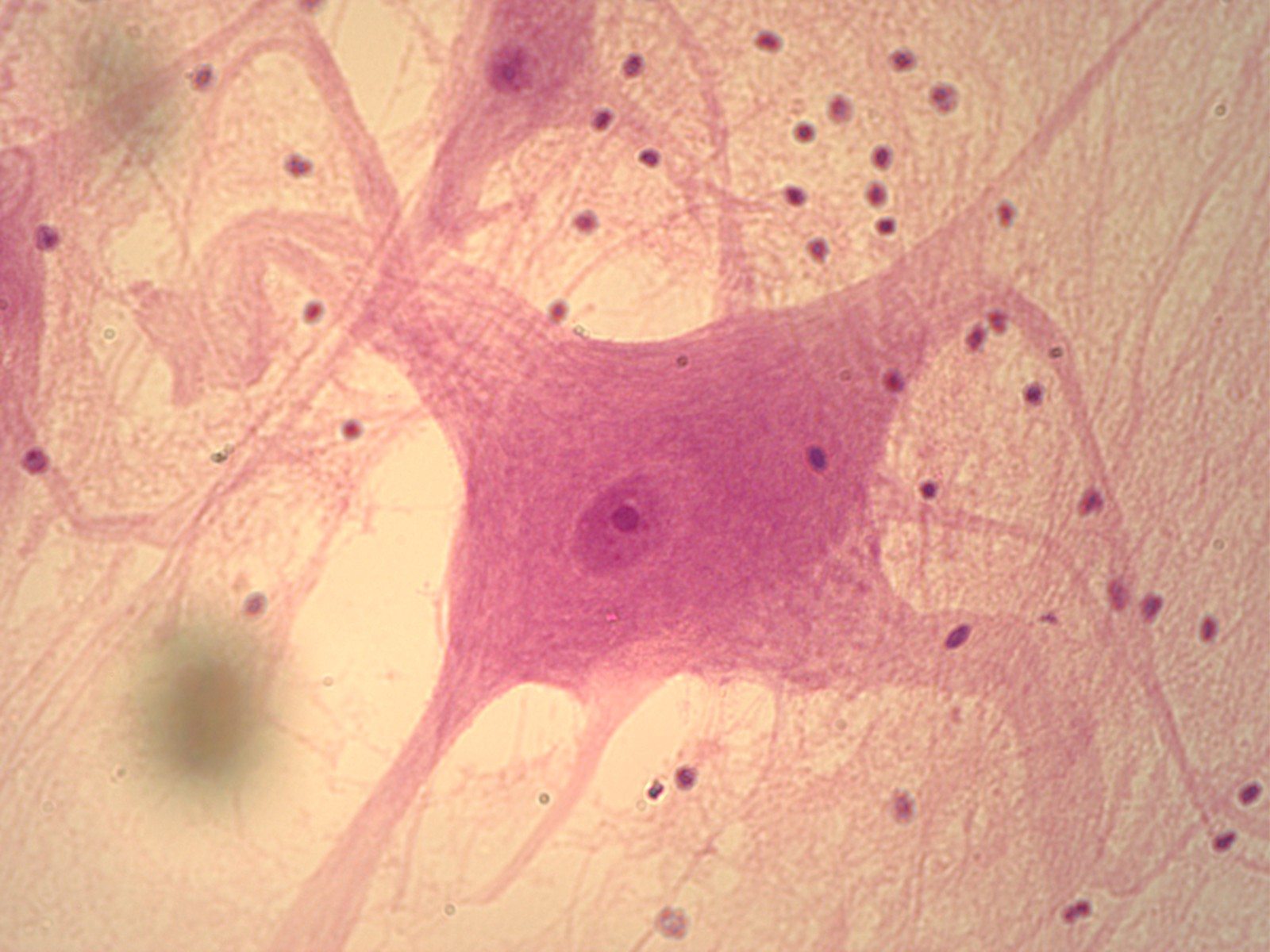
Question image

Identify the large blue cell

1

Ne

2

Glial

3

Fibroblast

4

Chondroblast

48

Multiple Choice

Question image

What tissue type is this?

1

Nervous tissue

2

Cardiac muscle

3

Smooth muscle

4

Connective tissue proper

49

Multiple Choice

Provides insulation to prevent interference from other electrical signals.

1

Glial Cells

2

Neurons

CH 2 Review

by Stacy King

Show answer

Auto Play

Slide 1 / 49

SLIDE