Search Header Logo
Chemical Bonds

Chemical Bonds

Assessment

Presentation

Biology

9th - 12th Grade

Medium

NGSS
HS-PS1-1, HS-PS1-2, HS-PS2-4

+1

Standards-aligned

Created by

Rose Marsh

Used 7+ times

FREE Resource

19 Slides • 19 Questions

1

media

2

media

3

media

4

media

5

media

6

media

7

media

8

Multiple Choice

Question image

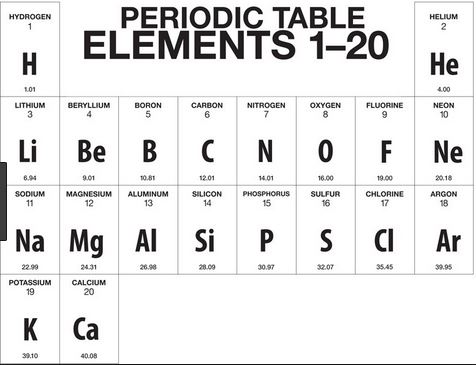
How many valence electrons does Hydrogen Have?

1

1 Valence electron

2

2 Valence electron

3

3 Valence electron

4

4 Valence electron

5

5 Valence electron

9

Multiple Choice

Question image

How many valence electrons does Nitrogen Have?

1

1 Valence electron

2

2 Valence electron

3

3 Valence electron

4

4 Valence electron

5

5 Valence electron

10

Multiple Choice

Question image

How many valence electrons does Sodium Have?

1

1 Valence electron

2

2 Valence electron

3

3 Valence electron

4

4 Valence electron

5

5 Valence electron

11

media

12

Multiple Choice

According to the Octet Rule, atoms of elements react with each other in order to attain ____ electrons in their outermost energy level or shell.

1

2

2

4

3

6

4

8

5

10

13

Multiple Choice

Question image

This atom will

1

lose 2 electrons

2

gain 2 electrons

3

lose 6 electrons

4

gain 6 electrons

5

do nothing

14

media

15

media

16

17

Multiple Choice

What makes an element an atom (neutral) instead of an ion?

1

when there are more electrons than protons

2

When there are more protons than electrons

3

When the electrons are equal to the protons.

18

Multiple Choice

Atoms that gain electrons become...
1
negatively charged
2
positively charged
3
remain neutrally charged
4
21

19

Multiple Choice

Anions have a ________ charge.

1

positve

2

negative

3

neutral

20

Multiple Choice

Cations have a __________ charge.

1

positive

2

negative

3

neutral

21

media

22

Multiple Choice

How are ionic bonds formed?
1
Transfer of electrons
2
Sharing of electrons

23

Multiple Choice

Why do elements bond?
1
To be friends
2
To create a new element
3
To become stable

24

media

25

Multiple Choice

Covalent compounds
1
Share electrons
2
transfer electrons
3
contain a sea of electrons
4
conduct electricity

26

Multiple Choice

Covalent bonds are between...
1
Metal and Non-metal
2
Non-metal and Non-metal
3
Metal and Metal

27

media

28

media

29

Multiple Choice

What type of bond contains atoms with "partial" charges?

1

Polar Covalent

2

Non-Polar Covalent

3

Ionic

30

Multiple Choice

The bond between C and H is non-polar covalent. That means

1

there is a pair of electrons shared equally between them

2

there is a pair of electrons shared unequally between them

3

an electron will be stolen from one and given to the other

31

media

32

Multiple Choice

Question image

Which label shows hydrogen bond in between water molecule?

1

X

2

Y

3

Z

33

media

34

Multiple Choice

In a polar covalent bond, electrons are shared ___________.
1
equally
2
unequally
3
between non-metals with similar electronegativities
4
between a metal and a non-metal

35

Multiple Choice

In covalent bonds, electrons are ___________.
1
transferred
2
gained
3
lost
4
shared

36

Multiple Choice

Question image
In this Lewis structure, the symbol above F means...
1
electrons are being transferred to Fluorine
2
electrons are less attracted to F than H
3
electrons are more attracted to F than H
4
Fluorine has formed a cation

37

38

media
media

Show answer

Auto Play

Slide 1 / 38

SLIDE