Search Header Logo
Enzymes Lesson & Biomolecules Review

Enzymes Lesson & Biomolecules Review

Assessment

Presentation

Biology

9th - 12th Grade

Easy

NGSS
HS-PS1-4, HS-LS1-1, HS-PS1-5

+3

Standards-aligned

Created by

LAURA TICE

Used 15+ times

FREE Resource

6 Slides • 32 Questions

1

Multiple Choice

What type of biomolecule are enzymes?

1

carbohydrate

2

lipid

3

protein

4

nucleic acid

2

media

3

Multiple Choice

What are the monomers of enzymes?

1

nucleotides

2

fatty acids

3

monosaccharides

4

amino acids

4

media

5

Fill in the Blank

Enzymes speed up chemical reactions by _________________ activation energy.

6

Multiple Choice

Question image
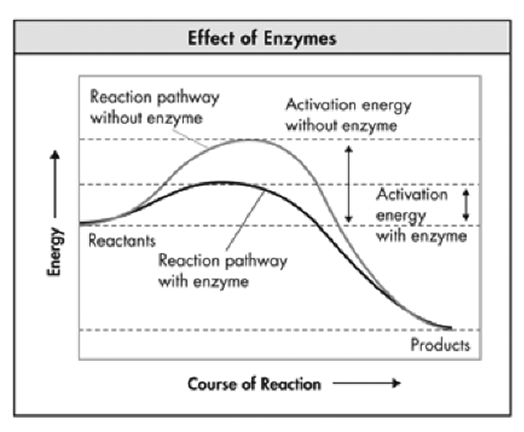
The graph shows how enzymes affect reactions in cells. Which statement best summarizes the information shown in the graph?
1
Enzymes increase the energy of the reactants.
2
Enzymes decrease the energy level of the products.
3
Enzyme decrease the activation energy of the reaction.
4
Enzymes reverse the direction of the reaction.

7

Multiple Choice

Question image
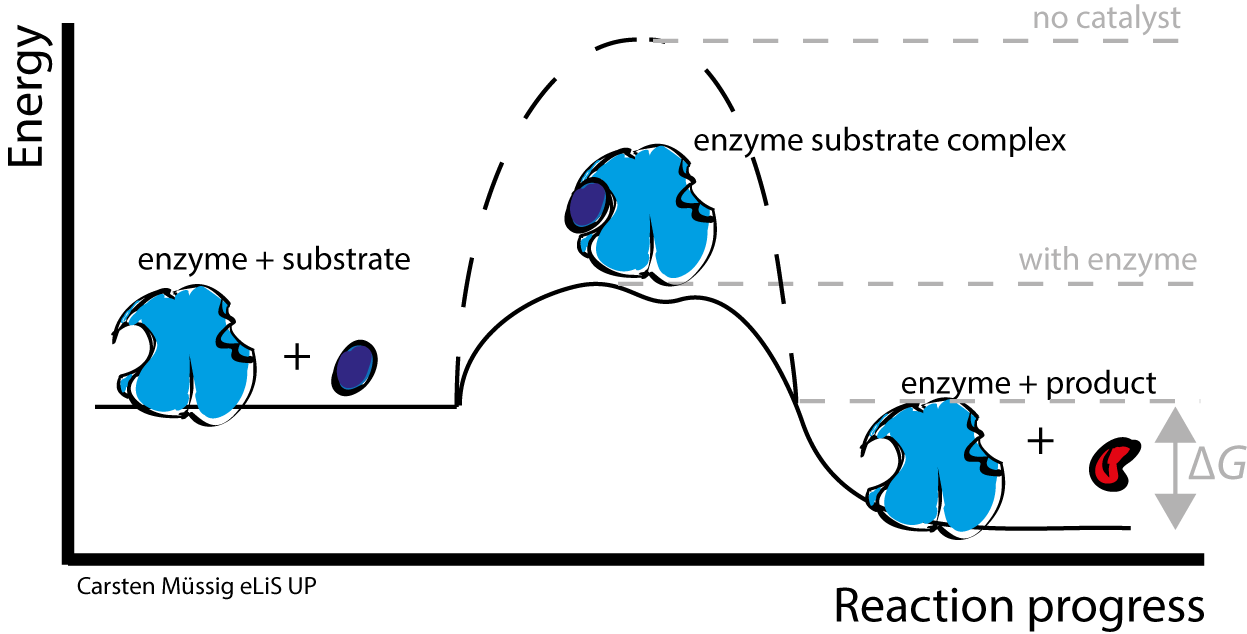
An enzyme speeds up a reaction by
1
lowering the activation energy.
2
raising the activation energy.
3
releasing energy.
4
absorbing energy.

8

media

9

Multiple Choice

Question image
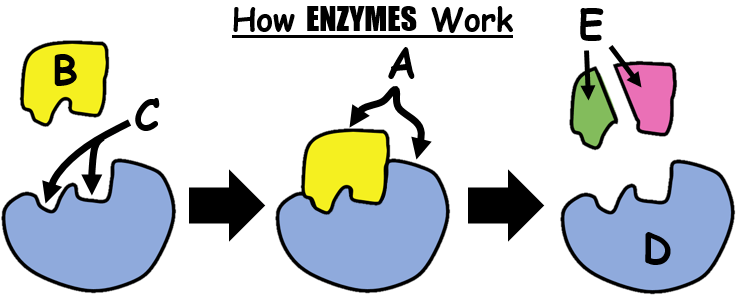
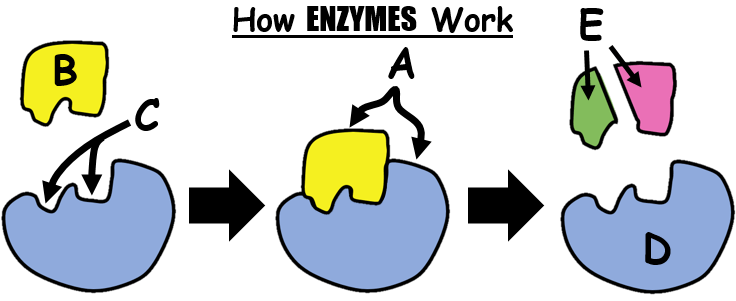
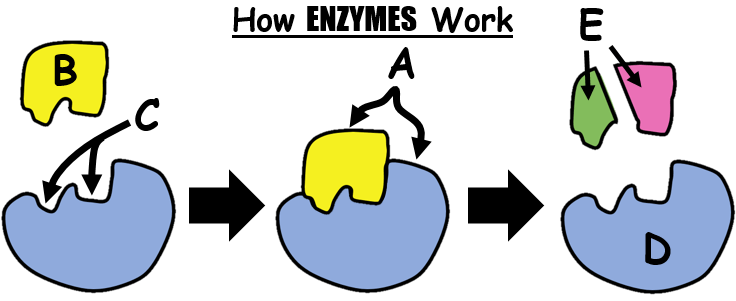
Letter D...
1
active site
2
enzyme
3
substrate
4
products

10

Multiple Choice

Question image
Letter B...
1
active site
2
enzyme
3
substrate
4
products

11

Multiple Choice

Question image
Letter C...
1
active site
2
enzymes
3
substrate
4
products

12

Multiple Choice

Question image
Letter E...
1
active site
2
enzyme
3
substrate
4
products

13

Multiple Choice

Question image
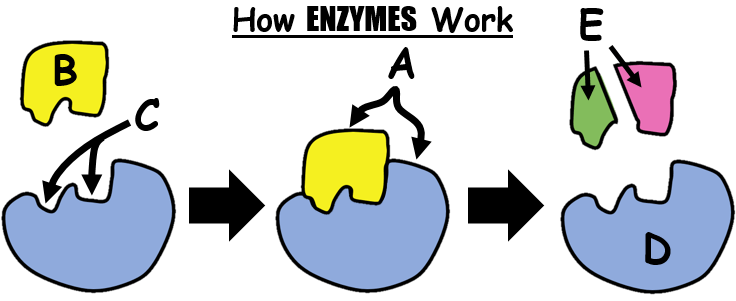
What is indicated by letter A?
1
enzyme
2
product
3
substrate
4
active site

14

media

15

Multiple Choice

Each enzyme only has 1 substrate that will fit its active site.  What is this called?
1
reusable
2
catalyst
3
specific
4
fragile

16

Multiple Choice

Question image
Which substrate would this enzyme catalyze?
1
Δ
2
σ
3
4
μ

17

media

18

Multiple Choice

Question image
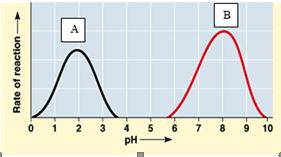
Which of the following conclusions can be drawn from this graph?
1
The optimum pH of the enzyme is 6.6.
2
The optimum pH of the enzyme is 5.8
3
The enzyme’s activity increases as pH increases 5.0 to 9.0
4
The enzyme’s activity is greater around pH of 8.0 .

19

Multiple Choice

How does an enzymes shape relate to its function?

1

the shape of the enzyme has no relation to its function

2

the enzyme is shaped specially for certain substrates to perform a specific reaction

3

the enzyme shape acts as a receptor to certain products

4

the enzyme shape can fit into specific substrates to cease a reaction

20

Multiple Choice

Question image
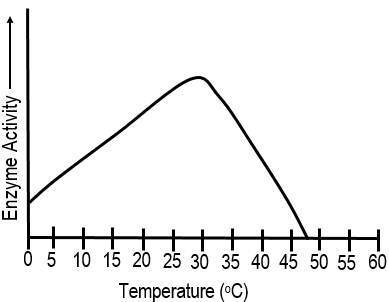
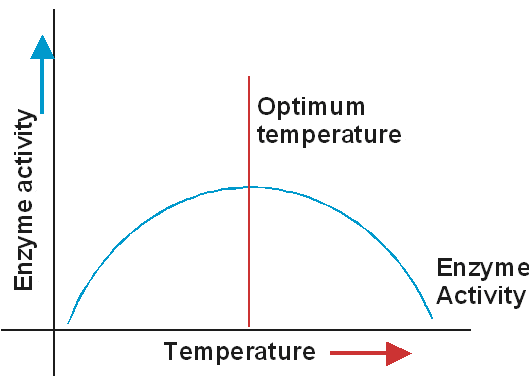
Based on the graph, what temperature does this enzyme work best? 
1
15 C
2
40 C
3
30 C
4
47 C

21

Multiple Choice

Every enzyme has a optimal temperature and pH. True or False?
1
True 
2
False

22

media

23

Multiple Choice

What happens to an enzyme when it is denatured?
1
Activation energy is lowered.
2
It becomes stronger.
3
It loses its shape.
4
Activation energy is raised.

24

Multiple Choice

Which of these is NOT true?
1
Enzymes can denature (change shape) when the temperature gets too high.
2
Enzymes can only be used once in a chemical reaction. 
3
Extreme pH can denature enzymes.
4
Enzymes speed up chemical reactions. 

25

Multiple Choice

What happens when enzymes are heated to a high temperature?
1
The enzymes die.
2
The shapes of the enzyme are altered denature
3
The enzymes' amino acid sequence changes.
4
The enzymes remain the same

26

Multiple Choice

Question image
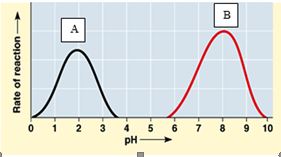
What is the pH range of enzyme A?
1
2
2
0-3.7
3
3.7
4
0

27

Multiple Choice

Question image

What is the optimal pH of enzyme A?

1

8

2

2

3

5.7-10

4

10

28

Multiple Select

A prolonged period of high fever is dangerous to humans because... (choose TWO that apply)

1

It makes the enzymes work faster

2

It denatures the enzyme and stops working

3

It can make the enzyme function better than it did before

4

It can change the shape of an enzyme so it can not bind to the right substrate

29

Multiple Choice

Question image

The diagram represents one way an enzyme can be inhibited. Which statement explains the effect of an inhibitor on an enzyme?

1

A substrate will be able to bond with the enzyme.

2

The enzyme will likely be attacked by immune cells.

3

The enzyme will be unable to produce more enzymes..

4

A substrate will be unable to attach to the enzyme.

30

Multiple Choice

Fireflies emit light. The production of light by an organism is called bioluminescence. To generate visible light, cells in a firefly's tail produces thousand of luciferase enzymes. Luciferase binds to a chemical called luciferin. Once bound, the luciferase enzyme speeds up a chemical reaction that combines an oxygen molecule and luciferin to produce oxyluciferin. This reaction requires energy and releases light. Which of the following best describes how the luciferase enzyme speed up the chemical reaction?

1

Luciferase increases the amount of time the light is visible.

2

Luciferase decreases the amount of energy required for the reaction to start.

3

Luciferase increases the number of sites on luciferin.

4

Luciferase decreases the temperature of the environment inside the body of the firefly.

31

Multiple Select

Question image

Choose 3 important characteristics for Nucleic acids

1

They are what that genetic material is made from

2

Their monomers are called nucleotides

3

They are the only biomolecules that contains nitrogen

4

They are the only biomolecules that contain phosphorus

32

Multiple Choice

Question image

Which biomolecule makes up the cell membrane and hormones?

1

lipids

2

protein

3

nucleic acid

4

carbohydrate

33

Multiple Choice

Question image

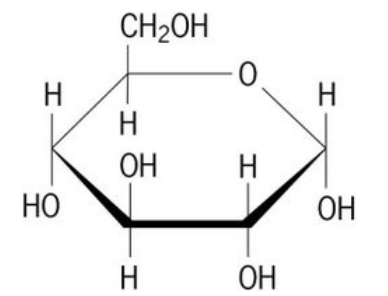
Which of these best represents a fatty acid molecule?

1

F

2

G

3

H

4

J

34

Multiple Choice

What is the monomer of a carbohydrate?

1

monosaccharide

2

amino acid

3

polysaccharide

4

nucleotide

35

Multiple Choice

Question image
At high temperatures enzyme activity declines because of:
1
Denaturation
2
Decreased Kinetic Motion
3
Increased H-Bonding
4
Dissociation of Ionic Compounds

36

Multiple Choice

WHICH BIOMOLECULES STORES LONG-TERM ENERGY?

1

PROTEIN

2

CARBS

3

LIPIDS

4

NUCLEIC ACIDS

37

Multiple Choice

Question image
Which biomolecule is this a picture of?
1
Protein
2
Nucleic Acid
3
Lipid
4
Carbohydrate

38

Multiple Choice

Which biomolecule is also known as enzymes?
1
Carbohydrate
2
Lipid
3
Nucleic Acid
4
Protein

What type of biomolecule are enzymes?

1

carbohydrate

2

lipid

3

protein

4

nucleic acid

Show answer

Auto Play

Slide 1 / 38

MULTIPLE CHOICE