Search Header Logo
8th Grade Chemistry Pre-Test

8th Grade Chemistry Pre-Test

Assessment

Presentation

Chemistry

8th Grade

Medium

Created by

Jessica Harris

Used 4+ times

FREE Resource

1 Slide • 45 Questions

1

media

8th Grade Atomic Structure & Periodic Table Pre-Test

Mrs. Harris

2

Multiple Choice

all matter is made of what 
1
energy 
2
atoms 
3
electrons 
4
compounds 

3

Multiple Choice

The positive particles of an atom are 
1
electrons 
2
neutrons 
3
protons 

4

Multiple Choice

the central region of an atom where its neutrons and protons are is its 
1
nucleus 
2
electron cloud
3
core 
4
center 

5

Multiple Choice

Particles in an atom that are neutral and have no charge are 
1
electrons 
2
neutrons 
3
protons 

6

Multiple Choice

Most of the mass of an atom is found in the ______.

1

nucleus

2

proton

3

electron cloud

4

isotope

7

Multiple Choice

The smallest particle with characteristics of an element is known as the

1

Periodic Table

2

Atom

3

Proton

4

Electron

8

Multiple Choice

How does the size of a proton compare to the size of a neutron?
1
larger
2
smaller
3
equal

9

Multiple Choice

Question image
These particles orbit around the nucleus of an atom.  What are they called?
1
electrons
2
protons
3
neutrons

10

Multiple Choice

These are the SMALLEST subatomic particles

1

Proton

2

Neutron

3

Electron

11

Multiple Choice

Question image
From the diagram, which particles are indicated with the arrow?
1
electrons and protons
2
protons and neutrons
3
electrons and neutrons

12

Multiple Choice

Question image
In terms of matter, the atom is almost entirely filled with _____
1
orbiting electrons
2
charged protons
3
heavy neutrons
4
empty space

13

Multiple Choice

Question image

Why is the overall charge of an atom neutral (0)?

1

They have the same number of protons and neutrons.

2

They have the same number of protons and electrons.

3

They have the same number of electrons and neutrons.

14

Multiple Choice

An atom with atomic number 6 would have how many protons

1

6

2

12

3

3

4

cannot be determined

15

Multiple Choice

In the modern periodic table, elements are arranged by:

1

atomic mass

2

atomic number

3

valence electrons

4

number of isotopes

16

Multiple Choice

Question image

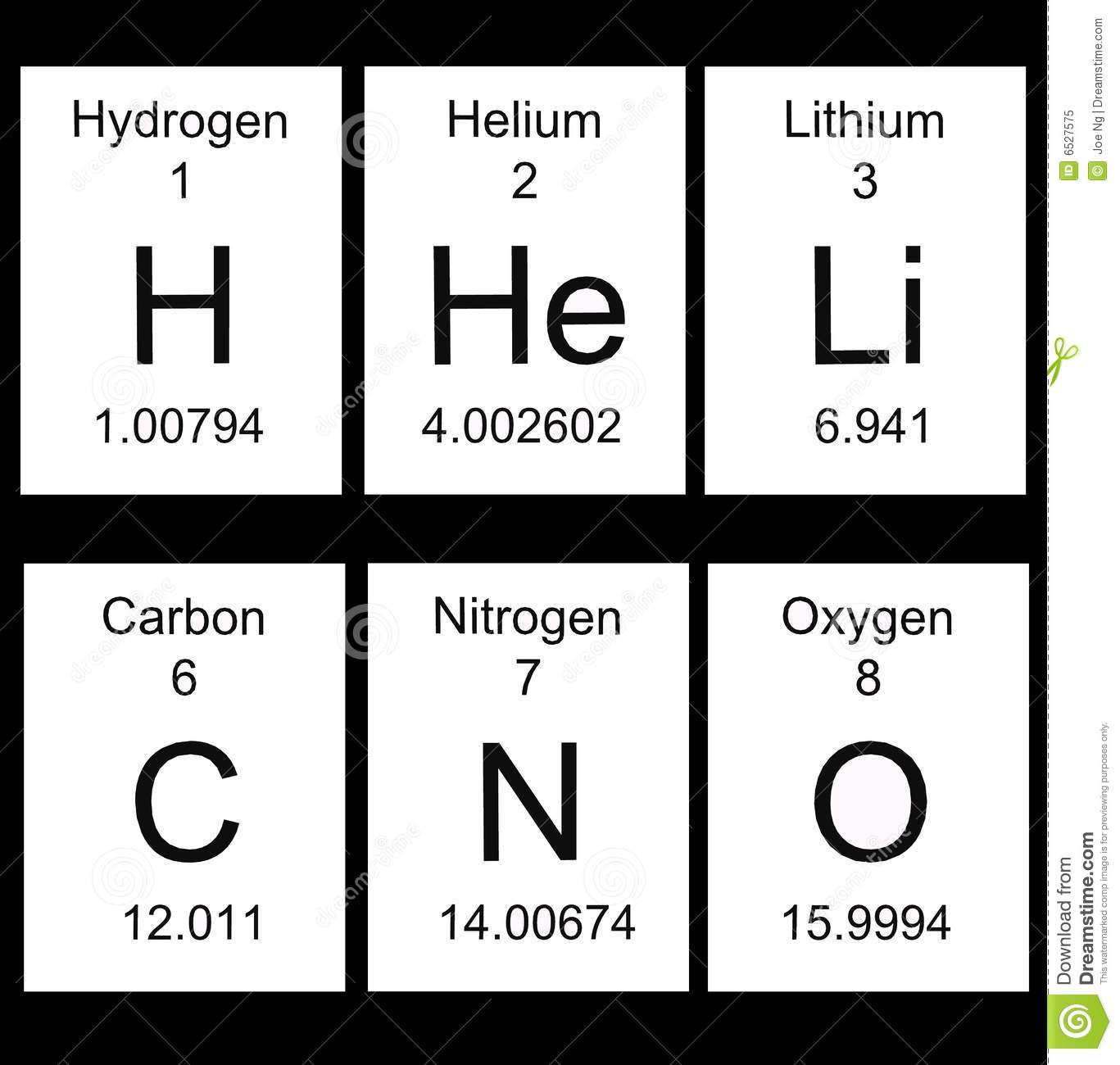
What does the 1.00794 stand for?

1

Hydrogen

2

atomic number

3

atomic mass

4

atomic explosion

17

Multiple Choice

If an atom has 10 protons, 10 neutrons, and 10 electrons, what is the mass of the atom?

1

10

2

20

3

30

18

Multiple Choice

True/False: Compounds are made of two or more different elements.

1

True

2

False

19

Multiple Choice

Most of the mass in an atom is concentrated in the...

1

electrons

2

nucleus

3

protons

4

empty space

20

Multiple Choice

An arrangement of elements in order of their atomic numbers such that elements with similar properties fall in the same column or group.

1

Atomic Number

2

Electron Cloud

3

Periodic Table

4

Nucleus

21

Multiple Choice

Each column in the periodic table is called a 
1
period
2
group
3
cluster
4
unit

22

Multiple Choice

The atomic number tells you what?
1
number of electrons
2
number of protons
3
number of neutrons
4
both electrons and protons in an atom.

23

Multiple Choice

What is the name of the group that never reacts--ever ever they are stable with a full outermost ring!!!
1
noble gases
2
transition
3
halogens
4
borons

24

Multiple Choice

Question image
What is the chemical symbol for Lithium?
1
H
2
He
3
Li
4
N

25

Multiple Choice

Question image
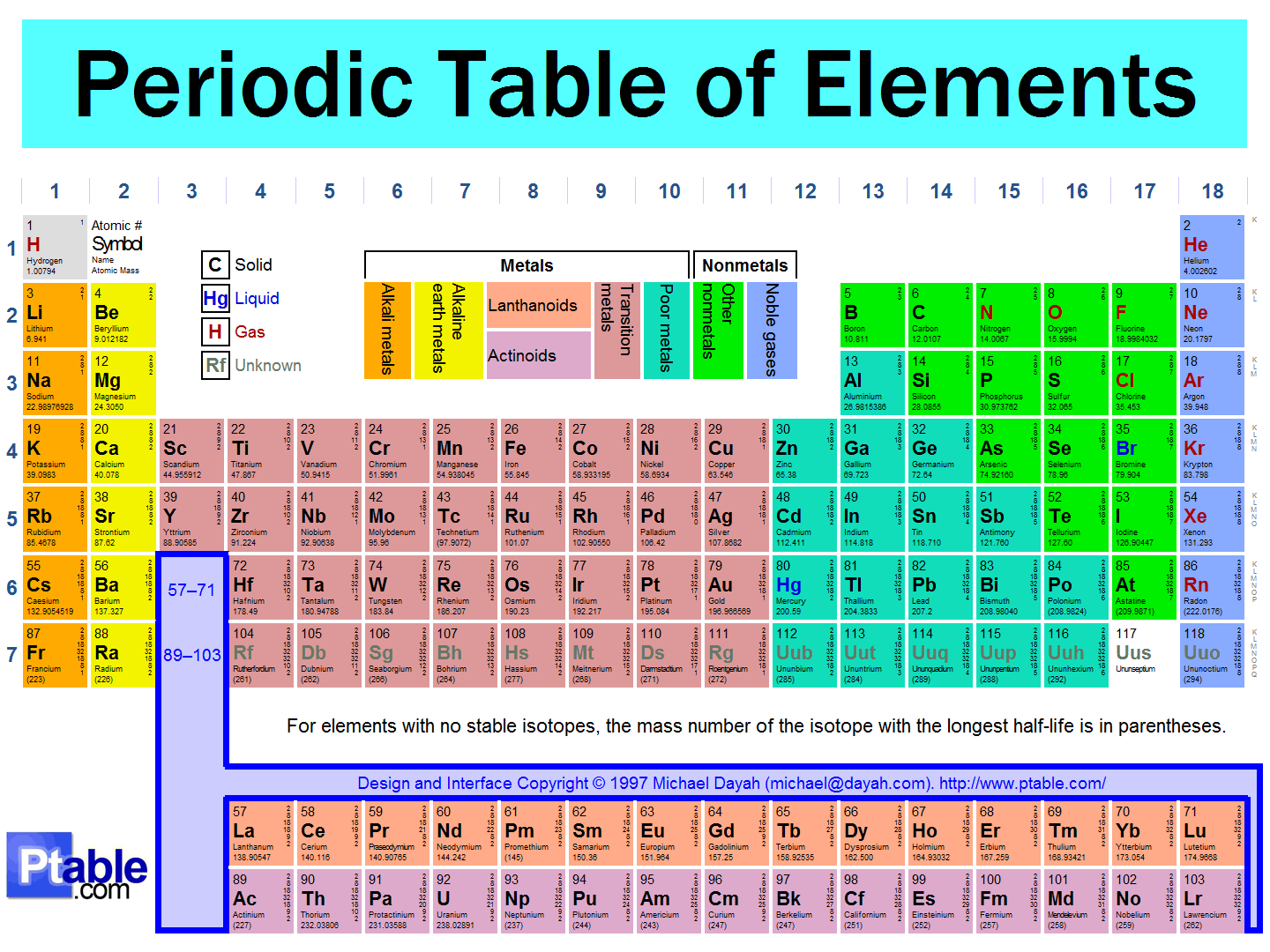
The horizontal row on the periodic table is called a
1
group
2
family
3
period
4
atomic number

26

Multiple Choice

Question image
How did Mendeleev arrange the elements?
1
alphabetical 
2
density
3
melting point
4
atomic mass

27

Multiple Choice

Question image
Dimitri found that there was a pattern of properties that repeated every ____ elements.
1
2
2
4
3
5
4
7

28

Multiple Choice

Question image
What group of elements don't have individual names?
1
Alkaline-earth Metals
2
Transition Metals
3
Alkali Metals
4
Halogens

29

Multiple Choice

Question image
Most of the elements on the periodic table are classified as _____.
1
Metals
2
Nonmetals
3
Metalloids
4
Periods

30

Multiple Choice

Balance this equation:
MgCl2 --> Mg4+ Cl2
1
It's already balanced.
2
4MgCl2 --> Mg4+ 4Cl2
3
4MgCl2 --> Mg4+ 5Cl2

31

Multiple Choice

The substances listed on the left side of a chemical equation are the
1
Products
2
Coefficients
3
Precipitates
4
Reactants

32

Multiple Choice

In chemical reactions, what does the principle of conservation of mass mean?
1
Matter is not created or destroyed.
2
The total mass of the reactants is greater than the total mass of the products.
3
The total mass of the reactants is less than the total mass of the products.
4
Matter is not changed.

33

Multiple Choice

Name the part in red:

H2 + O2 -> H2O
1
Coefficient
2
Product
3
Yield
4
Subscript

34

Multiple Choice

Name the part in red:

H+ O2 -> H2O
1
Coefficient
2
Product
3
Reactant
4
Subscript

35

Multiple Choice

Question image
Some elements combine chemically and no longer have the same ________________ they did before forming a compound.
1
valence electons
2
energy
3
properties
4
group number

36

Multiple Choice

A _________________ is composed of symbols and subscripts indicating the number of atoms of an element in a compound.
1
Chemical Equation
2
Chemical Reaction
3
Synthesis Reaction
4
Chemical Notation

37

Multiple Choice

Question image
A ____________is the force that holds atoms together in a compound.
1
Chemical Formula
2
Chemical Reaction
3
Chemical Bond
4
Synthesis Reaction

38

Multiple Choice

An ionic compound is held together by the _______--the force of attraction between opposite charges of the atoms.
1
Covalent Bond
2
Ionic Bond
3
Synthetic Bond
4
Molecular Bond

39

Multiple Choice

How are covalent bonds formed?
1
Sharing of electrons
2
Transfer of electrons

40

Multiple Choice

Why do elements bond?
1
To be friends
2
To create a new element
3
To become stable

41

Multiple Choice

Question image
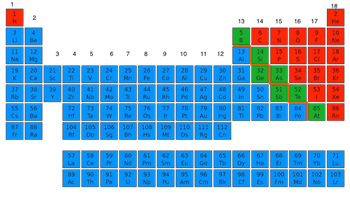
Where are the nonmetals located on the periodic table? 
1
Blue
2
Red
3
Green

42

Multiple Choice

Covalent Bonds ______________ valence electrons.

1

give

2

take

3

keep

4

share

43

Multiple Choice

Atoms joined together by SHARING electrons are?
1
Ionic bonds
2
Covalent bonds
3
Metallic Bonds
4
James Bonds

44

Multiple Choice

How many electron can fit on the first electron shell?
1
2
2
8
3
18
4
32

45

Multiple Choice

An elements in group 2 has how many valence electrons?
1
1
2
2
3
3
4
4

46

Multiple Choice

A bond between two nonmetals is an
1
Ionic Bond
2
Covalent Bond
3
Metallic Bond
media

8th Grade Atomic Structure & Periodic Table Pre-Test

Mrs. Harris

Show answer

Auto Play

Slide 1 / 46

SLIDE