Chapters 11 and 12 Gases, Liquids, Solids, and Intermolecular Forces
Presentation
•
Chemistry
•
University
•
Medium
+2
Standards-aligned
Luis Bello
Used 3+ times
FREE Resource
37 Slides • 21 Questions
1
Chapters 11 and 12
Gases, Liquids, Solids, and Intermolecular Forces
by Luis Bello
2
3
Multiple Choice
4
Multiple Choice
5
Multiple Choice
6
Multiple Choice
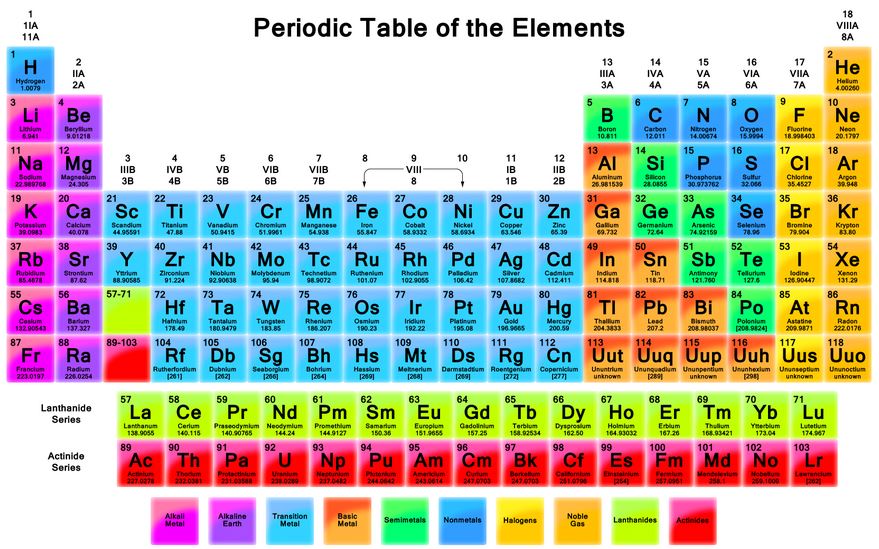
Elements on the LEFT side of the periodic table will most likely form:
Positive ions
Negative ions
Neutral Ions
None of these
7
Multiple Choice
The theory that is used to predict the arrangement of atoms about a central atom is called?
Valence shell repulsion
Valence shell electron sharing
Valence shell electron pair repulsion
Valence electron shell repulsion pair
8
Multiple Choice
9
Multiple Choice
10
11
12
13
14
15
16
17
18
19
Multiple Choice
A student inflates a balloon with helium then places it in the freezer. The student should expect
the balloon's volume to increase
the balloon's volume to decrease
the balloon's moles to increase
the balloon's moles to decrease
20
Multiple Choice
21
Multiple Choice
22
Multiple Choice
23
Chapter 12- Liquids, Solids, and Intermolecular Forces
24
Previous Class Chapter 11
11.2 Kinetic Molecular Theory: A Model for Gases
11.3 Pressure: The Result of Constant Molecular Collisions
11.4 Boyle’s Law: Pressure and Volume
11.5 Charles’s Law: Volume and Temperature
11.6 The Combined Gas Law: Pressure, Volume, and Temperature
11.7 Avogadro’s Law: Volume and Moles
11.8 The Ideal Gas Law: Pressure, Volume, Temperature, and Moles
11.9 Mixtures of Gases
11.10 Gases in Chemical Reactions
25
Multiple Choice
26
Liquids, Solids, and Intermolecular Forces
12.2 Properties of Liquids and Solids
12.3 Intermolecular Forces in Action: Surface Tension and Viscosity
12.4 Evaporation and Condensation
12.5 Melting, Freezing, and Sublimation
12.6 Types of Intermolecular Forces: Dispersion, Dipole–Dipole, Hydrogen Bonding, and Ion–Dipole
12.7 Types of Crystalline Solids: Molecular, Ionic, and Atomic
27
28
29
30
Multiple Choice
In which state of matter will there be the LARGEST space between molecules?
Solid
Liquid
Gas
31
Multiple Choice
The diagram shows the arrangement of particles in a
Solid
Liquid
Gas
32
33
34
35
The critical point is the highest temperature and pressure at which a pure material can exist in vapor/liquid equilibrium.
At temperatures higher than the critical temperature, the substance can not exist as a liquid, no matter what the pressure.
36
Intermolecular forces
37
38
39
40
41
42
Solids
43
44
45
46
47
48
49
50
51
52
Multiple Choice
53
Multiple Choice
54
Multiple Choice
55
Multiple Choice
56
Multiple Choice
Changing from a liquid to a gas
condensation
vaporization
sublimation
melting
57
Multiple Choice
Which grouping lists the states of matter in order of increasing distance between particles?
gas, liquid, solid
liquid, solid, gas
solid, gas, liquid
solid, liquid, gas
58
Multiple Choice
Which grouping lists the states of matter in order of increasing distance between particles?
gas, liquid, solid
liquid, solid, gas
solid, gas, liquid
solid, liquid, gas
Chapters 11 and 12
Gases, Liquids, Solids, and Intermolecular Forces
by Luis Bello
Show answer
Auto Play
Slide 1 / 58
SLIDE

Similar Resources on Wayground
53 questions
Uncertainties
Presentation
•
12th Grade
53 questions
Geometry Area and Volume
Presentation
•
University
53 questions
Surface Area and Volume Formula
Presentation
•
University
51 questions
Topic 3
Presentation
•
University
49 questions
Metabolic
Presentation
•
KG
49 questions
GEORGE'S 3rd quiz and lesson
Presentation
•
University
49 questions
Lifespan Psychology and Developmental Theories
Presentation
•
University
Popular Resources on Wayground
20 questions
STAAR Review Quiz #3
Quiz
•
8th Grade
20 questions
Equivalent Fractions
Quiz
•
3rd Grade
6 questions
Marshmallow Farm Quiz
Quiz
•
2nd - 5th Grade
20 questions
Main Idea and Details
Quiz
•
5th Grade
20 questions
Context Clues
Quiz
•
6th Grade
20 questions
Inferences
Quiz
•
4th Grade
19 questions
Classifying Quadrilaterals
Quiz
•
3rd Grade
12 questions
What makes Nebraska's government unique?
Quiz
•
4th - 5th Grade