Search Header Logo
Plant Structure SC.912.L.14.7

Plant Structure SC.912.L.14.7

Assessment

Presentation

Biology, Science

9th - 12th Grade

Medium

NGSS
MS-LS1-4, MS-LS1-6, MS-LS2-3

+2

Standards-aligned

Created by

Sweetheart Tayong

Used 17+ times

FREE Resource

20 Slides • 30 Questions

1

Plant Structure

by Sweetheart Tayong

SC.912.L.14.17

Relate each structure of each of the major plant organs and tissues to the physiological processes.

2

Plant Physiology

Plants

       Plants have organs, tissues, and cells.

media

3

Four tissues found in plants?

Dermal

Vascular

Ground

Meristematic

4

Plant Tissues

Plant Organs are made of four tissue systems:

1. Dermal Tissues covers the outside of a plant.

Protects the plant

Secretes cuticle of leaves

Forms outer bark of trees

media

5

Multiple Choice

Plant tissue that forms the outer part of trees

1

Dermal

2

Vascular

3

Ground

4

Meristematic

6

Plant Tissues

Plant Organs are made of four tissue systems:

2. Ground Tissues found inside of a plant.

Provides support of plant

Stores materials in roots and stems

Carries products of photosynthesis

media

7

Multiple Choice

Plant tissue that stores ad carries photosynthetic products 

1

Dermal

2

Vascular

3

Ground

4

Meristematic

8

Plant Tissues

Plant Organs are made of four tissue systems:

3. Vascular Tissues transport water, minerals, and organic compounds.

Made of two networks of hollow tubes

Xylem transports water and minerals

Phloem transports photosynthetic products  (water and sugar)

media

9

Multiple Choice

Choose the correct pair of functions of the vascular tubes 

1

Xylem transports sugar and water

Phloem transports minerals and sugar

2

Xylem transports water and minerals

Phloem transports organic molecules and sugar

10

Plant Tissues

Plant Organs are made of four tissue systems:

4. Meristematic Tissues consist of small, densely packed cells that can keep dividing to form new cells.

Allows cells to stay forever young

Involved in plant growth

media

11

PLANTS: TISSUE SYSTEMS

  • Apical Meristem:

    Lengthens

    Lateral Meristem:

    Widens

media

12

Multiple Choice

__________ __________ causes primary growth; lengthens the plant

1

LATERAL MERISTEM

2

LATERAL EPICONDYLE

3

APICAL CONDYLE

4

APICAL MERISTEM

13

Multiple Choice

••On the leaves and some stems, cells may secrete  a wax-coated substance that becomes the cuticle which provides protection in variety of ways.  What tissue system would it be a part of ?

1

DERMAL

2

GROUND

3

VASCULAR

4

MERISTEMATIC

14

Multiple Choice

THE LATERAL MERISTEM HAS THE FOLLOWING FUNCTION IN PLANTS

1

LENGTHENS THE PLANT

2

SUPPORTS THE PLANT

3

WIDENS THE PLANT

4

DENATURES THE PLANT

15

PLANT ORGANS

ROOTS

Roots make up over half the body of the plant and provide many functions:

Anchor the plant in the ground.

Absorb water and minerals from the soil.

16

media

In what part of a  plant can water get through?

Roots

17

​PARTS OF THE ROOT

Root hairs are tiny projections on the dermal cells of roots that aid in absorption of water and minerals.

Root cap a small cone of cells that protects that growing part of the root as it pushes  through the soil

Roots also include the xylem, phloem and cadmium that aid in growth and movement of materials for photosynthesis and transpiration.

18

Multiple Choice

Question image

Part of the plant that absorbs water.

1

Roots

2

Flowers

3

Petals

4

Leaves

19

​STEMS

Stems have many functions:

Support leaves and flowers

House most of the vascular system

Store water

Grow underground for storage

Form new plants

Stems also include xylem, phloem, and cadmium which aid in growth, transpiration and photosynthesis

20

Multiple Choice

Question image

Part of the plant that is long, transport nutrients, water and keep the plant stable in the ground.

1

Roots

2

Stem

3

Petals

4

Leaves

21

​LEAVES

​-Are the site of photosynthesis.

All leaves have the same structure and function.

The topside of the leaf is where the majority of the chloroplasts are located that absorb the sunlight

The underside of the leaf contain stomata and is the site of transpiration and gas exchange.

22

media

23

media

24

Multiple Choice

Question image

Part of the plant that has chlorophyll

1

Roots

2

Flowers

3

Petals

4

Leaves

25

26

​STOMATA

 When stomata open, water evaporates and gas exchanges Stomata close at night and when plant loses much water.

media

27

​GUARD CELLS

Guard cells surround each stomata

Stomata open and close when guard cells change shape

media

28

Multiple Choice

Question image

Stomata are made of specialized cells called ______ which surround a tiny pore/opening

1

stoma

2

guard cells

3

dermal cells

4

diffusion channels

29

Multiple Choice

Question image

The main function of stomata is to

1

capture sunlight

2

protect leaves from insects

3

allow gases to move rapidly in/out of leaves

4

release sugars into the atmosphere

30

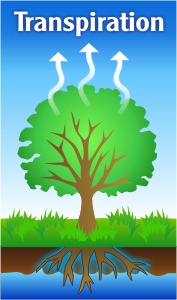
​TRANSPIRATION

Evaporation of water through Stomata

31

Multiple Choice

What is transpiration?

1

Excess water being released from the aerial parts of plants in the form of water vapor

2

Excess sugar being released from the leave

3

The way a plant makes its food

4

When the plant uses sugar for energy

32

Multiple Choice

Water transported from stems to leaves through what?

1

xylem

2

phloem

3

stems

4

roots

33

Multiple Choice

Question image
Transpiration is
1
the movement of water through a plant from the roots up the stem
2
the loss of water from the leaves of a plant by the process of evaporation
3
the flow of water into plant roots by osmosis from the soil
4
the process of minerals and sugars moving through plant veins

34

​PARTS OF THE FLOWER

media
media

35

Multiple Choice

Question image
This part of the flower makes pollen...
1
Stamen
2
Ovary
3
Anther
4
Filament

36

Multiple Choice

Question image
Who is known as the sticky part of the flower where pollen lands?
1
Stamen
2
Style
3
Stigma
4
Petals

37

Multiple Choice

Question image
This part of the plant protect the bud as it is forming a flower...
1
Sepal
2
Ovary
3
Carpel (Pistil)
4
Peduncle

38

Multiple Choice

Question image
This part helps transport the pollen tube from the stigma to ovary...
1
Stamen
2
Filament
3
Ovule
4
Style

39

Multiple Choice

Question image
Who is made up of the stigma, style, and ovary?
1
Carpel
2
Stamen
3
Receptacle
4
Sepal

40

Multiple Choice

Question image
Who holds up the anthers?
1
Stigma
2
Ovary
3
Filament
4
Style

41

Multiple Choice

Question image
This part of the flower contains the ovule?
1
Petal
2
Nectary
3
Ovary
4
Carpel

42

Multiple Choice

Question image
What part of the flower makes food for insects and other animals to feed on?
1
Nectary
2
Stigma
3
Anther
4
Ovary

43

Multiple Choice

Question image
This part of the plant is brightly colored and attracts insects?
1
Nectary
2
Ovary
3
Stigma
4
Petals

44

Multiple Choice

Question image
Which part of the flower contains the female gamete (egg)?
1
Anther
2
Filament
3
Ovule
4
Ovary

45

Multiple Choice

Question image
Which part of the plant is made up of the anther and filament?
1
Carpel
2
Stamen

46

Multiple Choice

Question image

The pistil (or carpel) is the _______ part of the flower

1

Male

2

Female

47

Multiple Choice

Question image

The stamen is the ______ part of the flower

1

male

2

female

48

Multiple Choice

Question image
This is the top part of the pistil of a flower which receives the pollen grains; germination happens here.
1
petal
2
sepal
3
filament
4
stigma

49

Multiple Choice

Question image

These are found inside of the ovary, they are tiny egg cells that will become seeds, also known as ______________

1

ovaries

2

ovules

3

anthers

4

sepals

50

Multiple Choice

Question image
This is the stalk that holds the anther.
1
stamen
2
stigma
3
filament
4
pistil

Plant Structure

by Sweetheart Tayong

SC.912.L.14.17

Relate each structure of each of the major plant organs and tissues to the physiological processes.

Show answer

Auto Play

Slide 1 / 50

SLIDE