Search Header Logo
Elements

Elements

Assessment

Presentation

Science

9th Grade

Easy

NGSS
MS-PS1-1, HS-PS1-8, MS-PS1-5

Standards-aligned

Created by

Lindsey Knight

Used 9+ times

FREE Resource

3 Slides • 16 Questions

1

Elements

by Lindsey Knight

2

3

​Independent work time

  1. Open your workbook to Page 130 and answer Questions 1-11

  2. ​For Spanish, open Schoology to 11/4 Elements and answer Question 1-11

4

Multiple Choice

An atom that has an equal number of protons and electrons is:

1

Positively charged

2

Negatively charged

3

Neutral

5

Multiple Choice

An atom that has more protons than electrons is:

1

Positively charged

2

Negatively charged

3

Neutral

6

Multiple Choice

An atom that has fewer protons than electrons is:

1

Positively charged

2

Negatively charged

3

Neutral

7

Multiple Choice

In real life, which is more likely to have caused a neutral atom to get a charge of +1?

1

A proton was added

2

An electron was removed

3

Either process equally likely to have happened

8

Multiple Choice

The central region of an atom where its neutrons and protons are is its 
1
nucleus 
2
electron cloud
3
core 
4
center 

9

Multiple Choice

An atom with atomic number 6 would have how many protons 
1
6
2
12
3
3
4
cannot be determined 

10

Multiple Choice

True or False? Neutrons have a negative charge
1
True
2
False

11

Multiple Choice

What is the atomic number for an element with three protons?
1
2
2
1
3
3
4
6

12

Multiple Choice

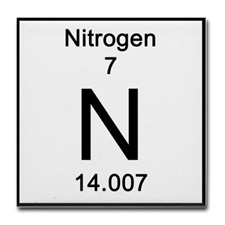
Question image
What is the number of protons that the element in this image contain?
1
14
2
7
3
15
4
18

13

Multiple Choice

The positive particles of an atom are 
1
electrons 
2
positrons 
3
neutrons 
4
protons 

14

Multiple Choice

all matter is made of what 
1
energy 
2
atoms 
3
electrons 
4
compounds 

15

Multiple Choice

electrons have this type of charge?
1
negative
2
positive
3
neutral

16

Multiple Choice

Most of the mass in an atom is concentrated in the...
1
electrons
2
nucleus
3
protons
4
empty space

17

Multiple Choice

What does the nucleus consist of?
1
Protons + Electrons
2
Neutrons + Electrons
3
Atoms
4
Protons + Neutrons

18

Multiple Choice

The part of the atom that is moving around the nucleus is called?
1
electron
2
neutron
3
proton

19

Multiple Choice

If the number of protons changes, does the atom change its identity?
1
YES!
2
NO!

Elements

by Lindsey Knight

Show answer

Auto Play

Slide 1 / 19

SLIDE