Search Header Logo
Cell Transport

Cell Transport

Assessment

Presentation

•

Biology

•

10th - 12th Grade

•

Medium

•
NGSS
HS-LS1-3, MS-LS1-2, HS-PS1-5

Standards-aligned

Created by

Rose Marsh

Used 11+ times

FREE Resource

22 Slides • 28 Questions

1

media

2

3

media

4

5

media

6

media

7

media

8

media

9

media

10

media

11

media

12

media

13

media

14

media

15

media

16

media

17

media

18

19

media

20

21

media

22

Multiple Choice

Question image

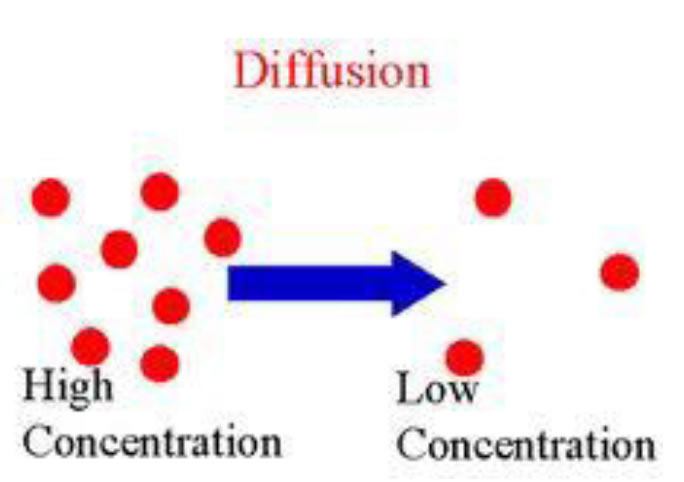
The movement of particles from an area of high to low concentration is known as--

1

Passive Transport

2

Active Transport

23

Multiple Choice

What is it called when large molecules move across the cell membrane from an area of high concentration to an area of low concentration through a protein channel?

1

Diffusion

2

Osmosis

3

Active Transport

4

Facilitated Diffusion

24

Multiple Choice

What is the name of the process in which small molecules move from an area of high concentration to an area of low concentration across the cell membrane

1

Diffusion

2

Osmosis

3

Active Transport

4

Facilitated Diffusion

25

Multiple Choice

When there is an equal number of molecules on the inside and outside of the cell, that is called-

1

difference

2

transportation

3

homeostasis

4

solution

26

Multiple Choice

What is the difference between active and passive transport?
1
Active does not need energy and passive uses ATP (energy)
2
Active uses ATP (energy) and passive does not need energy
3
Active stores transport proteins and passive releases 
4
Active uses hormones and passive does not 

27

Multiple Choice

Question image
 Look at the diagram of a cross-section of a cell membrane below. The cell membrane controls movement of materials into and out of the cell. The following particles are moving from high concentration to low concentration and are using a carrier protein. How would you describe this type of movement across the membrane? 
1
simple osmosis
2
active transport
3
simple diffusion
4
facilitated diffusion

28

Multiple Choice

Question image
Look at the cross section of a cell membrane of a eukaryotic cell. H+ ions are being pumped from a low concentration to a high concentration. How do you describe this type of transport across the cell membrane?
1
active transport
2
passive transport
3
facilitated diffusion
4
co-transport

29

Multiple Choice

Osmosis is the movement of _____ across a membrane.
1
food
2
energy
3
oxygen
4
water

30

Multiple Choice

During osmosis
1
water moves from high to low concentration
2
large or oddly shaped molecules move across a cell membrane
3
water moves when energy is used
4
proteins are built

31

Multiple Choice

Permeable means
1
things can pass through
2
the concentration levels are different
3
it is permanent
4
things are stuck

32

Multiple Choice

Question image
What is the definition of  Selective Permeability?
1
The movement of materials across the cell membrane that requires NO ENERGY from the cell.
2
The movement of materials through (or across) the cell membrane
3
The ability of the cell membrane to allow some things to pass through while preventing other things from passing through.
4
The movement of molecules from an area of high concentration to a area of low concentration 

33

Multiple Choice

 If a cell containing 5% salt is placed into a glass of water with 20% salt, the water is _______ compared to the cell.
1
hypertonic
2
hypotonic
3
isotonic

34

Multiple Choice

Question image
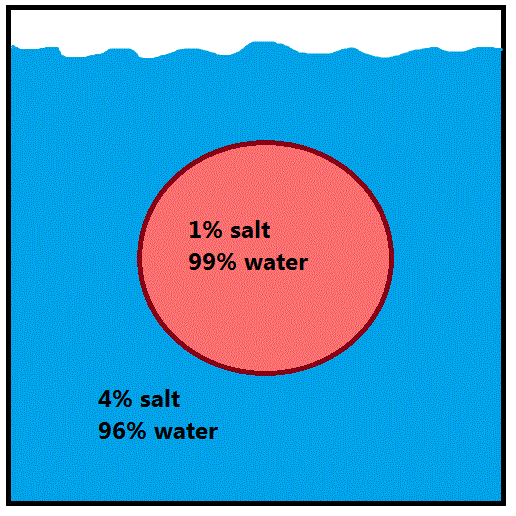
Where will the water go?
1
Into the cell
2
Out of the cell
3
Equally in & out - it's isotonic
4
There is no water

35

Multiple Choice

HYPO means...
1
Low
2
High
3
Equal
4
Fat

36

Multiple Choice

ISO means...
1
Low
2
A lot
3
Equal
4
Mammal

37

Multiple Choice

What happens if someone gives you a 90% salt saline drip?
1
Your cells will shrivel and you'll die
2
Your cells will swell and you'll die
3
Nah you'll be fine.

38

Multiple Choice

Why can't you drink salt water?
1
It's hypertonic to your cells
2
It's hypotonic to your cells
3
It's isotonic to your cells
4
It's paratonic to your cells

39

media

40

Multiple Choice

Question image
Mr. Slug was salted. Where was there more solute immediately after salting?
1
Outside of the slug
2
Inside of the slug
3
There was no solute anywhere

41

Multiple Choice

What is the type of solute we mainly talked about in our examples?
1
Salt
2
Sugar
3
Calcium
4
Mercury

42

Multiple Choice

Question image
A blood cell is placed into the jar, as seen. Where will the water go?
1
Into the cell
2
Out of the cell
3
Equally in & out - it's isotonic
4
The water is a lie

43

Multiple Choice

Osmosis is the movement of _____ across a membrane.
1
food
2
energy
3
oxygen
4
water

44

Multiple Choice

 If a cell containing 5% salt is placed into a glass of water with 20% salt, the water is _______ compared to the cell.
1
hypertonic
2
hypotonic
3
isotonic

45

Multiple Choice

 An animal cell placed in a hypertonic (salty) solution will
1
Stay the same
2
Shrink- get smaller
3
Swell- get bigger

46

Multiple Choice

During osmosis
1
water moves from high to low concentration
2
large or oddly shaped molecules move across a cell membrane
3
water moves when energy is used
4
proteins are built

47

Multiple Choice

HYPO means...
1
Low
2
High
3
Equal
4
Fat

48

Multiple Choice

ISO means...
1
Low
2
A lot
3
Equal
4
Mammal

49

Multiple Choice

What happens if someone gives you a 90% salt saline drip?
1
Your cells will shrivel and you'll die
2
Your cells will swell and you'll die
3
Nah you'll be fine.

50

Multiple Choice

Why can't you drink salt water?
1
It's hypertonic to your cells
2
It's hypotonic to your cells
3
It's isotonic to your cells
4
It's paratonic to your cells
media

Show answer

Auto Play

Slide 1 / 50

SLIDE